
Not Quite A Review: I need to talk about Vintage Story
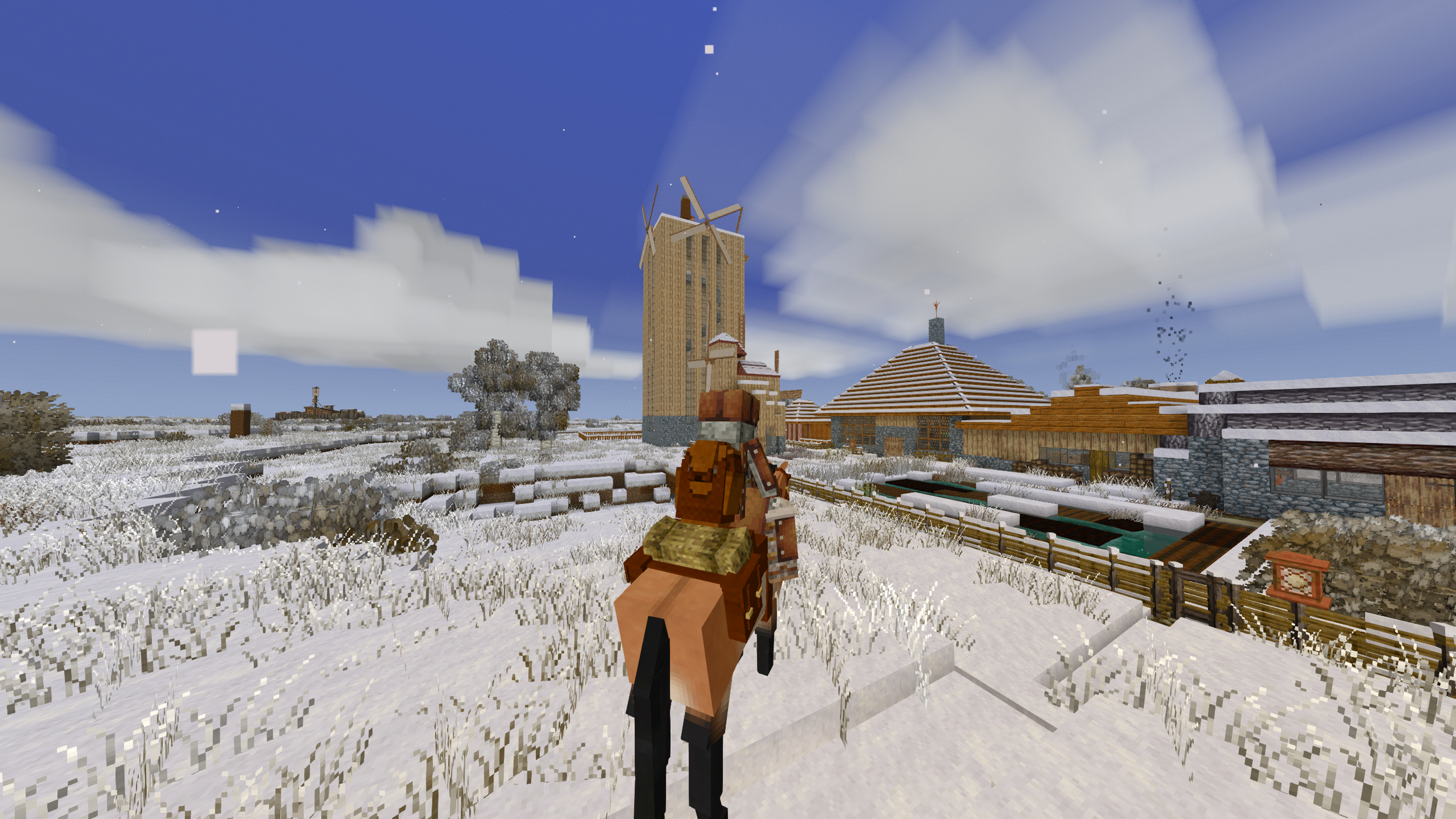
I want to start this article with a bit of context, but if you’re less about my yapping then really, why are you here and want to get right to my thoughts about the game, skip to the next header.
Usually on this website, I review games with horses in them, especially games that are about horses. Vintage Story is a block-based survival game that one friend of mine spontaneously summarized as “that sounds like Minecraft with extra steps”, and it does not yet contain horses in its unmodded base game.
So why did I decide to play Vintage Story for The Mane Quest?
I wanted something new to play for fun, and I am a sucker for those more survival-focused first days of a new Minecraft world that always go by too quickly
I saw people in the community post about their modded horses and those looked really nice
It won a community poll on my Discord for what I should play next
That was at the start of February. I’ve been playing Vintage Story for over half a year now and my playtime counter tells me it’s been about 280 hours. Just when I thought I was getting close to having tried the most important parts of the game and the Equus horse mod, that mod’s creator announced a brand new horse mod focused on medieval war horses, and also the Vintage Story team started teasing the addition of horses to the vanilla base game.
If I add another mod or wait for official horses, I might be busy with this game and this review for another six months, so in the interest of preserving my sanity and giving myself the opportunity to review other games in the future, I will now officially give up on the idea of “I’ll write a review when I’m ‘done’ with the game” and just get something written down about it.
An Introduction to Vintage Story
Vintage Story began development as a Minecraft mod way back in 2016. It is labelled as “Early Access”, remains in active development and is available for a one time purchase from its own website or from the Humble Store.
The game still shares some fundamental similarities with Minecraft – from a block-based world where everything can be built and destroyed, to grid-based crafting to the basic logic of tools and inventory – but also diverges from its parent game in a lot of ways. I make these comparisons not because Vintage Story can’t stand on its own as a game (it very much can!), but because I assume a certain familiarity with Minecraft on the part of most of my readers, and because the areas in which it differs from Minecraft are what really drew me to the game to begin with.
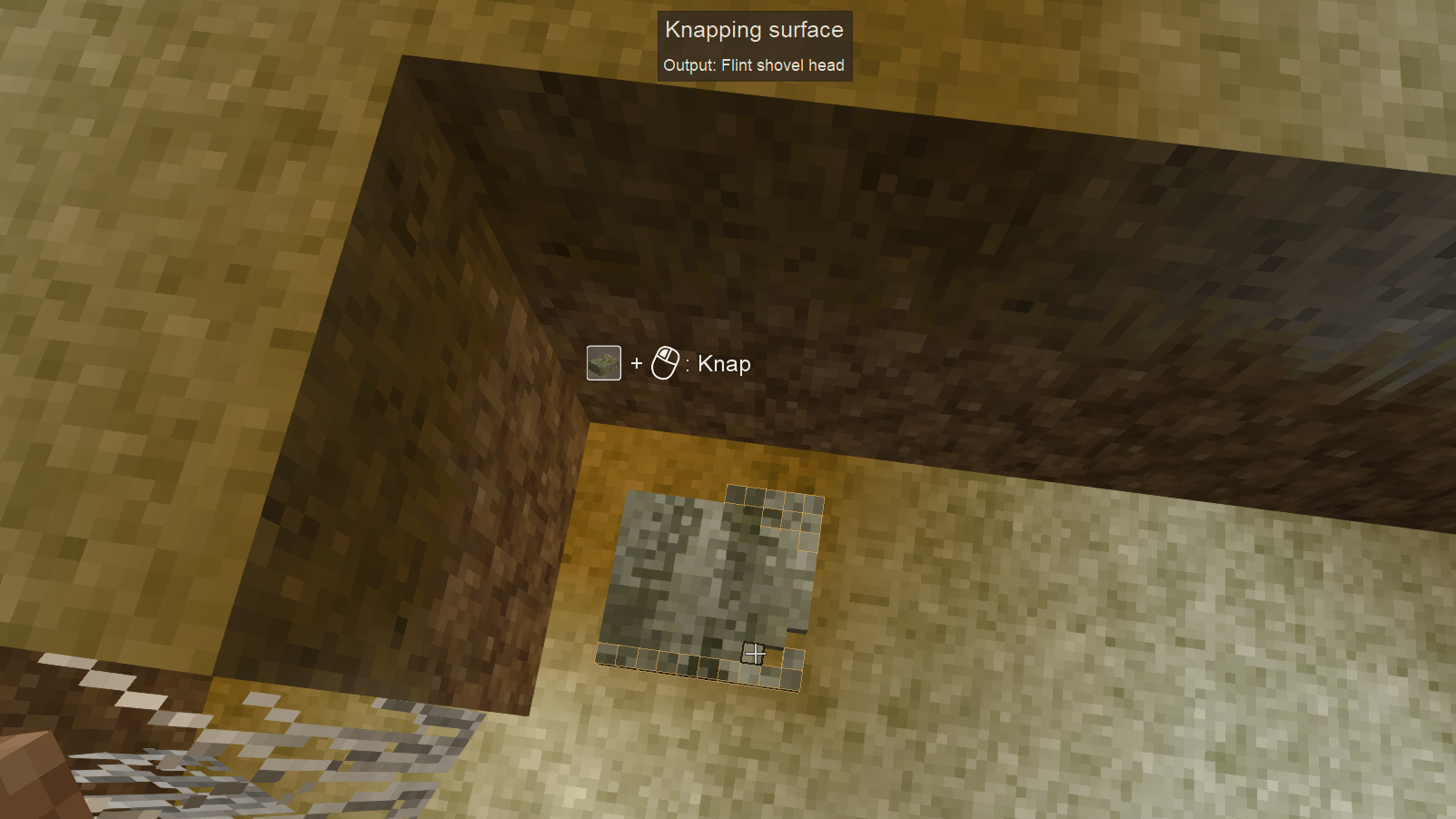
Knapping tools from stone means hitting single voxels until you have the shape of your shovel head.
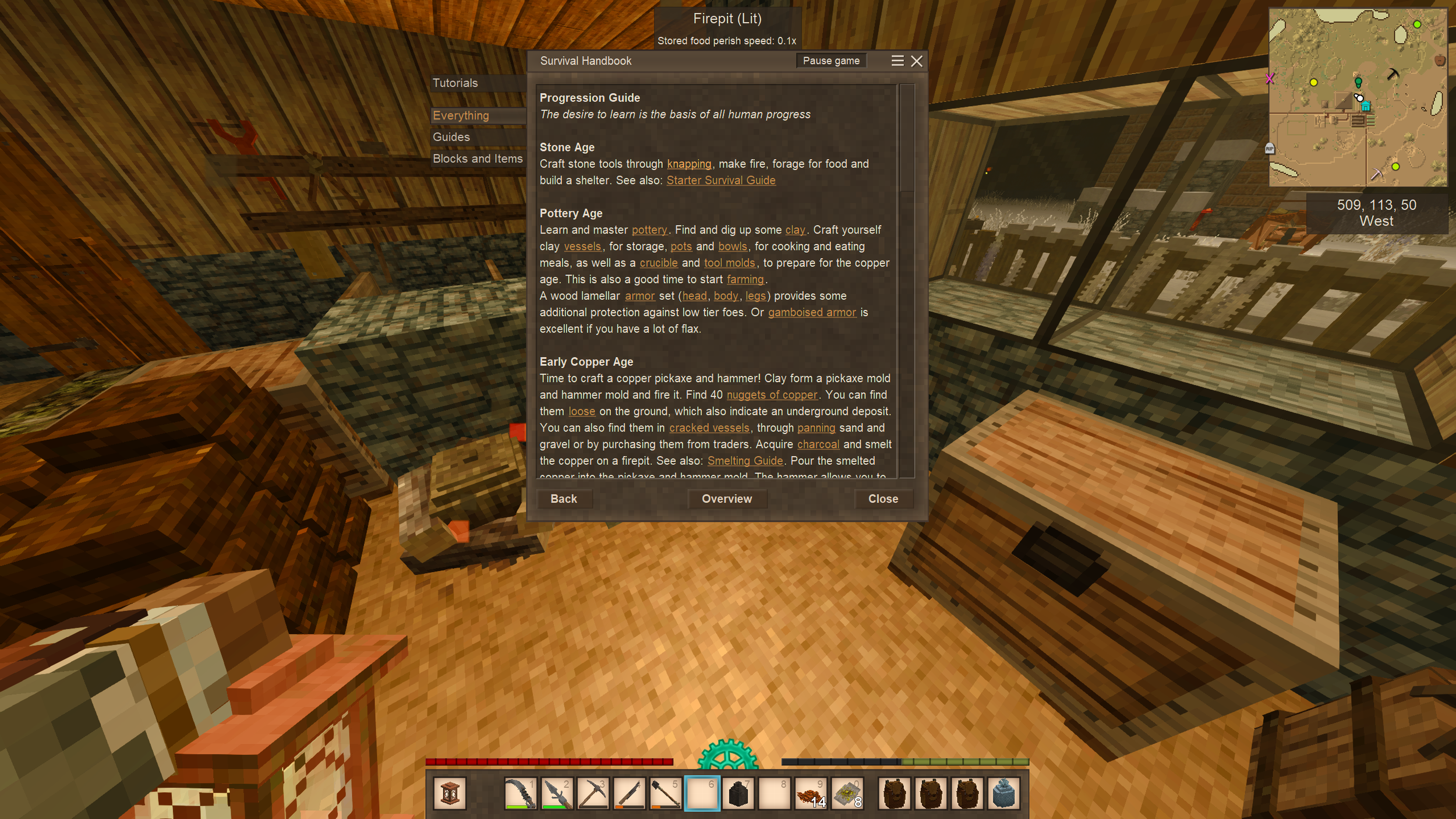
The in-game handbook provides basic guidance, as well as info an all recipes.
Vintage Story has the player start their journey with empty hands and a very basic tutorial for how to create their first few tools from knapping flint. Very quickly, the player is left to their own devices with an overwhelmingly voluminous handbook and a very rough guide for which tool stages to progress to next.
I’m gonna be honest, I had a fun first half hour in Vintage Story, and then had about two hours of panicked running around in search of food, accidentally burning down a forest, getting killed by wolves after moving way too far off from my spawn point, and general confusion as to what my next steps should be. I promptly started a new world and with the learning of setting up base very near my default spawn point – I died a lot in this game early on – set myself up for a much more promising start.
Vintage Story is very much about survival, and that core concept takes different shapes as you progress: surviving your first night, surviving your first encounter with a wolf, surviving your first temporal rift spawning right outside your home, surviving a temporal storm and the powerful enemies that come with it, surviving an ill-advised late fall excursion without warm clothing, surviving your first winter with enough food preserves, surviving your first cave exploration, and surviving the consequences of whenever you start to feel a little too confident in your equipment and get yourself into a fight with a bear too far from home.
About every aspect of the game’s difficulty can be customized on game start, so you can absolutely go for a completely peaceful experience here, but on its default settings, Vintage Story is and remains a challenge, and it’s very much the kind of challenge I greatly enjoy.
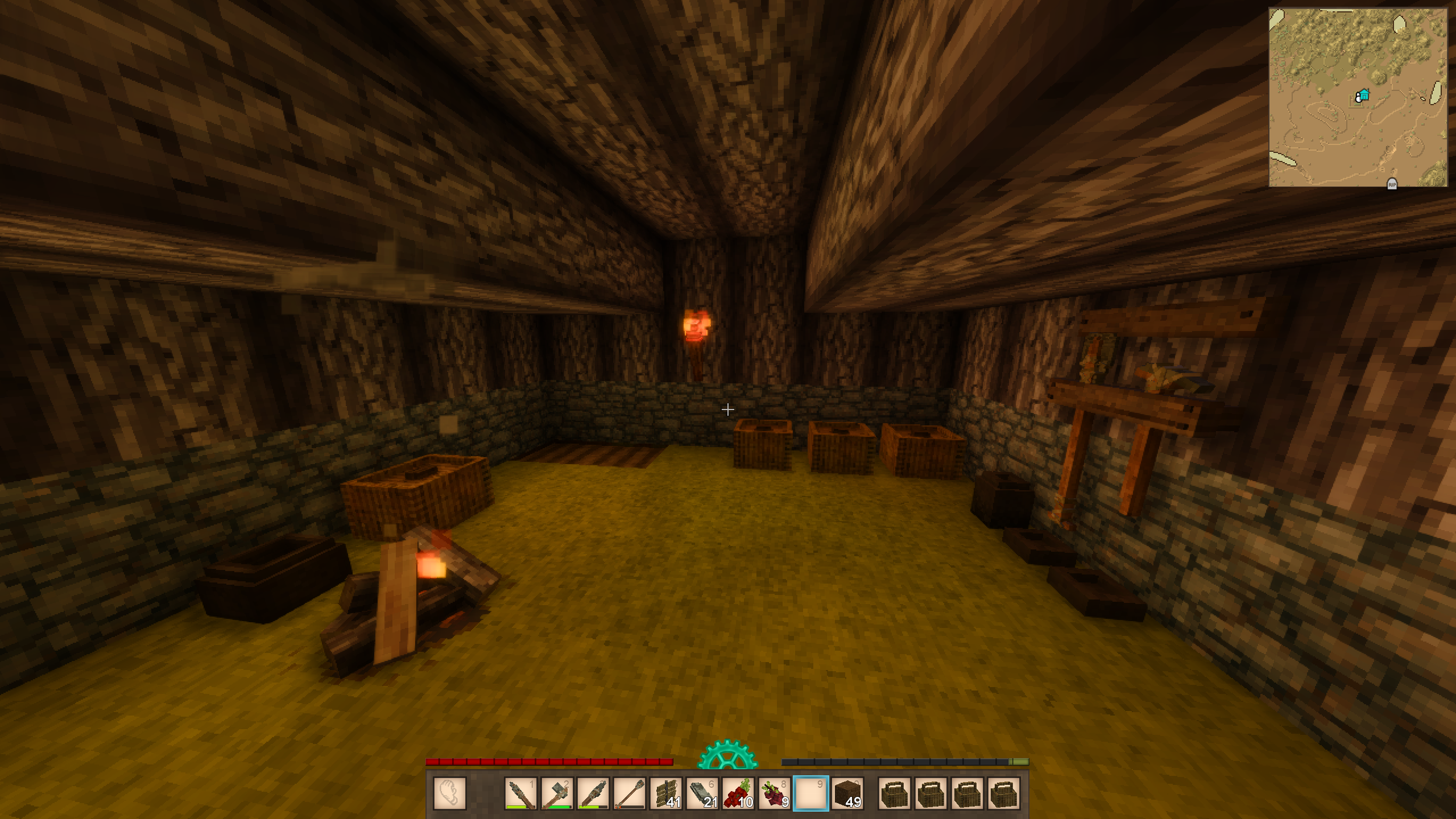
My stone age home, built of logs and cobblestone, with reed baskets for storage.
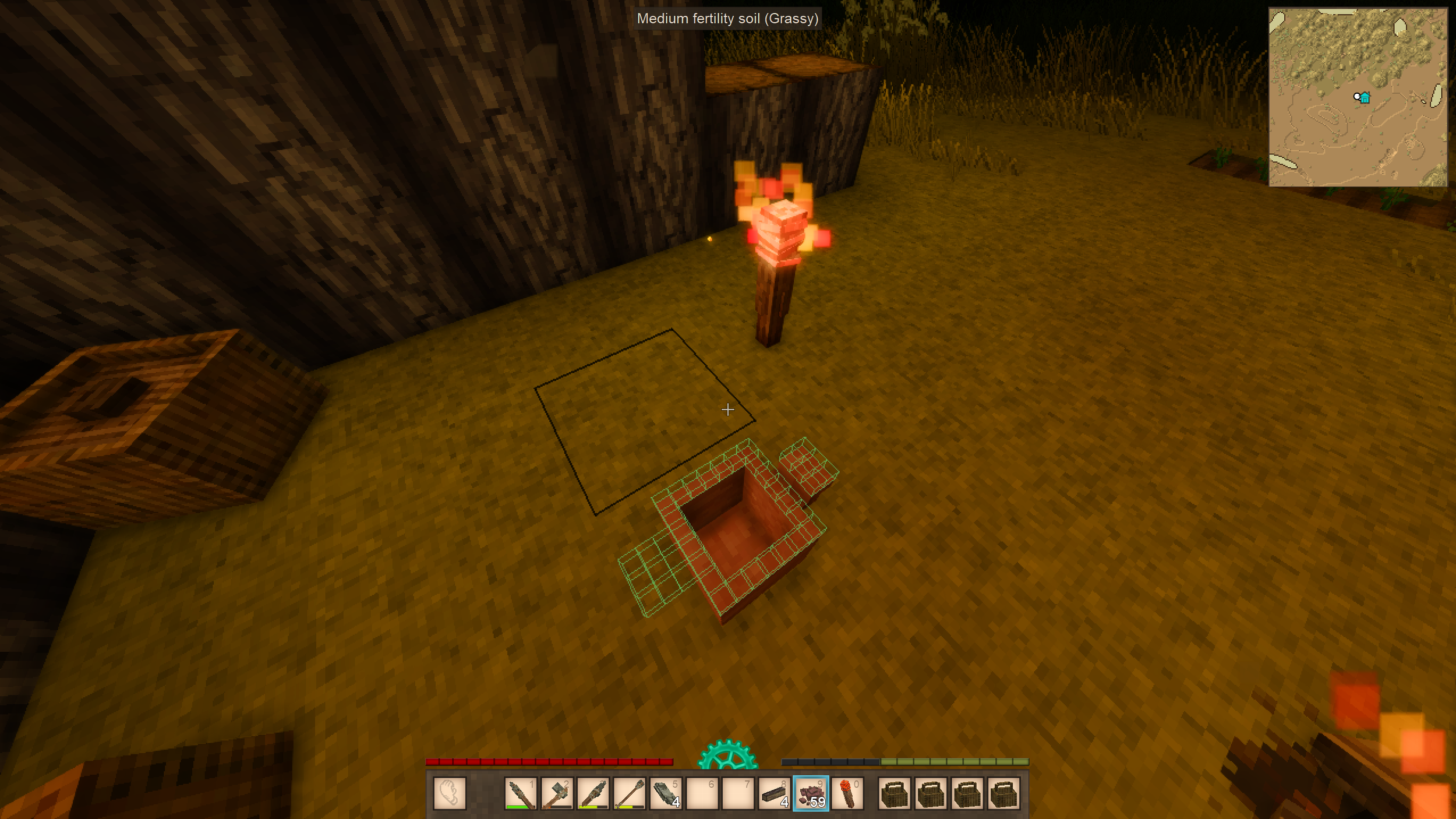
Stone knapping, clay forming and metal forging includes hitting individual voxels (in green) to shape tools and items.
Stone to Metal, Forage to Farm
Progress in Vintage Story is linked to the materials you work with: your stone tools and clay containers will eventually allow you to find and forge copper, your first metal pickaxe and prospecting pick will lead you to bronze, exploring the world to find animals to hunt and limestone to harvest will lead you to working with leather. Each of these new materials and processes can feel daunting at first – I burned down my house trying to fire my first earthenware pot, and I gather that’s not an uncommon experience – but achieving these milestones is also incredibly satisfying, and every material comes with notable benefits such as more inventory space, vastly better tools, or the ability to start gathering even more materials.
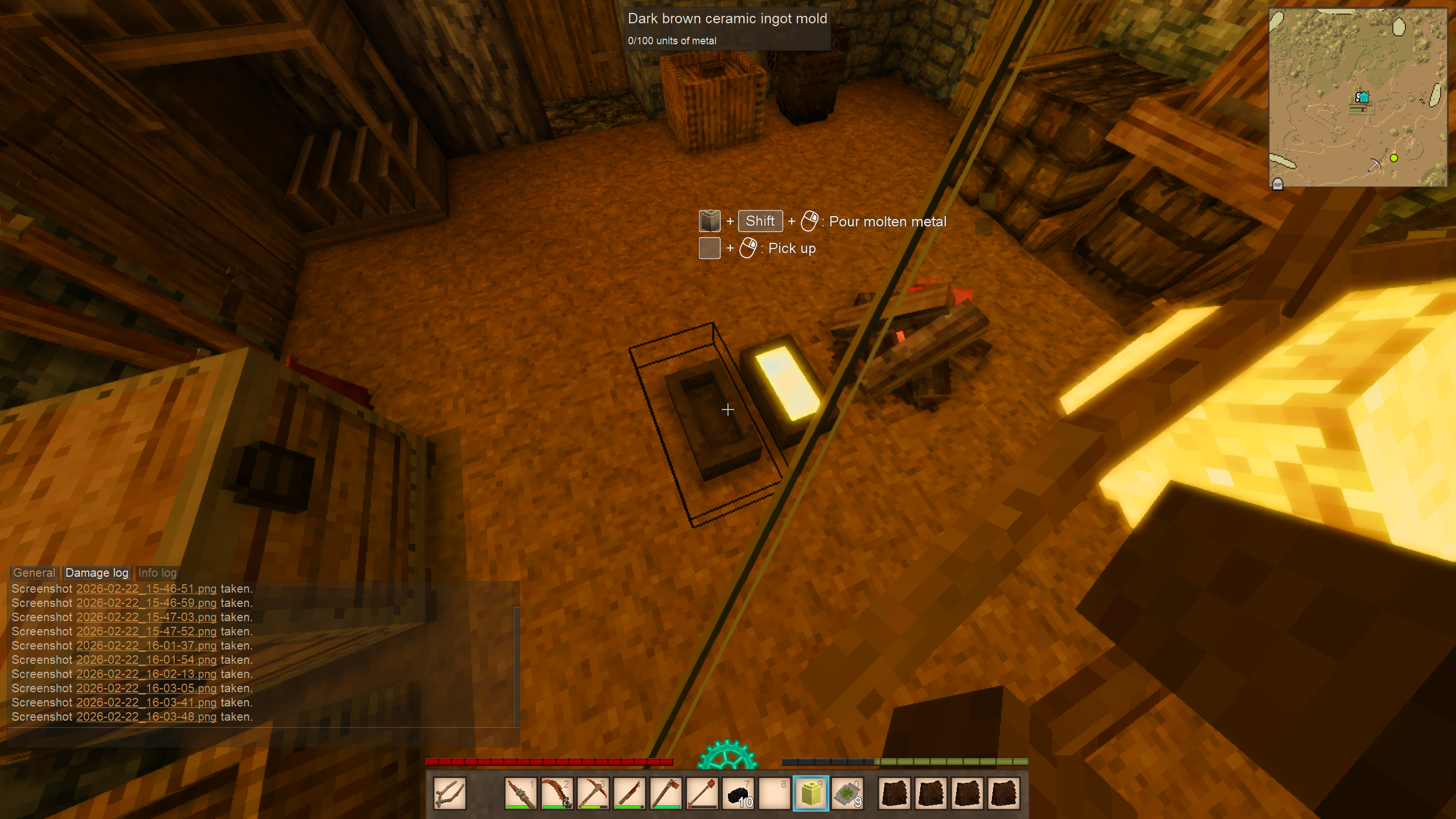
Pouring some of my first copper ingots in February…
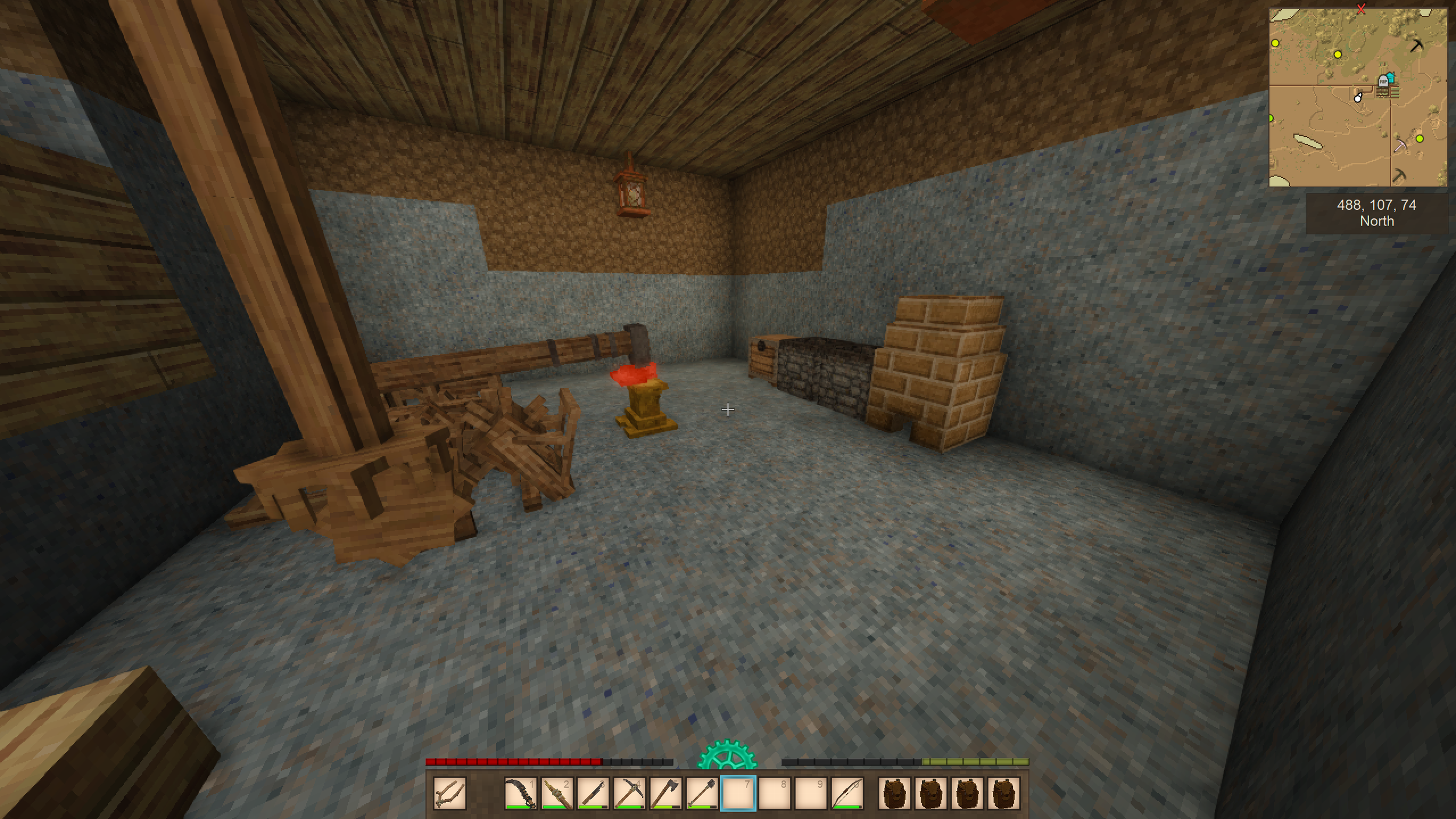
…and setting up my first mechanized helve hammer for iron processing in April.
This is the kind of game where I had a wiki page or a YouTube tutorial open on my second monitor for much of the early playtime, because although the handbook is very helpful, processing new resources is usually not intuitive.
The world of Vintage Story is procedurally generated, and finding specific materials can be a long process requiring a lot of travel. I am not exaggerating when I say that about 150 hours of my playtime were spent with the project of building a road southward so I could find more crops and different trees and escape to a warmer climate in Winter. I still have not found Salt for improved food preservation and I still have not reached a tropical biome.
To sneak in another Minecraft comparison: in that game’s survival mode, progressing to iron tools and having enough food to never worry about it again is a matter of perhaps half a day of playtime: your first two tiers of tools (wood and stone) become useless almost immediately. In Vintage Story, that progress took me something like 80 hours. At almost 300 hours, I only just progressed to the Steel Age and am getting ready to create my first batch of Chromium Tanned Leather for another inventory upgrade. More importantly, that progress stays satisfying throughout. You’re not just grinding for the same resources, you are in fact frequently learning new crafting processes, exploring the world for ore and rock, and even finding bits of lore scattered here and there.
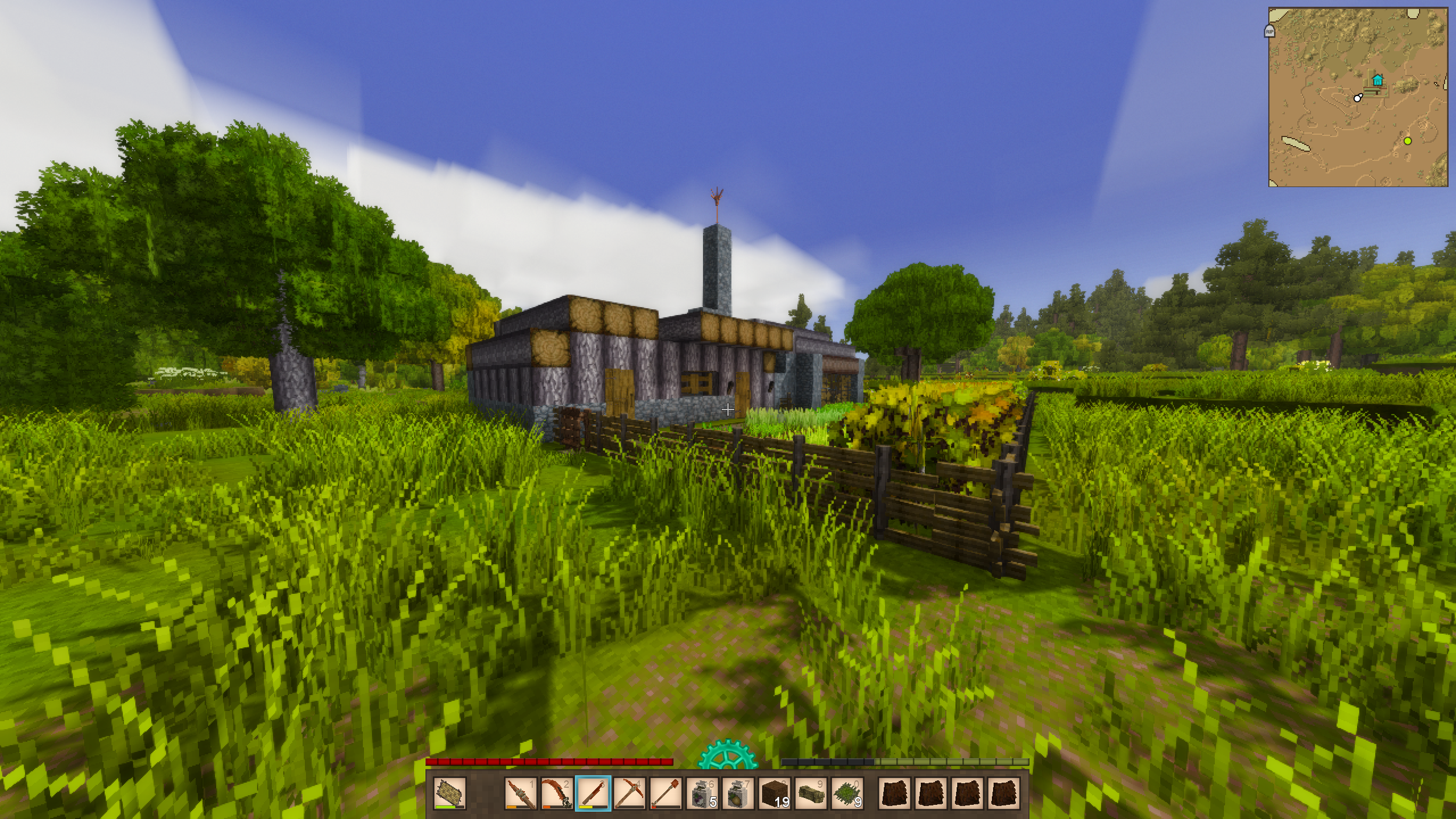
My humble early game log cabin in February…
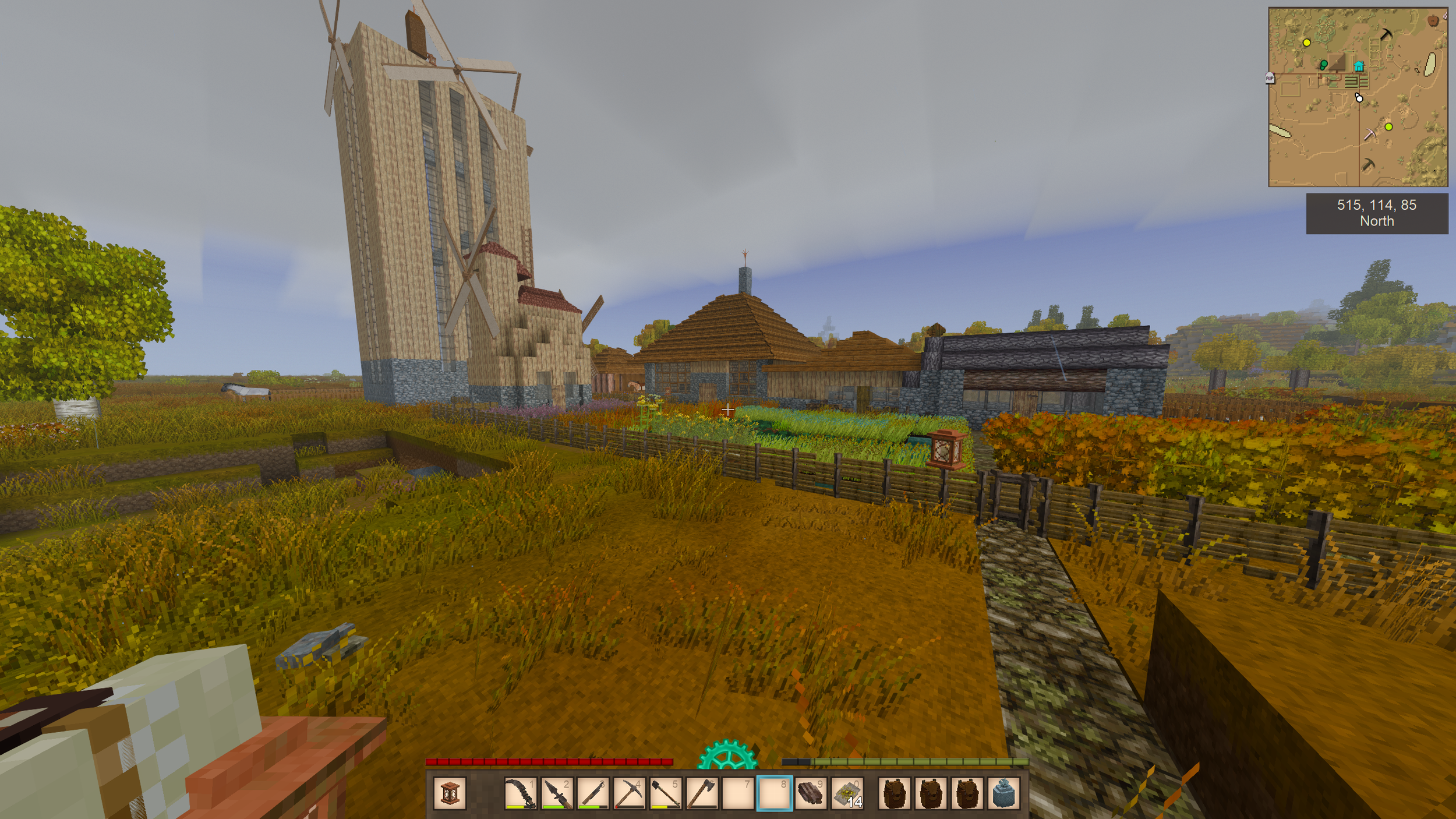
…and my several houses and windmills in July.
Mounts and Manuscripts
While horses are not yet in the official Vintage Story canon, you do eventually get a mount in the game in the shape of a tamed Elk. This is loosely tied to a story event and location called The Resonance Archives. In order to successfully clear the Archives and collect their loot, you’ll need a certain level of technological progress, and I decided to only add the horse mod to my game after having acquired my Elk in the vanilla version.
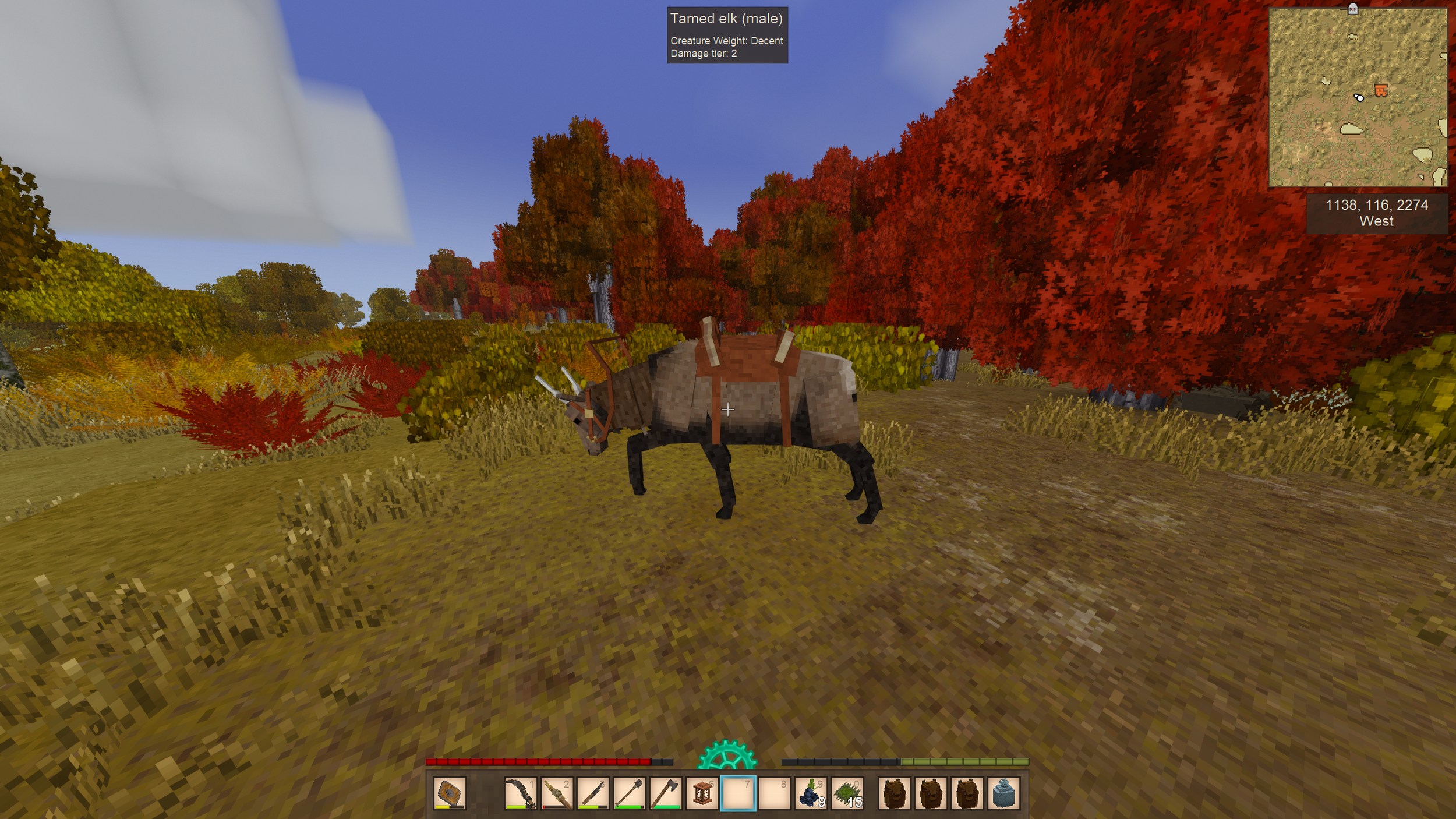
I acquired the Elk after I’d already been playing the game for about one hundred hours or so, in mid May.
I absolutely don’t think that is the one and only way to go about this. Crafting a saddle and bridle requires leather and metal nails, which means you will need at least that much technological advancement to get a mount anyway. Vintage Story is a pretty challenging and rewarding game and I don’t think I would have “spoiled” any of that satisfaction for myself had I opted to add horses sooner. If someone wants to just play around with horses in this game, there is a Creative Mode and world creation lets you disable or lessen just about every threat to your player character. That being said, waiting as long as I did absolutely made sense to me, and made the eventual addition of a mount really rewarding.
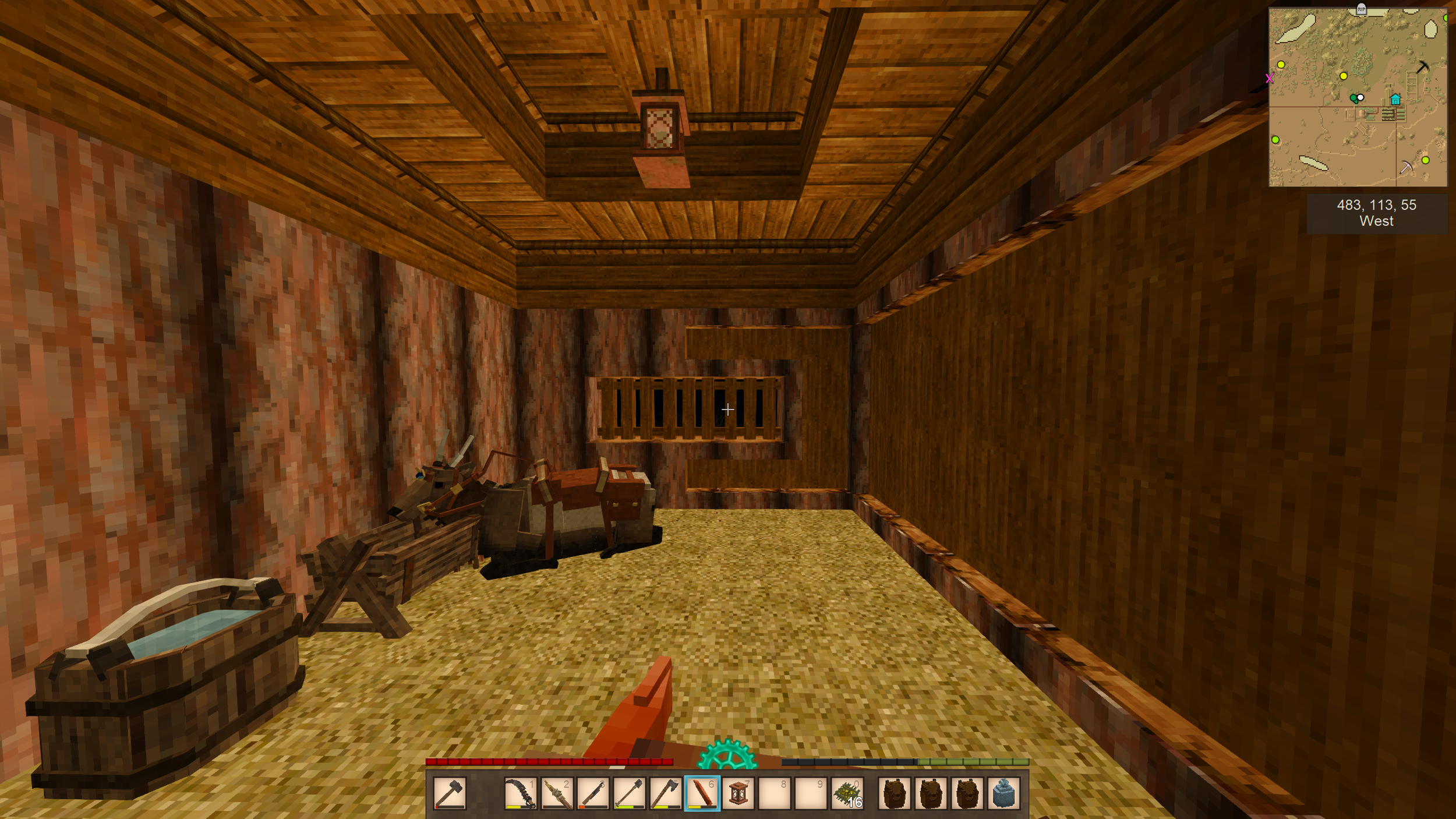
Building a nice little stable for my elk using wooden logs, planks and chiseling for details.
The Elk is a very powerful tool too: it lets you travel vastly quicker than on foot, its saddlebags add valuable inventory space, and its tack offers additional storage slots for a backup weapon, lantern, hay bed and cooking pot, which you’ll most likely need on any proper expedition anyway. The Elk also makes a horribly unsettling noise that becomes weirdly quaint after you’ve been hanging out with it for another hundred hours of playtime.
I have to admit, a ton of my time has been spent just dabbling and playing around – my southbound road is a huge ongoing project, but I’ve also rebuilt my house and expanded my cellar on several occasions, and once I got comfortable with the game I was consistently listening to YouTube videos and Podcasts on the side, which I can only do in parts of the game that are somewhat “mindless” and don’t require me to read or concentrate. So while my experience here absolutely does not need to reflect anyone else’s: at about 240h into this game, I did decide to add horses.
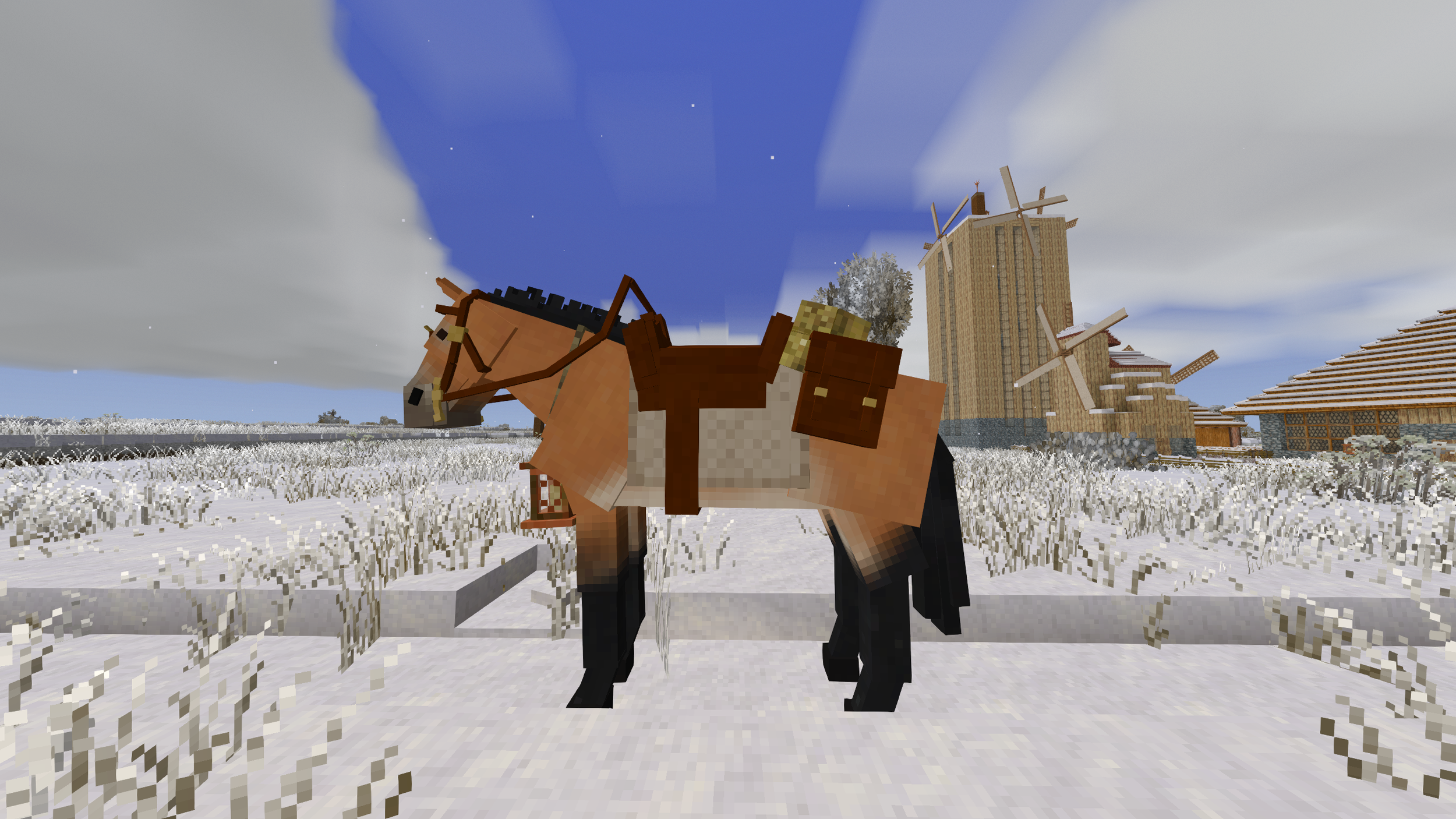
My beautiful buckskin stallion in front of my home base, in early Year 4 (ingame), early August irl.
Equus
When I talk about Horses in this review, I am talking about the Equus: Wild Horses mod. The same creators now offer a second mod called Equus: Medieval Horses, that features a different horse model and a bit of additional functionality. At time of writing, Vintage Story does not yet have non-modded horses, though they are being worked on and we’ve already seen this early teaser image from the team as well as some follow ups of a WIP model and coat patterns.
As its name implies, the Equus: Wild Horses mod adds horses as a wild animal that spawns in your game world, similar to all sorts of canonically available fauna. Horses in particular will spawn in small bands consisting of a few mares and one stallion, and like most roaming herbivores, the horses will generally evade the player and flee to keep their distance.
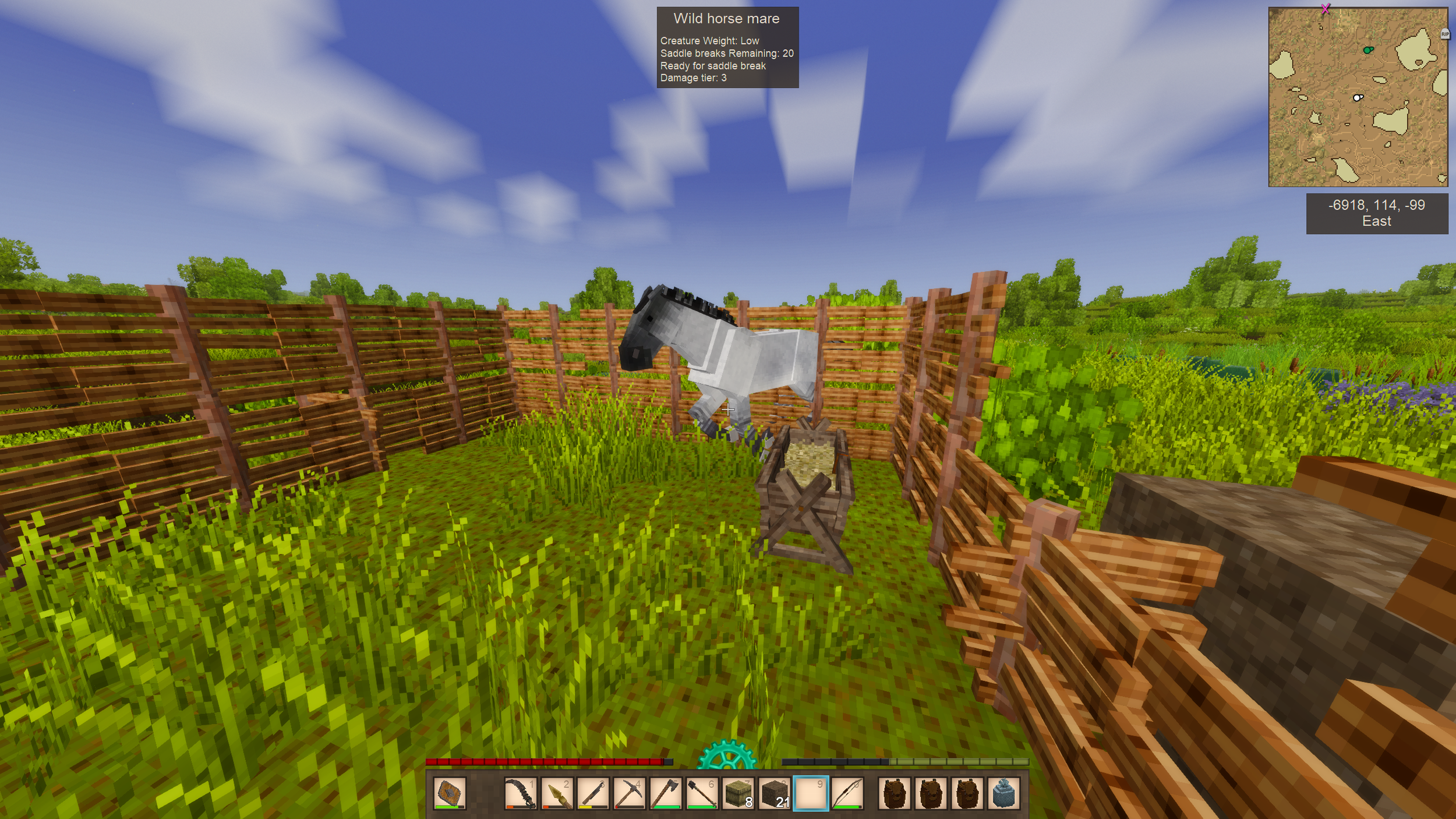
My first wild horse caught in a simple fenced corral
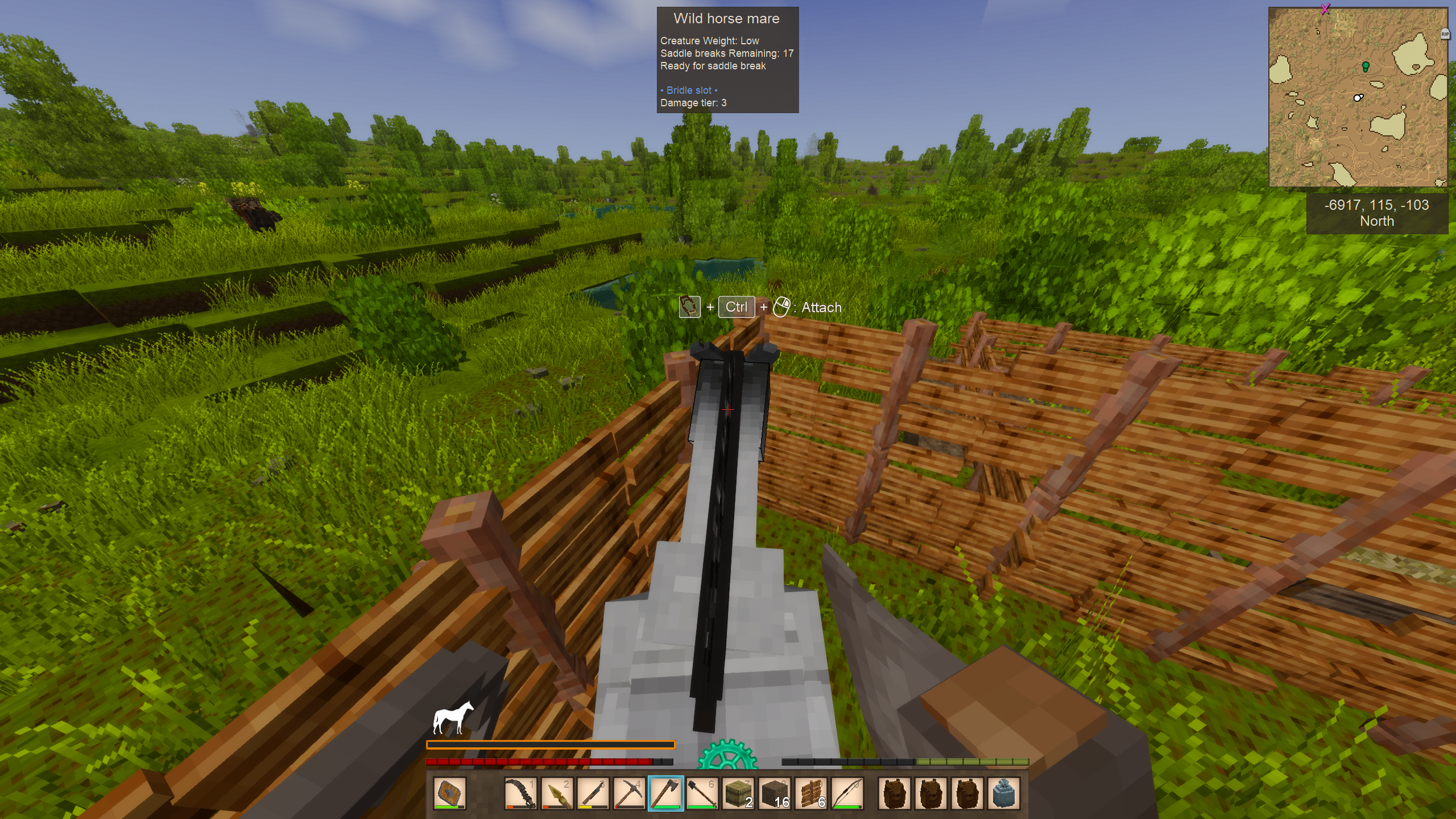
In the process of “Saddle breaking”
Catching a horse is therefore a process that requires a bit of exploration to find a herd, and then a few resources and tricks to increase your chances of initiating a taming interaction. I came to my first wild horse interaction prepared with a crafted saddle and bridle, a food trough and some hay, and a big batch of fences that would allow me to corral my steed to be.
Since most animals in Vintage Story, including horses, will flee as you approach, the best way to catch them is to dig a pit or build a fenced corral that you then chase them into, with the food trough acting as bait to get the horse moving into roughly the right direction. Once the horse is contained, taming it is a matter of repeatedly getting onto its back until it stops throwing you off. Once that’s done, you can put a saddle and bridle into the available equipment slots in order to be able to steer the horse while mounted.
This process is the same as the unmodded game already offers with Elk, so I understand that it was kept simple, but it’s unfortunately also a bit boring, in addition to representing a very old school and ethically rather questionable form of horsemanship.
A Mod by Horse Lovers
Taming process aside, it’s quite apparent that the Equus mod was made by people who have quite a bit of horse knowledge, which I absolutely love to see: horses move walk, trot, canter or gallop, with the player – admittedly depending on which style of bridle they use – getting precise control over the gait they move at. All gait animations come with correct footfalls and fitting sound effects, and the mod features a stamina bar that drains while galloping, stays in place at a canter, and recharges while walking, trotting or standing. Since the vanilla Elk does not come with a stamina system (or more than two gaits), this means that riding a horse is somewhat more involved and requires a little bit more attention from the player, but I found the controls intuitive and the stamina quite satisfying.
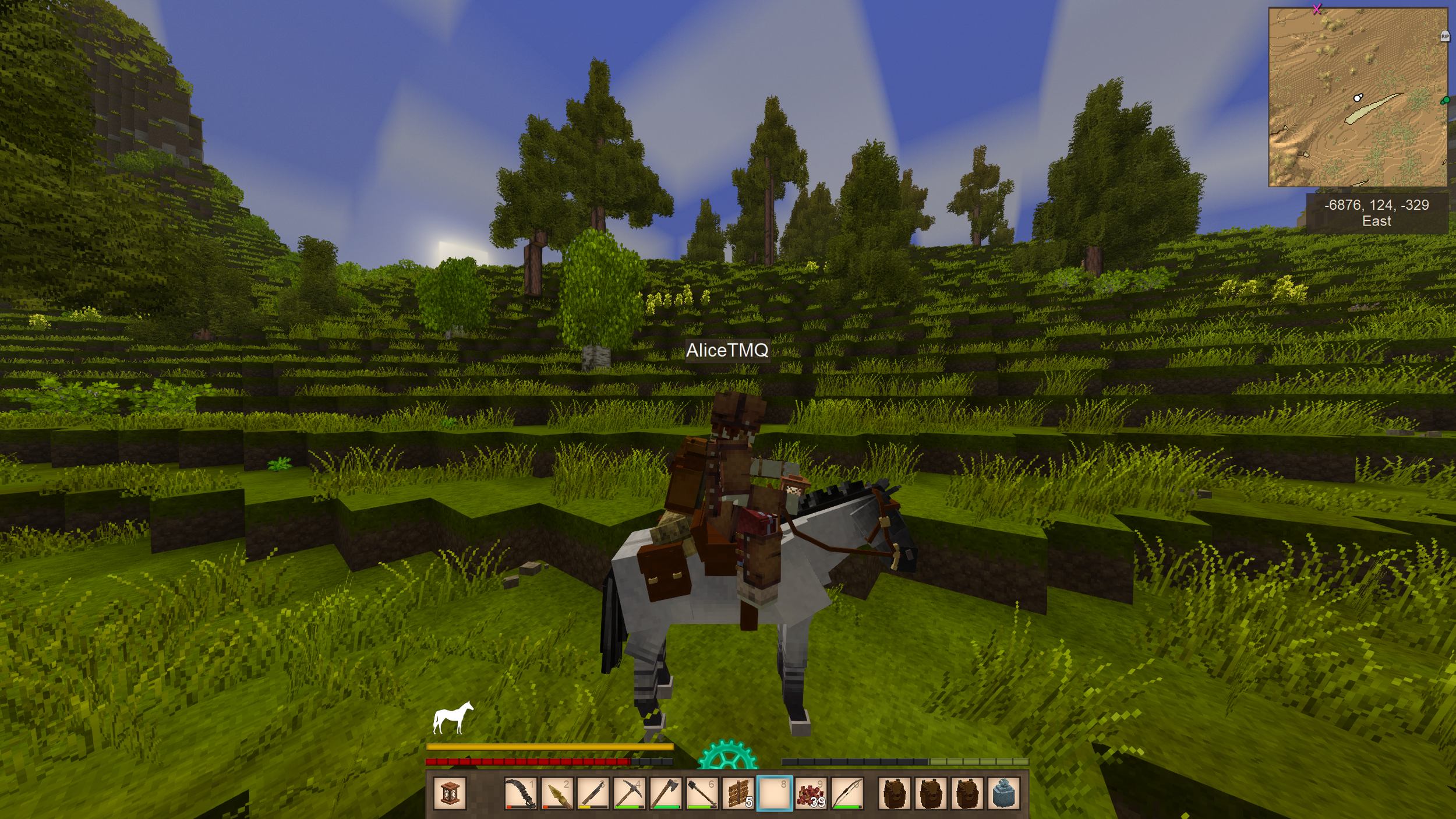
I got really lucky with the color, this is one of the first horses I found and she is gorgeous.
The horse model itself is inspired by Eurasian wild horses and as such features a large head with a slightly convex nose and a short upright mane. Sometimes when I call out bad stylization I get comments from people who see it as moot to look for realism in a game that’s heavily stylized, but I want to praise the Equus horses for not just capturing that particular body type but also getting the equine essence right in spite of the blocky art style. “Does this game horse look horsie enough” is a point of critique that I sometimes have a hard time properly explaining, and to me, the Equus horses come down on a clear “Yes”: these are some horsie looking horses and they fit their game’s art style well.
Another big highlight about the Equus horses are their coat colors: On the mod’s discussion page, Mod creator Shintharo12 explains that they “use a genetics system based on real horse genetics (albeit a bit simplified). We have the 3 'base' colours: bay, chestnut and black (which are the agouti and extension genes working together.” Pangaré, Cream and Dun dilutions modify those base colors, while roan, leopard and tobiano add white patterns on top, adding up to about a hundred different genetic combinations.
In my play experience, I feel like I’ve mostly seen a lot of bay dun leopards so far, but the horses I’ve ended up actually catching were a gorgeous grulla mare and a buckskin (or bay dun?) stallion. Like many other animals in Vintage Story, captured horses can also breed! With a gestation time of about 85 in-game days, it will be a while yet until I see a foal though. For context, an in-game year is 108 days, and my whole 280h playthrough so far has brought me about to the end of Year 3, so waiting for a horse to be born is a quite significant investment of playtime.
Finding, catching and breeding horses in more color variation is something I could probably invest another fifty to a hundred hours into, but as mentioned in my opening paragraph, I absolutely don’t claim to have seen everything the game offers, because otherwise writing this article would probably consume another year of my life.
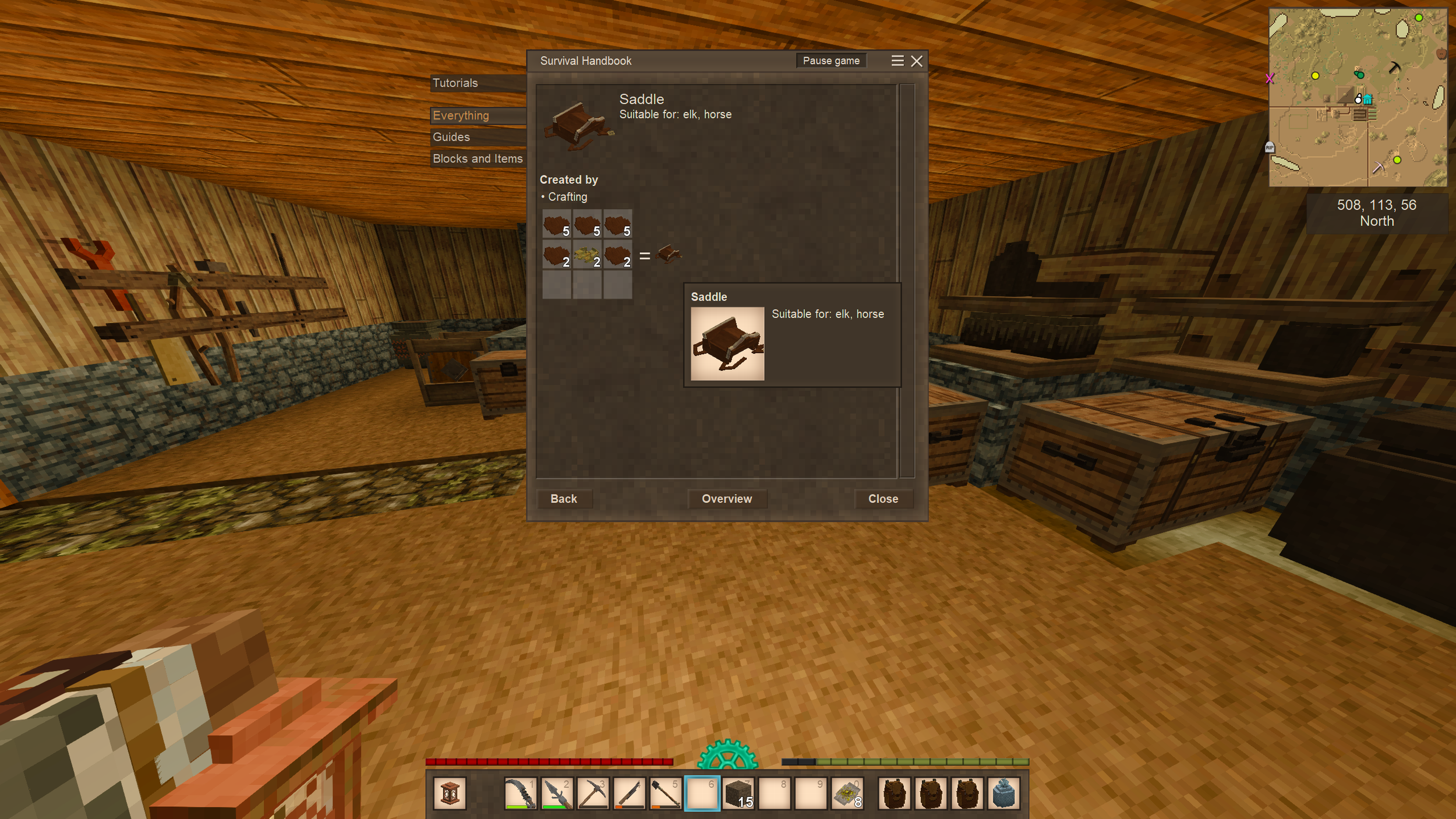
Like most things in Vintage Story, saddle and bridle need to be crafted before you can use them.
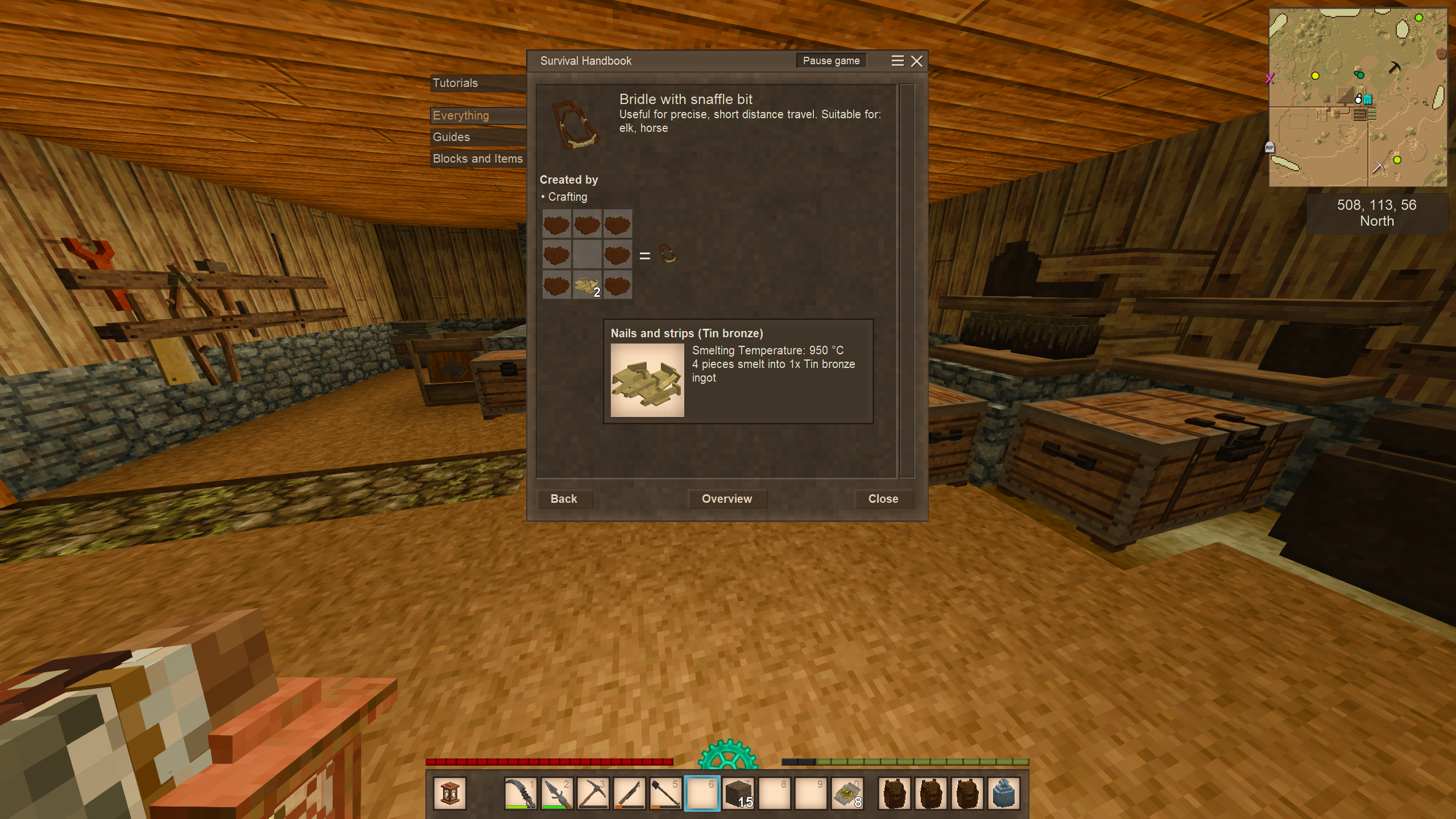
That there is an option for a curb bit and a snaffle bit and they control slightly differently is a very neat detail straight from the vanilla game!
So can Vintage Story be a Horse Game?
I mean, anything can be a horse game if you really set your mind to it. In addition to the two already mentioned Equus mods, the same creators offer additional mods for tack, unicorns, and even flying Pegasi inspired by the wonderful Sky Cowboys universe. (none of which I have tried myself yet)
I’d imagine it is absolutely possible to play this game with much more of a focus on horses than what I’ve been doing: if you turn off aggressive mobs and temporal storms, you can probably have a very chill time just progressing through the crafting experiences and collecting horses of various colors.
While there are not a ton of items dedicated to horse care or stable building, I have to mention the concept of chiseling: every block in the game can be subdivided into up to 4096 individual voxels to model just about anything you like. I’ve barely scratched the surface of how creative you could get with this functionality, and I’m sure more imaginative players could build a rather impressive barn this way.
Personally, I loved playing Vintage Story for survival and crafting reasons, but I think the horse community could go to town on this quite hard, perhaps even moreso than with Minecraft. And just because I haven’t mentioned it yet: yes, this game also supports multiplayer.
Verdict
I don’t really want to “review” a game that – as of writing – only fits this website thanks to mods, and I don’t want to “review” mods because mods are free fan projects that don’t deserve the same kind of scrutiny as purchasable products do. Also, the time I’ve now spent with this game is completely disproportional to how much I actually have to say about it on the horse game website, so it feels a bit weird to try and summarize my experience into a coherent article.
But that being said: I love Vintage Story, I’ve been utterly absorbed by it and I might spend quite a bit more time with it yet. I definitely recommend it if you’re looking for a deep and challenging survival crafting game, with or without horses. My experience with the Equus: Wild Horses mod has also been very positive, and frankly I’d be stoked to see what kinds of additional horse shenanigans some of you come up with in this game.
Perhaps this write-up intrigues you enough to go dive into the horse mods yourself, or perhaps you’ll want to wait for the vanilla game to add equine mounts – I’ll make sure to keep an eye on that, and report back when horses are actually live in the next big update. For now, I’ll attach one of the first teaser images the team has already shared below.
And now excuse me, I’ll get back to building an endless road, trying to find translocators, and perhaps even completing the second story event sometime.
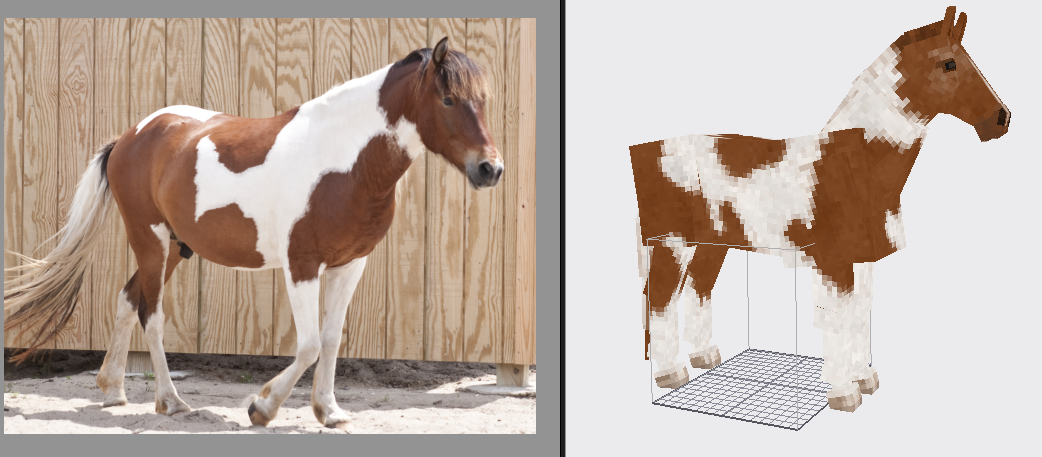
This is an image from the Vintage Story team, showing the work-in-progress horses that are being added to the base game
Vintage Story is out in Early Access on PC and available for purchase here.
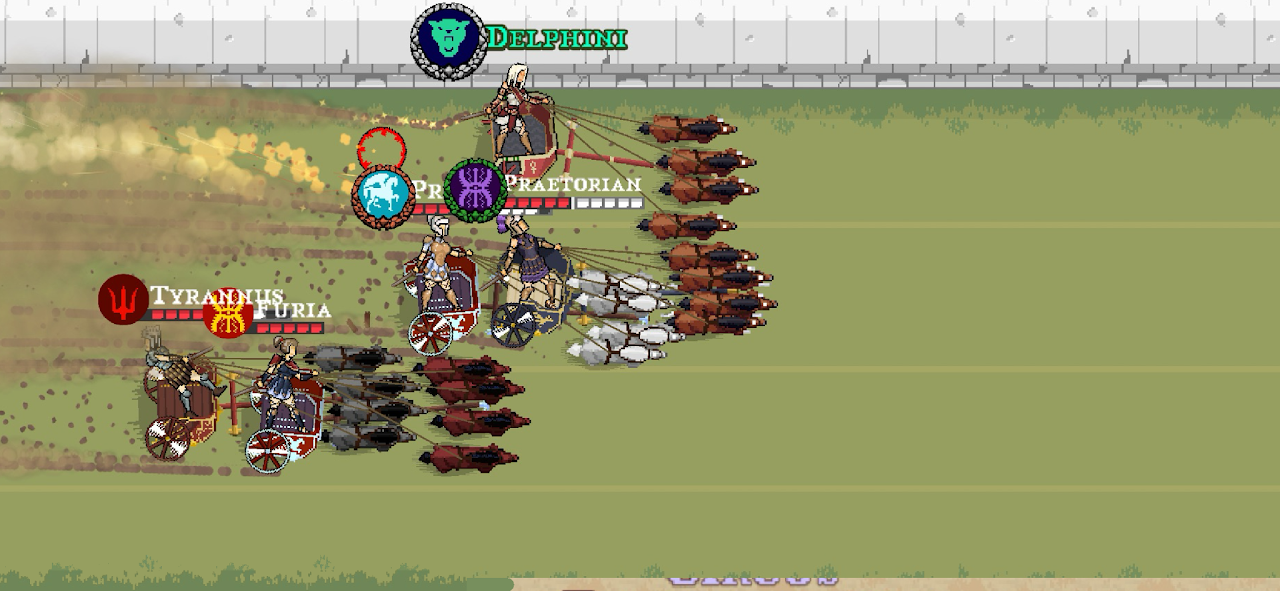
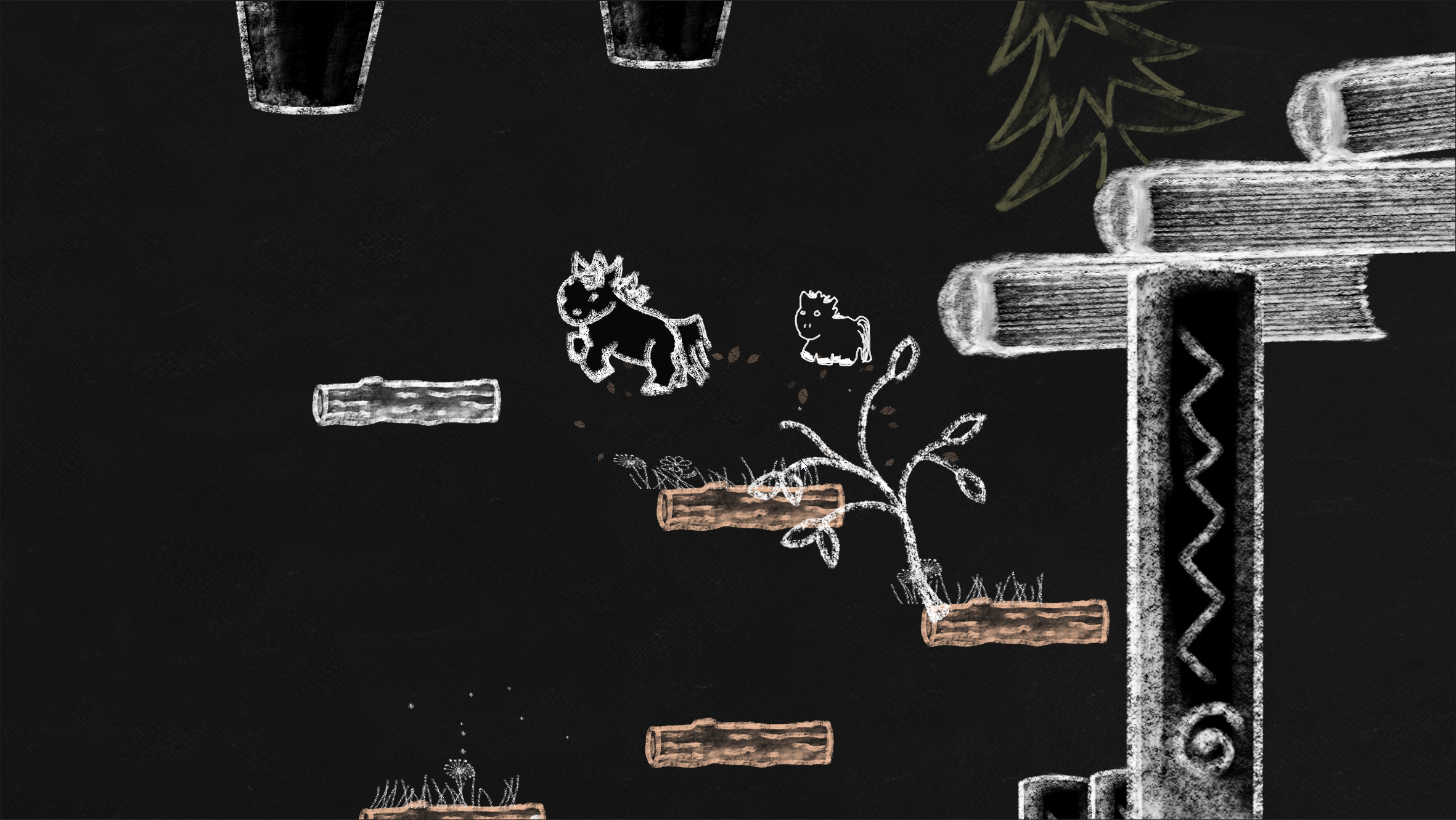


PS: A list of ideas for things I think could be cool to see in Vintage Story when horses are added:
I’m adding these just for fun. Consider if you will:
Genetics system & breeding?
Horses having different stats, maybe health, speed or stamina (and being able to breed for improvements)?
Feeding horses fruit & getting temporary buffs?
Horse tail hair (that it sheds sometimes? or that you can find tangled in bushes?) as crafting material?
Horse sheds fur in spring, comes loose if you apply a (craftable?) brush?
Horse fur used as crafting materials for e.g. mattresses or blankets…?
Horse drops manure that can be used as fertilizer?
Craftable straw bedding that wears down over time?
Pitchfork item to collect manure?
Vintage Story is a block-based survival game that one might summarize as “Minecraft with extra steps”. I’m obsessed with it and have played for 300 hours. There are horse mods already, and official horses are coming in the near future.