
Horse Game Marketing 101 – The Do's and Don'ts of Sharing Your Passion Projects with People
Indie horse game developers who make games out of a passion for the subject matter are becoming more common these days. I absolutely love to see it. At the same time, many of these up and coming horse game devs are completely new to game development and game publishing, and therefore make basic mistakes in those areas. This article is aimed at those passionate newcomers: Here’s some guidelines, basic do’s and don’ts and things to keep in mind for anyone planning to make, announce and distribute a horse game of their own.
My qualifications: I’ve been working full time in video game development and marketing for over 10 years, details here. More recently and most relevantly, I’ve been coordinating and managing all the marketing and publishing for Horses of Hoofprint Bay, and I’ve been consulting and supporting the marketing team of The Legend of Khiimori.
Why It Matters
We’re very used to professional game developers doing a bad job of addressing the horse game audience, both in terms of product (what’s actually in the game) and presentation (how they show us the game). On the flip side, passionate indies are often very aware of what matters to the horse game audience specifically – showing beautiful horse models, animations, accurate tack and more – but lose sight of what a competent, trustworthy game marketing campaign looks like in general.
To really be set up for success though, I’d argue you need both. I think the announcement and Demo Launch of Horses of Hoofprint Bay – full release, sales and reviews pending, of course – have been a good example of what that can look like, and I want to show fellow horse game devs and marketers the thoughts and processes behind that.
One more caveat: These are broad strokes and guidelines. You’ll always find exceptions, games that did the things I say you shouldn’t do and still found success. Ignore them. You don’t want to bet on your game being the one in a million that finds success despite bad marketing choices, you want to get the basics right and follow best practices. Getting visibility for indie games is hard enough, don’t make it harder for yourself.
This article will be most useful for games that come to PC on Steam, though some of the lessons can absolutely also be applied to mobile, console or browser games.

I don’t have a budget for custom artwork so you’re getting some silly little illustrations with royalty free vector art here.
Game Announcement
The Announcement or Game Reveal is your first marketing beat: it’s when you officially tell the world “this game is coming”, and show them how it will look. It makes sense to properly coordinate this and shape it into a proper marketing beat rather than just let the info trickle out over time, in order to increase visibility and turn your announcement into an actual piece of news that can reach as many people as possible.
A good game announcement for an indie game in the current landscape consists of the following materials:
Title
5-8 Screenshots showing a variety of features or environments
Teaser/Trailer with gameplay footage (30-60 seconds)
Short Description (1-3 sentences, elevator pitch)
Longer Description/Feature List (1 short paragraph each for 3-6 core features)
Rough Release Window (e.g. Year, no specifics needed)
Store Page (probably Steam)
Press Kit (some examples here)
Website or Linktree
Finding the best time for an announcement is a balance between two main factors: You want to announce the game sooner rather than later, so you have plenty of time to market, gain visibility and gather wishlist, but not so soon that screenshots and gameplay footage don’t look appealing yet. For a debut project of a reasonable scope – and remember that a reasonable scope is probably smaller than you think – I’d say planning for roughly a year between announcement and release is a decent goal.
What does that mean for the actual game’s development? That once you have a playable prototype (and yes, you should always start with a playable prototype, not just pretty horse animations!), your next goal should be to create something like a vertical slice for the announcement: polish a representative part of the game far enough to be able to create a trailer and a handful of screenshots, even if the rest of the game still uses grey boxes and placeholders. You can then continue to add content and polish while the game can already gather wishlists.
If you’re not yet ready for an official announcement, that doesn’t necessarily mean you can’t post anything yet: Teasing and previewing information on social media can absolutely work and be an effective way to build a bit of excitement and a following. It comes with one big risk though: If you manage to hit the jackpot of having a post go viral, you absolutely want to offer an option for those people to follow the game. Social media followers can serve that role, but since you will probably want to convert those into wishlists (and later: game sales) eventually, it’s better to have “wishlist now” available as the main call to action as soon as possible. I’d recommend a newsletter/mailing list signup as a possible in-between stage, since email signups are generally more a valuable, long-lasting and reliable way to reach fans.
In the case of Horses of Hoopfrint Bay, we made a handful of teaser posts like this and this, to gather a first few hundred newsletter subscribers and followers prior to our proper Announcement and Steam Page Reveal. The team had already been posting occasional prototype footage on the TMQ Discord for about a year at that point, but due to Discord’s rather insular nature, only a handful of active community members were really aware of the project.
Also note: if you’re announcing a horse game, I’m always happy to dedicate a TMQ article to the cause! Just send me your press kit and info in time!
Further reading: “When should I post my Steam Page” on HTMAG
KEY TAKEAWAY: Launch a well-made Steam page as soon as your game looks good enough to share gameplay clips and screenshots.

Community vs. Followers
Among new horse game devs, I’ve been seeing a tendency to open a Discord server as their first marketing action. I think that’s a bad idea most of the time, for several reasons:
Discord is explicitly a two-way street: you don’t just talk to players, players also talk to you. It only makes sense once you actively need feedback from players, e.g. when a playtest or demo is available. If you’re still in the planning stage, you need feedback from fellow game developers at most, not potential fans.
Community Management is work. This is constantly underestimated, but moderating a community well can eat up hours of your development time, especially if you don’t have a dedicated community manager, and especially if people talk about things that aren’t strictly related to your game. Delay that until you actually need it.
Discord cannot grow your visibility in a meaningful way. Discord is only useful for reaching people that you’ve already reached. If you want to increase your game’s reach, you should prioritize posting on platforms that are better for discovery, like Reddit, Tiktok and Instagram Reels.
Discord is not search-indexed. If the only way to find information about your game is to join a Discord server, many people with a mild interest will just not bother. Make that information available on an actual website, or publicly accessible social media profile or store page at least.
Don’t get me wrong, Discord Servers absolutely have their place in marketing and community management today, but they should not be your first – let alone only – avenue of updating people about your game.
KEY TAKEAWAY: Discord shouldn’t be your first or only marketing channel. Only start a Discord server once you actually need feedback.
Social Media: Platforms and Content
With your announcement, you should also start public social media accounts on at least one, ideally several platforms. I’m of the opinion that you should pick the platform that resonates with you, the one that it’s easiest for you to create content for. You don’t need to be on every platform, it’s better to have no profile on a specific site than to have an inactive one. Pick 1-2 platforms that you’re motivated to use, and stick to those.
If you’re not sure what to post where, make sure to research your competitors and their content on each platform. Follow other horse games, see what they put out, what works for them and what gets views. Everyone on social media copies post ideas from each other, so don’t bother trying to always be original. Post content that makes sense for each platform, i.e. short form vertical video on TikTok and Instagram reels, Screenshots and News and horizontal video clips on Bluesky or other Twitter-likes. Cross-post your content on multiple platforms where it makes sense, and keep an eye on trends to jump onto.
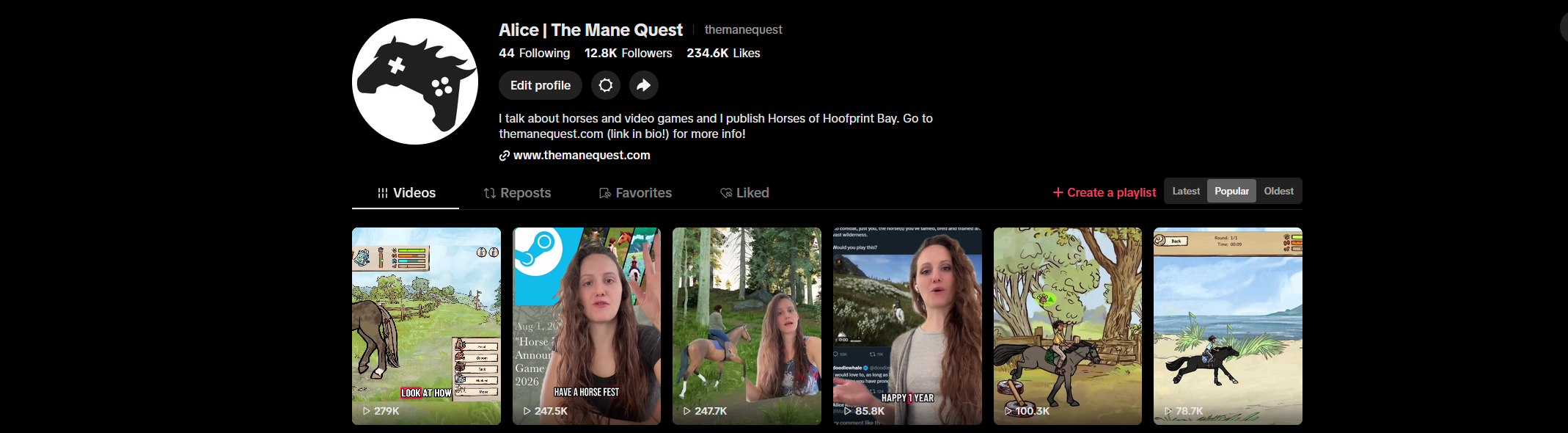
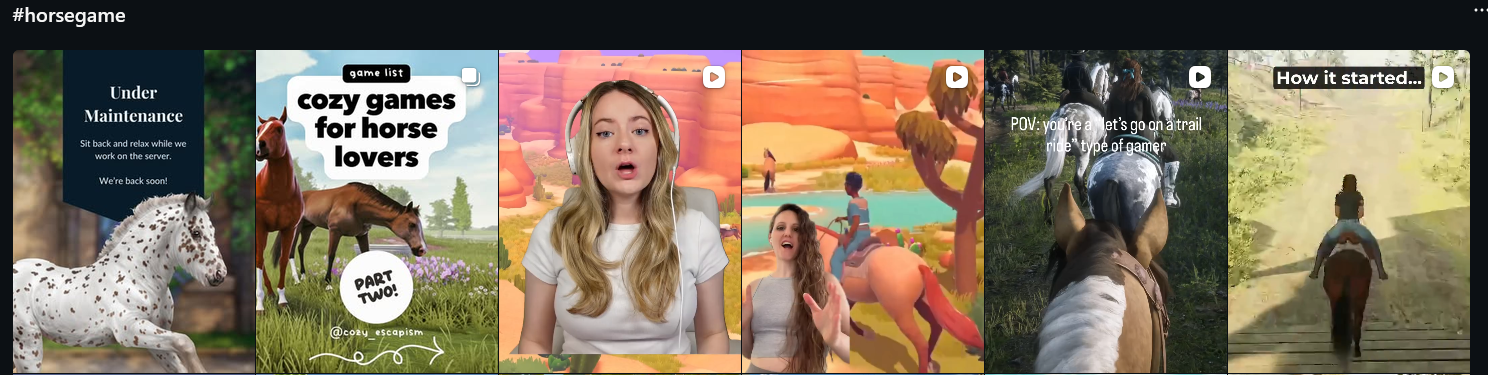
My personal favorite social media platform at the moment is Tiktok, because that’s where I’m having the most success in reaching new people, and I don’t mind talking into a camera. Check out my videos here if you’re interested, and sort by ‘popular’ to see what has really worked. Your mileage may vary though, so experiment and see what works for you!
If the thought of “posting to social media” fills you with dread in general, then at the very least post an occasional dev log on Steam News, so people have some idea of how your game is progressing. Again, it’s fine to pick the platforms that cost you the least, but post somewhere public.
KEY TAKEAWAY: Pick the platforms and content styles that work best for you, but post somewhere.
Gathering Momentum
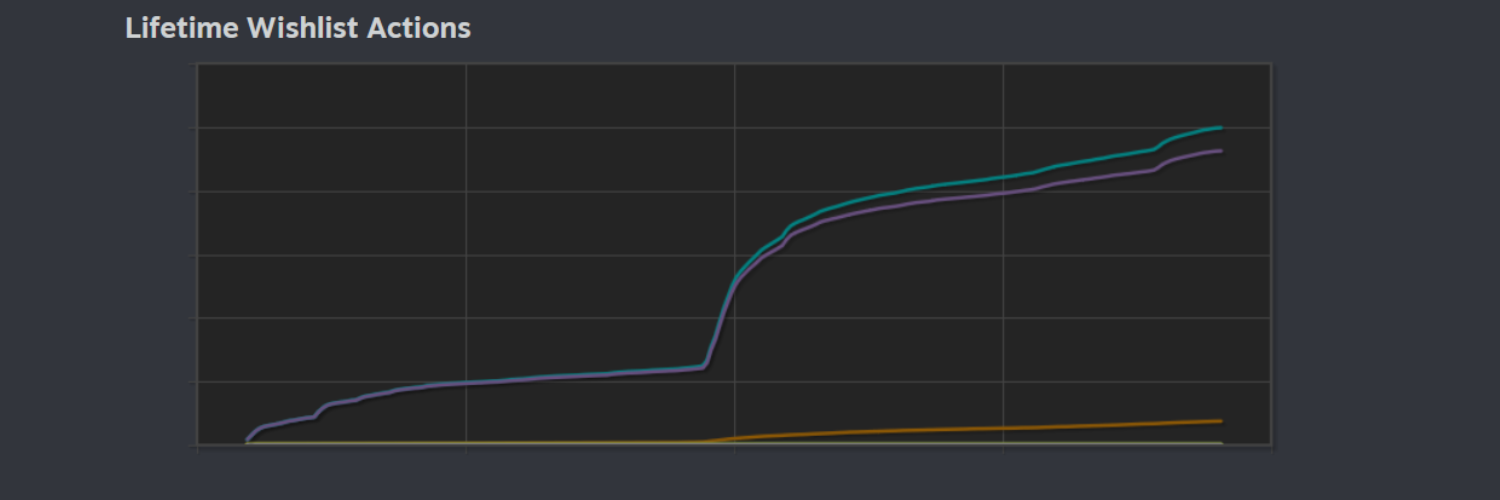
Once your game has been announced, it’s time to slowly gather momentum, visibility and wishlists while you keep developing. Post gameplay clips, new models or animations or WIP footage to your chosen social media platforms, and make use of the TMQ Communities on Discord, Facebook and Reddit to amplify your reach. Note: you don’t need your own Facebook page or subreddit to post “here’s my game, wishlist it now” on those platforms!
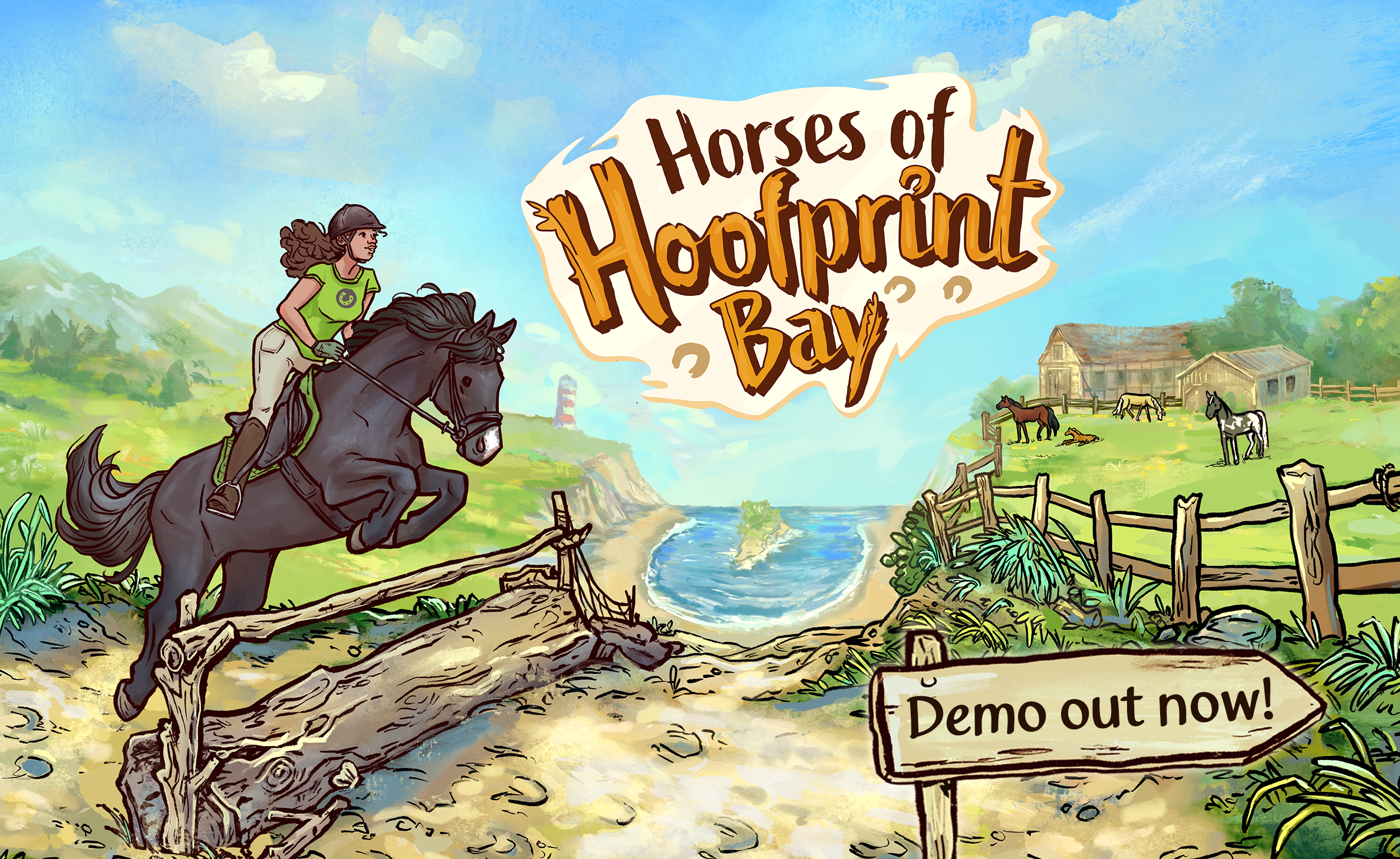
Another key component of indie game visibility nowadays are showcases and Steam events: Keep an eye out for fitting opportunities through the HTMAG Festival Calendar, the Metaroot Opportunity Bot and the official Steam Event Documentation. Wherever possible, align your marketing beats with events for additional visibility. For Horses of Hoofprint Bay, that meant announcing our game just in time for Steam Animal Fest – though our visibility there was incredibly limited – and releasing a demo just before Steam Horse Fest – which was a huge success.
As soon as your game is announced, “Add to wishlist!” should be your main Call-to-Action at the end of every post (with a link in the post, or a link in your profile bio at least), until the moment that you have a playtest or demo that you want to funnel people towards instead.
Note that Wishlists are a crucial metric to gauge player interest, but you should never try to ‘cheat’ getting wishlists for their own sake: don’t pay for wishlists directly, don’t ask other developers to wishlist ‘quid pro quo’, don’t beg friends and family to wishlist unless they’re genuinely interested in your game. A wishlist from someone with no actual intention to buy is worthless, and will only distort your sales expectations.
If you’re wondering what your numbers mean, check out the Benchmarks over on How To Market a Game.
KEY TAKEAWAY: Participate in events/festivals, keep posting about your game, know the value of Wishlists.

Crowdfunding Considerations
A Crowdfunding campaign is as much a Marketing tool as it is a Funding tool, but it’s a whole lot more work than just “have game idea with potential → ask for money → profit”. A proper “how to crowdfund an indie game” guide is far beyond the scope of this article, so I’ll just summarize the few most common issues I’ve seen on that topic in the horse game space:
Launching a Kickstarter too early in the process. You need at least a vertical slice and ideally a playable demo. Some concept arts and environment screenshots are not enough anymore to get people to spend money.
Setting your goal too high. The ideal campaign goal is one you’re completely sure you’ll reach within the first 24-48h, based on your existing followers. You can always extend via stretch goals, but you’ll have a much harder time getting backers if your campaign looks like it might fail, which means you’ll get nothing at all. Aim low. A Kickstarter campaign will not cover your total, actual dev budget in any case, so keep your goal attainable.
Obviously overscoping as a first time developer. Kickstarter backers tend to recognize an unrealistic pipe dream when they see one. You won’t convince anyone to back you by telling them you’ll make an open world game with an elaborate story and complex visuals on a 20k budget.
Not preparing properly and not researching comparable campaigns. I’ve seen multiple horse game campaigns make basic mistakes that a single “indie game crowdfunding best practices” Google search would probably have fixed. Talk to other devs who have successfully crowdfunded, do your research, copy their homework!
If you have any intention of crowdfunding a game, I highly recommend following Thomas Bidaux of Ico Partners on social media, or even hiring him as a consultant if you can. Watch his 2019 GDC talk about Kickstarter for games here (watch the whole talk, but especially pay attention to the Fundamentals section), and find the slides of a 2025 follow up here. The full talk from 2025 is unfortunately not (yet?) available without a GDC Vault ticket, but the main takeaways from 2019 all still hold up. Thomas also summarized essential how-tos in this Medium post.
KEY TAKEAWAY: Do your research before launching a crowdfunding campaign. It requires a lot of work and know-how.
How to Talk About Your Game
If you’re in this for the passion, you already know how to talk about horses in an authentic and believable way. So how do you talk about your game mechanics in a way that makes people want to play?
Show and describe concrete actions: What can players do, which decisions do they need to make? Focus on what’s already playable in your prototype, not what you have vague ideas for in the future.
Underpromise and overdeliver: This niche has a serious issue of newbies coming in with grand promises of making the best game ever, only to burn out and never be heard of again. Keep it simple instead, talk about what you’ve already implemented, and only announce features once you’re completely confident that they’ll make it into the game. For the love of god make TINY games.
Emphasize Unique Selling Points: Many horse games sound incredibly similar to each other if you compare feature lists. Figure out your USPs and make them clear. To actually succeed, your game needs its own identity beyond “just another horse game”, whether that’s in style, setting or mechanics.
Show gameplay. If you don’t have gameplay to show, your priority should be implementing gameplay, not marketing.
This article is about marketing and not game design or production, but have to include this: the vast majority of “I’ll make my own horse game” announcements I’ve seen in the past 8 years are way too big and unrealistic. Finishing games is a skill you need to practice. Make tiny games – something you finish in a day, then a week, then a month and learn from going through that entire process on a small scale repeatedly.
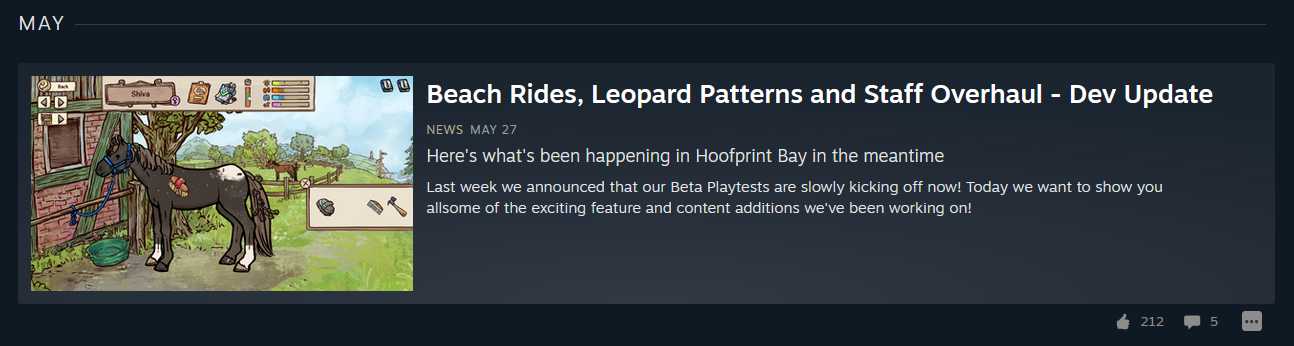
For Horses of Hoofprint Bay, we’re quite careful to only announce features when they’re actually done, rather than promise future additions.
Use the TMQ Communities
The neat thing about the fact that I’ve been gathering horse game players in the TMQ-adjacent communities is that anyone announcing and promoting a new horse game can reach their audience of early adopters very easily. I highly recommend you make use of it:
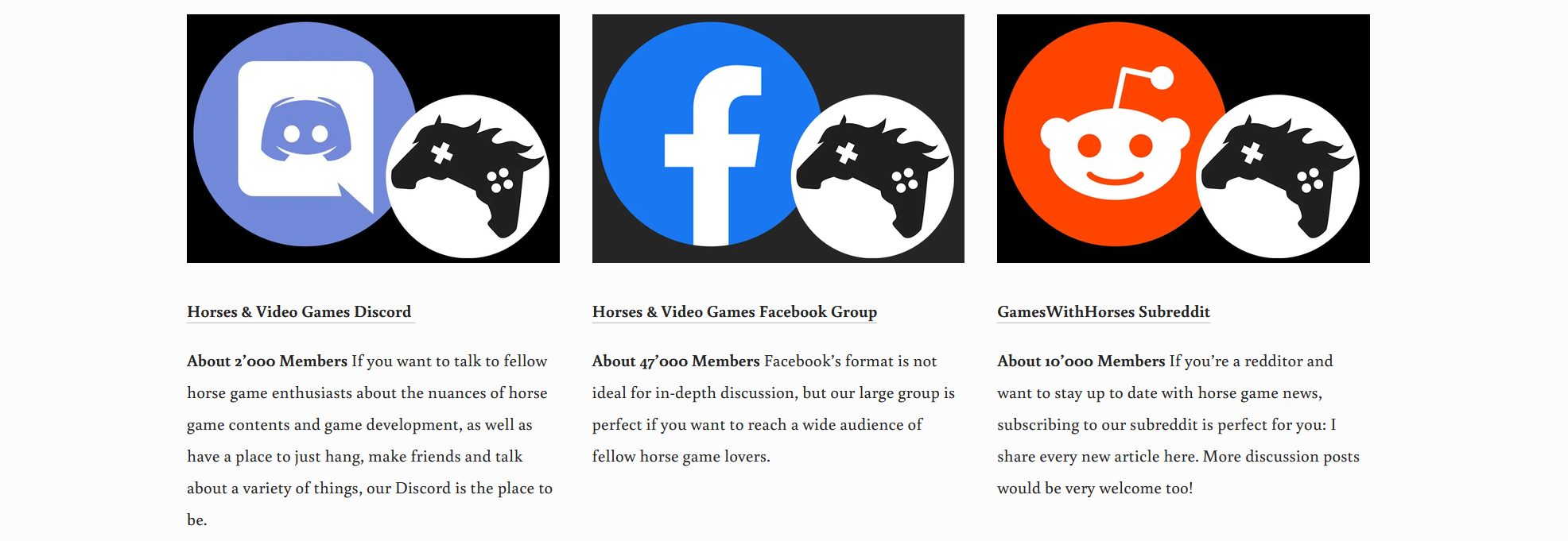
In the TMQ Discord, introduce yourself, add your game to the #horse-game-project-list channel and share updates either in #games-with-horses or #horse-game-development
On the /r/GamesWithHorses subreddit, post major updates and new materials as links or direct video/image uploads. Keep an eye out for comments and answer people’s questions! Reddit is great because it’s easily google-searchable, so future players can find your info again.
In the Horses & Video Games Facebook Group, post links, videos and images whenever relevant. If you have a Facebook Page for your game, share those into the group with a personalized caption. If you only have a personal account, post it from there and provide a link (website, store page, linktree…) in the post.
Of course, you can start building your own Discord Server, Subreddit and Facebook Group instead of relying on mine. Depending on your game and scope, it even absolutely makes sense to do that – and all my groups allow for relevant cross-promotion. But the fact that I’ve gathered about sixty thousand horse game enthusiasts that you can serve your game to on a silver platter should not be underestimated. The people in my community want to hear about new horse games. Show them yours. Repeatedly.
Further Reading and Resources
I cannot stress this enough: there are resources and guides for indie game marketing best practices out there, you only need to look for them. I’ve seen numerous horse game projects fail to get these basics right, and it always pains me to see, because while getting visibility for your game is never easy per se, some basic mistakes are very easily avoidable.
I particularly recommend the following resources:
HowToMarketAGame by Chris Zukowski, in particular the 60 Game Marketing Mistakes E-Book (it’s free!)
The GDC Vault has a bunch of freely available content. I recommend browsing the Business & Marketing category for Games that interest you or talk titles that catch your attention.
For Crowdfunding, read Thomas Bidaux’s Medium Post and watch his GDC Talk
The GameDiscover Newsletter is great for getting an overall view of trends and games marketing news
If you’ve ever attended Devcom/Gamescom, make use of their archive of Session VODs and look for talks on games marketing
Join the GameDevMarketing subreddit. The community skews towards solo devs and beginners, but you can still learn quite a bit from people there, and share your own learnings. Also check out the breakdown I wrote about HoHB’s Announcement and Demo Success there!
For another look at how the marketing for Horses of Hoofprint Bay has been done so far, check out this article on GamesMarket about our numbers and what we did to get them. (a free account is needed to view the article)
And of course: Reach out to me. For passionate indies who want to make a horse game but don’t have a marketing budget, I will gladly offer free consultation if I can somehow fit it into my schedule. Send an email to alice@themanequest.com or reach out on Discord to alice_tmq.
Your Horse Game Marketing Questions?
When I posted in the TMQ Discord about working on this article, I asked people for questions and topics to address. I quickly got enough of them that I realized I’d have to plan for a second, Q&A style article where I’ll go over your horse game marketing questions to the best of my ability and experience.
If you have questions of your own that you’d like to add, ask them in the comments here on the site, or the replies on whatever social media platform you found this post on! I’ll do my best to answer as many as I can in an upcoming sequel article!
I am stoked to share this interview with the thogli studios team and myself from Video Game Town: Bringing ‘Horses Of Hoofprint Bay’ To Life. Definitely take a look if you’re interested in a closer look at how thogli studios works, how Horses of Hoofprint Bay and some of its features came to be, and some teasers for what’s still to come.