
Living Creatures vs Meat Motorcycles – How to Make Horses in Games Feel Alive
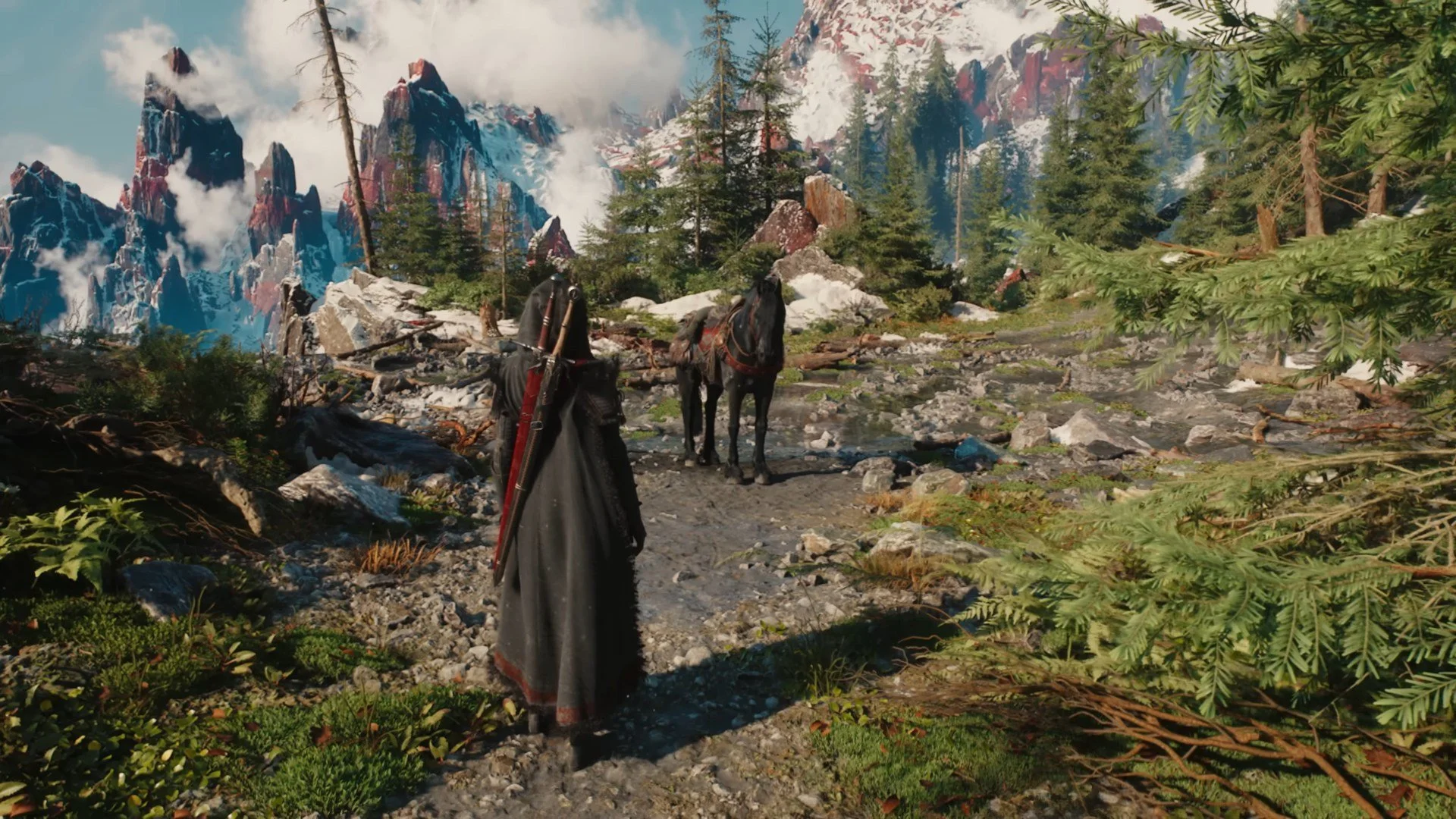
Image from The Witcher 4: Unreal Engine 5 Tech Demo
What makes horses in games feel alive and how do you get players to care for them? When complex independent behaviors are out of scope, what measures can developers take to give players a sense of emotional attachment on a budget? How do you get game horses to feel like actual living creatures rather than just four-legged bicycles? Fortunately, there are a lot of options if you’re a little bit horse-savvy, so let’s look at some of them.
This article is a bit of a continuation of my post on How To Add Horses To Your Game. I’ll try to avoid excessive overlap, so if this is your first exposure to the topic, I highly recommend heading over there and reading that one first!
One additional note before we begin: This article contains a lot of high level ideas that I would love some games to explore further. I don’t expect any game to tackle each thing on this list at once, I’m trying to spark inspiration in any designers and creatives who already plan to have horses in their game and are open to adding a bit of additional polish or depth to them.
Make Horses React to the World Around Them
As every rider knows, horses care quite a bit about what is going on in the world around them, whether it’s windy weather or those incredibly dangerous plastic bags that float unpredictably over the ground, there’s loads of things out there that make horses jumpy.
If you’re up for a humorous intro to the topic of the many things that can scare a horse, I recommend this video by Ozzy Man Reviews. In short: horses can be scared of almost anything, particularly things that they haven’t seen before, things that are in different places than they’re used to, and things that move and make noise. They can fortunately be trained to tolerate a lot more scary things through desensitization and positive reinforcement though! Check out Jason Kingsley’s video “How do you train a medieval warhorse” for an introduction to how such a process might look.
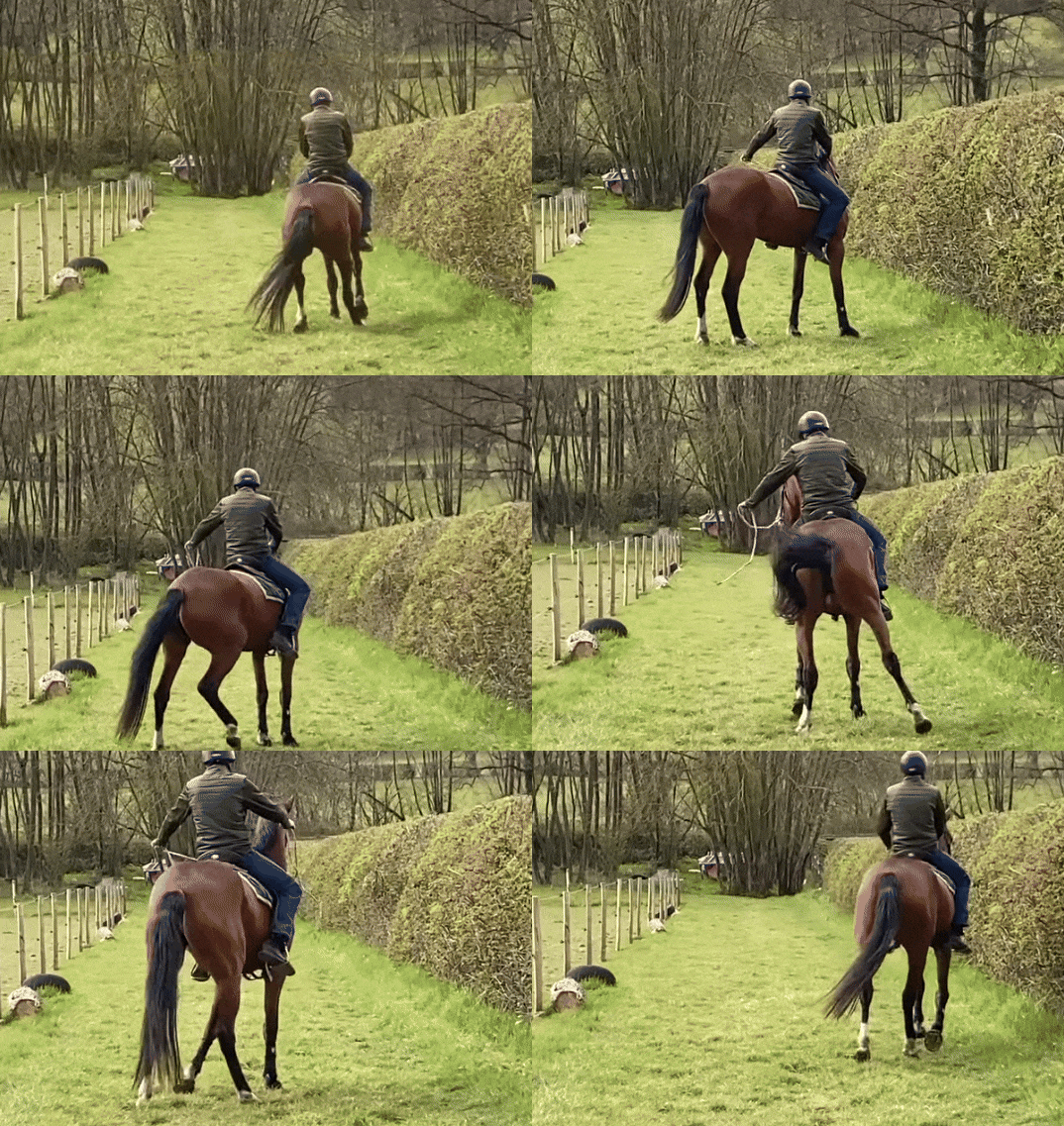
A glance at what it can look like when a horse refuses to approach something it finds scary – in this case, it’s a log. Source
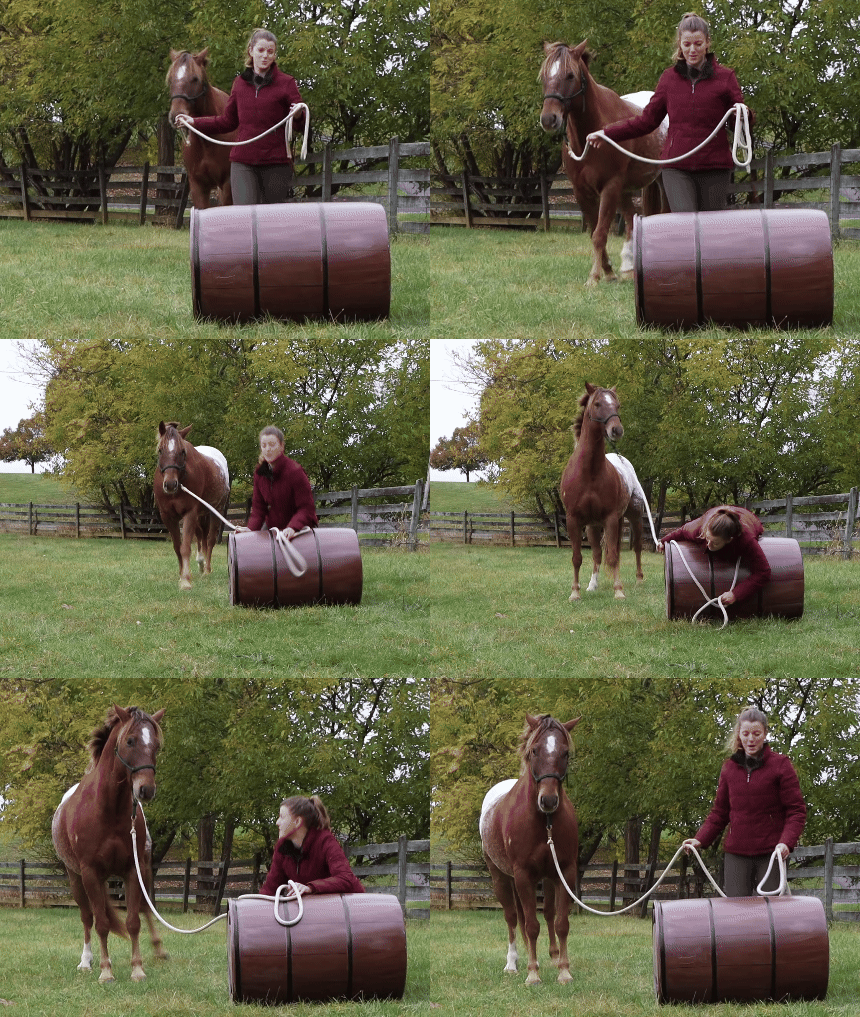
Desensitization Training includes startling your horse just a tiny bit and then rewarding them for keeping mostly cool. Source
Now, a mount that constantly spooks or flat out won’t approach certain areas is probably not a ton of fun in a game, but here’s a few pointers for how horses’ flight animal instincts could make for interesting gameplay:
Scary Things as Progress Gates: In an open world, things that the horse considers scary (that might be clotheslines and trash cans or monsters and magic spells, depending on your setting) can’t be passed or approached, so you have to take a wide detour around them, which can serve as gating the player from particular areas. The horse’s resilience to these dangers can be increased over time through training or levelling, so those areas become accessible in time.
Trigger Stacking: Inspired by the real life behavioral concept of Trigger Stacking, your in-game horse might tolerate 2 stressful things at a time (e.g. windy weather and an ill-fitting saddle), but the next additional stressor (such as the sound of nearby combat) will cause the horse to buck off its rider and flee. You can then again give the player options for how to manage this better, e.g. investing in a higher quality saddle, avoiding this quest until the weather has cleared, or investing XP to upgrade the horse’s trigger capacity to 3.
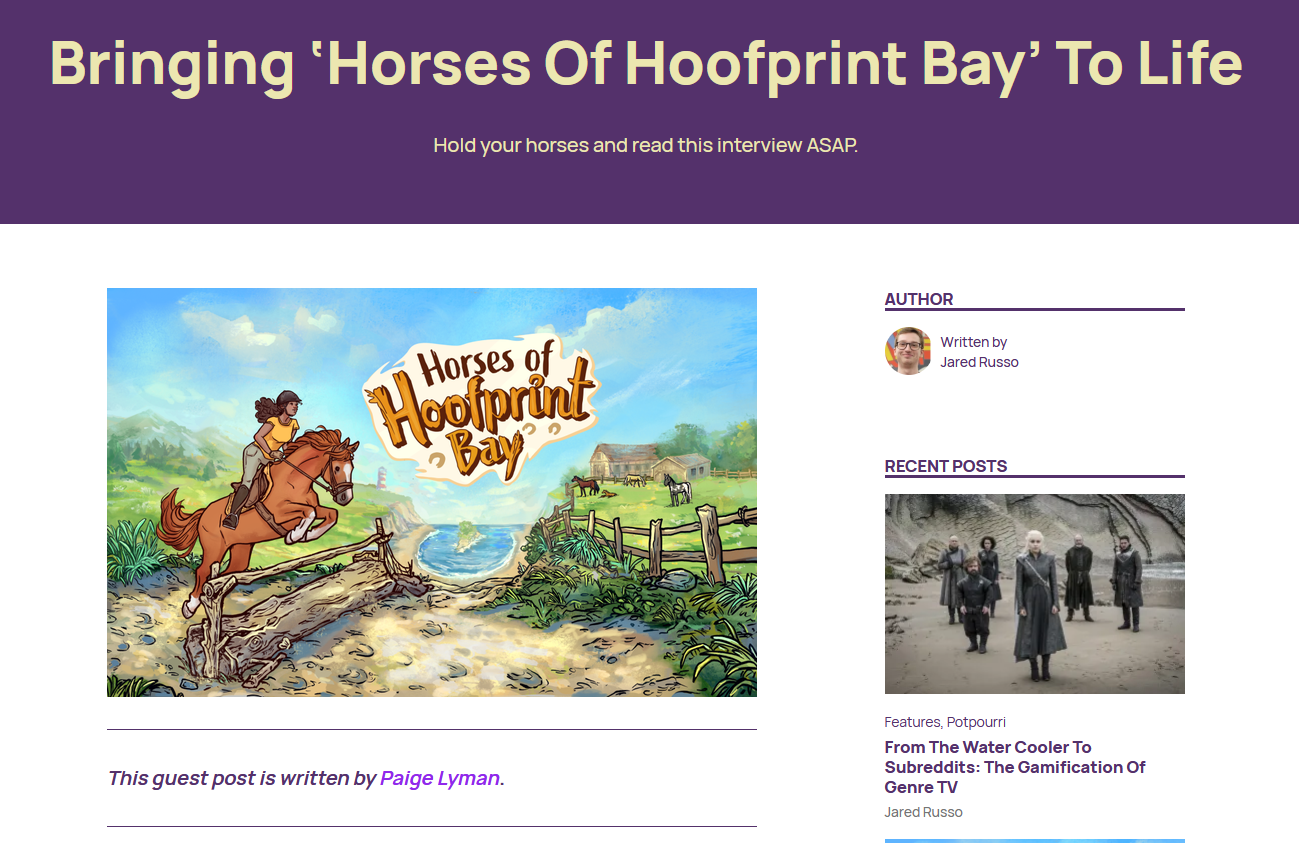
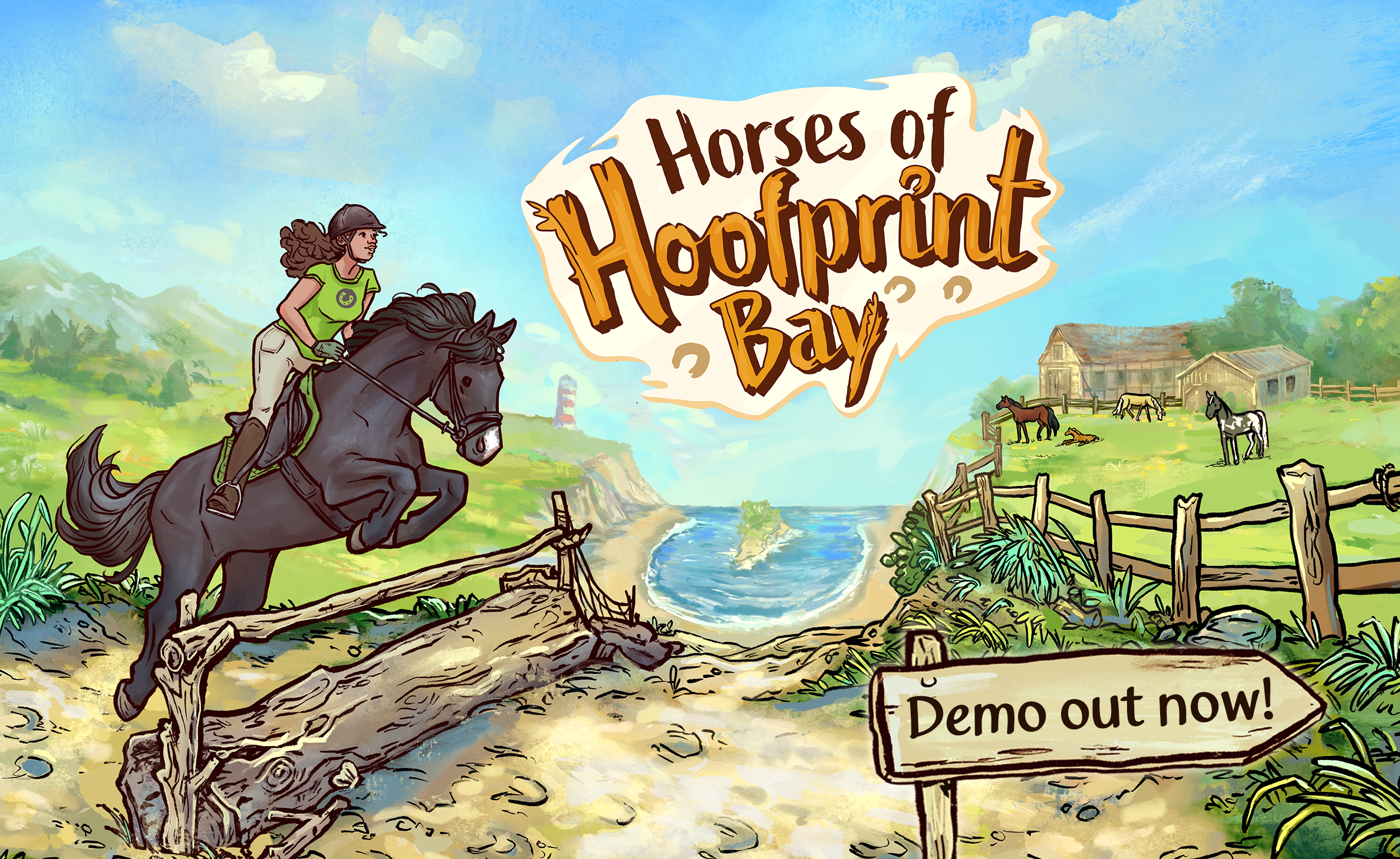
In 2D Games: In a 2D sidescroller format, it’s even more straightforward: there can be places where you need a specific level of confidence or a specific skill to bypass a particular obstacle, or you’ll have to turn back and take a different route. (That’s what we’re doing in Horses of Hoofprint Bay!) Additional depth could be added by putting scary things into different categories and unlocking the ability to pass them separately, e.g. in a skill tree.
Quick-Time Horse-Calming: Soothing your horse could be a sort of quick-time reaction: if a horse displays disquieted behavior (that could be stopping and planting their feet, or just tensing up and looking at the scary thing), you might be able to soothe the horse and calm it down if you react quickly enough, for example with calming words and pats or even with a magic spell. Failing to react in time could lead to the horse running off regardless of player input, or bucking off its rider entirely. The Legend of Zelda: Breath of the Wild and The Witcher 3: Wild Hunt feature mechanics like along those lines.
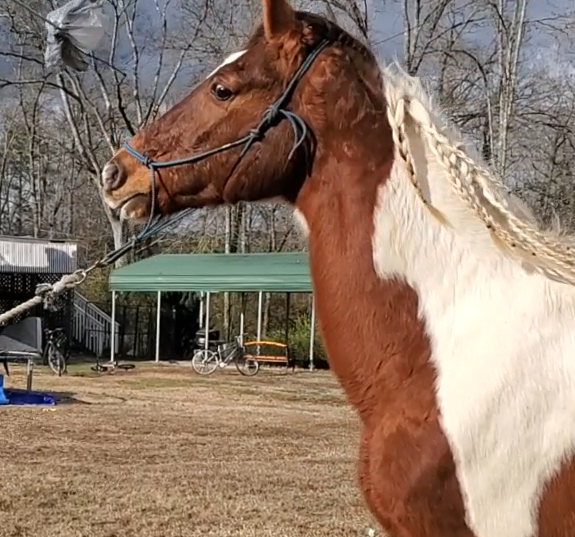
Clear signs of equine suspicion: raised head, tense posture, white of the eye visible and ready to run away. Image provided by aTMQ Community Member.
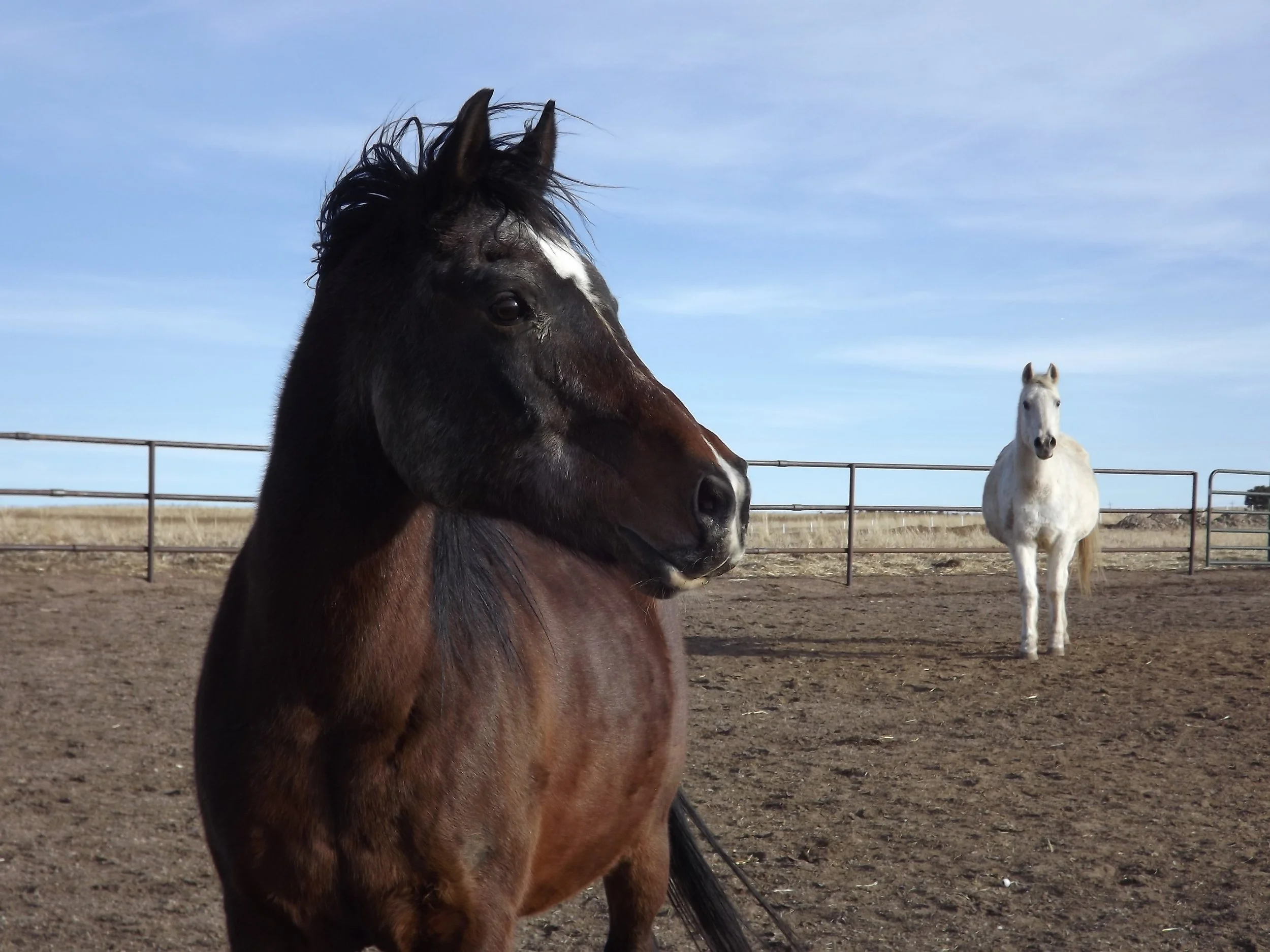
This horse is alert, but it’s keeping an eye on whatever startled it rather than actively fleeing. Image provided by BlueAppaloosa.
Beyond the actual mechanics, horses reacting to the world around them can also happen on a level that’s purely for fluff and polish. That might not add gameplay depth by itself, but it’ll strengthen the emotional attachment players have to their in-game mount, and by extension, to the whole game. To find footage of horses getting scared to various degrees, I recommend looking up horse desensitization videos like this compilation. Note that ethical training includes mild scares and positive rewards, while unethical trainers might flood the horse with scary things until it shuts down. They’re not always easy to tell apart as a layperson, and the more dramatic, less ethical examples may even be more relevant for exaggerated in-game animation.
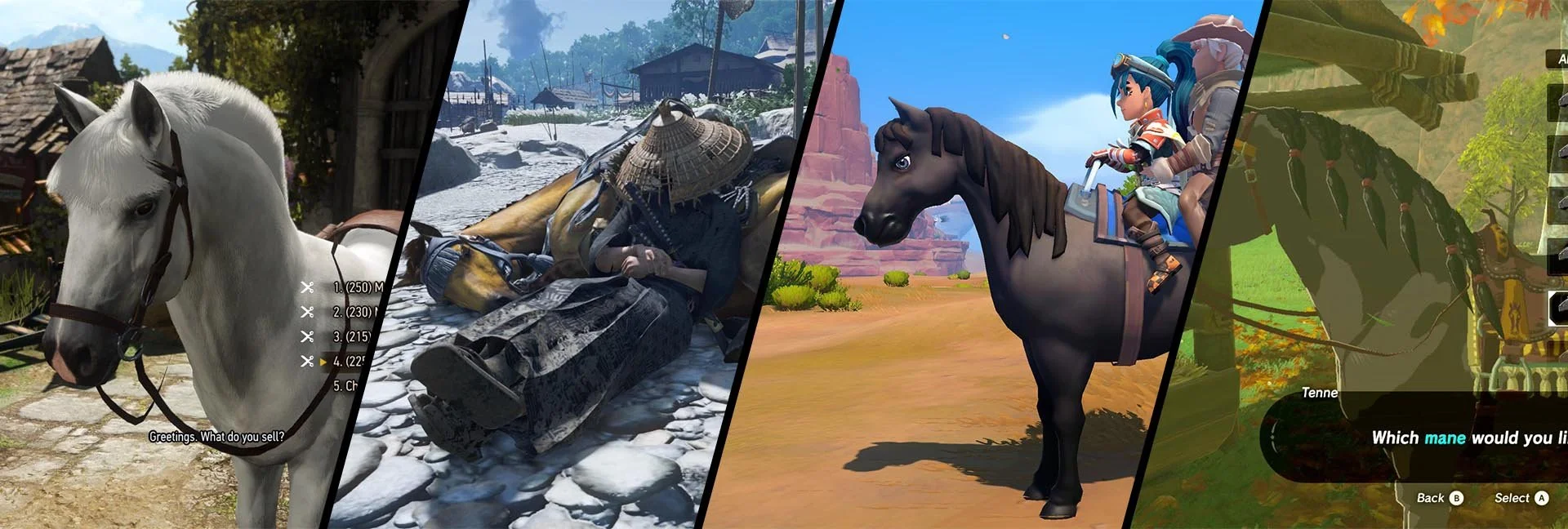
Anxious Horse Idling: Different idle animations if the horse is near something that makes them uncomfortable. Their behavior might include head shaking, ground-pawing, prancing in place, eyes and ears facing backwards and just being overall tense, with their head held high rather than in any more relaxed position. See this section of my Ghost of Tsushima review for an interesting example of this, though in that case the equine discomfort applies to specific (stolen) mounts, rather than different areas.
Skeptically Eyeing Things: If a horse is skeptical of a thing but not outright terrified, their response might be limited to looking at it: turning their head to see the point of interest with both eyes and perked ears. See the two images above this section.
Dragon Snort: Horses tend to do a dramatic snort, sometimes called “dragon breath”, in order to alert herdmates to danger, when facing something they mistrust. This isn’t only a sound effect, but goes hand in hand with a tense pose, raised head and flared nostrils. Some examples here, here and here
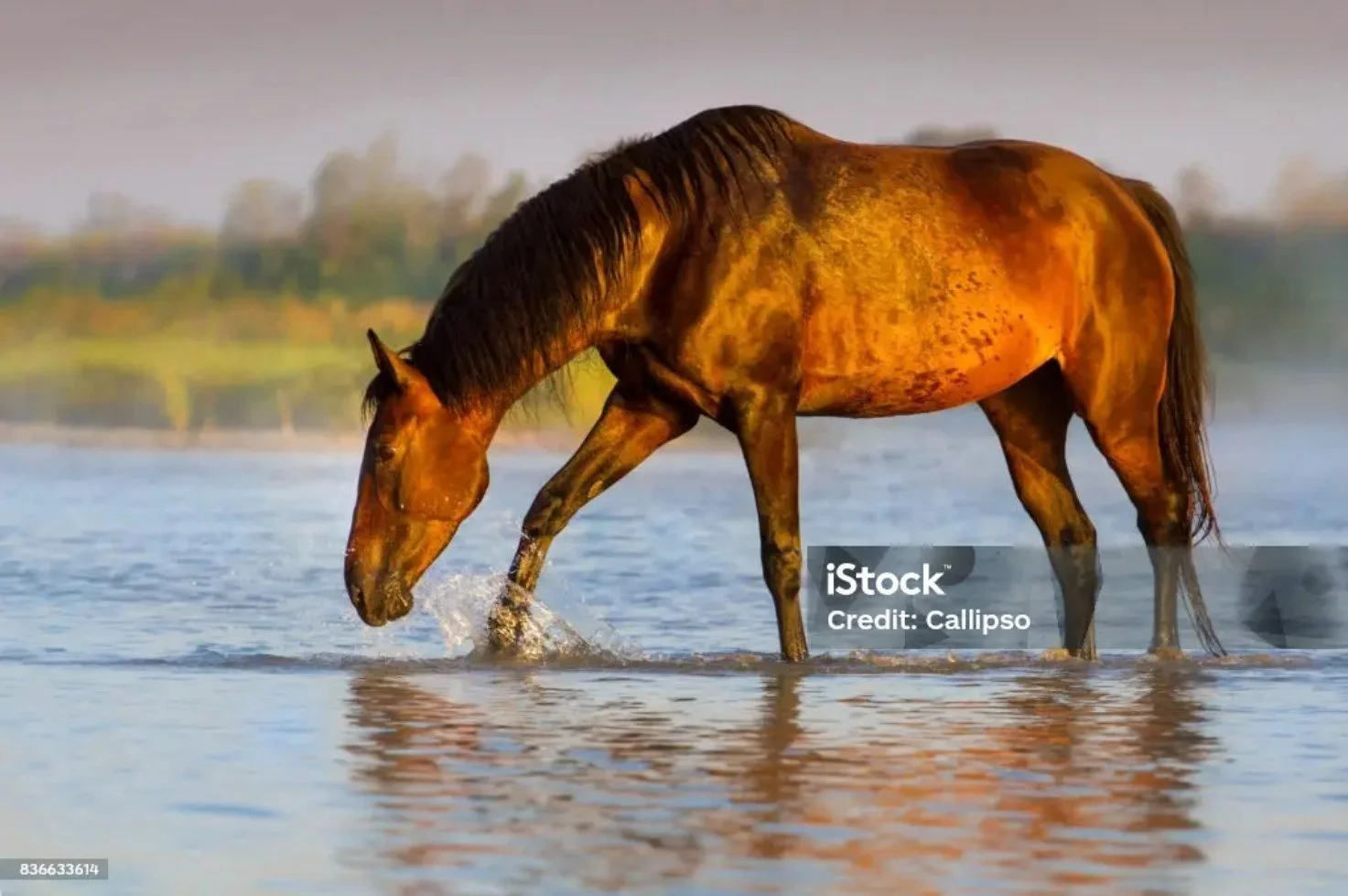
When walking through water, horses might go for a drink or start playing around by pawing.
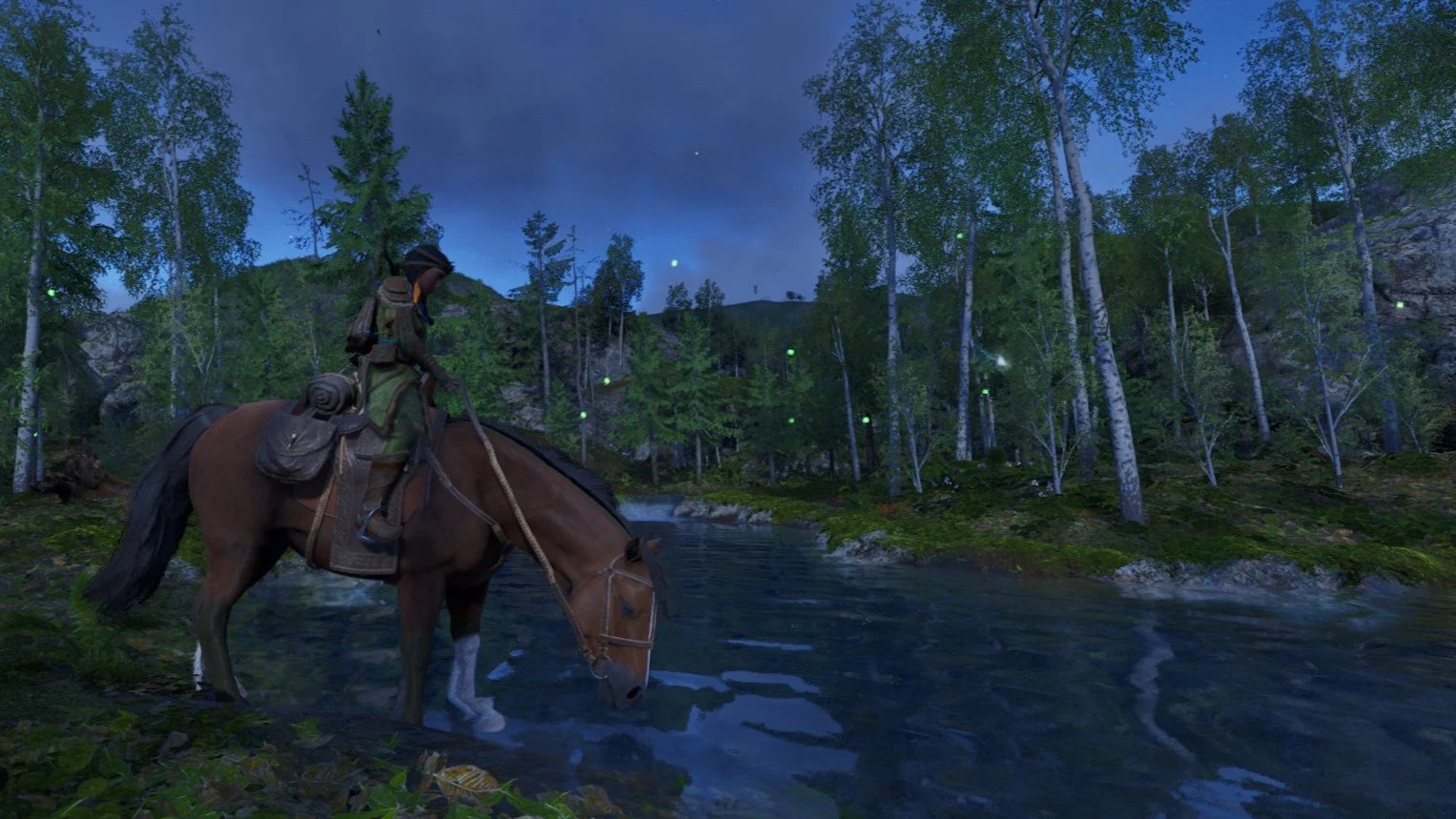
Letting your horse sate its thirst in rivers is part of the survival mechanics in The Legend of Khiimori. Screenshot from Next Fest Demo, provided by a TMQ Community Member.
Fear isn’t the only reaction a horse can have to the world! If safety isn’t the horse’s immediate concern, it might also react to more positive or neutral stimuli:
If a horse is thirsty, it might walk towards a well or river of its own accord and drink.
When passing by bushes or shrubs, some horses try to have a snack while moving by reaching out to grab leaves and twigs with their mouth.
Horses don’t neigh nearly as much as movies might have you believe, but they will occasionally greet each other with a neigh, particularly if a horse is out alone and sees another horse in the distance. Sometimes they’ll even greet their mirror image on reflective surfaces such as large windows!
Some horses are scared of puddles and refuse to move into water if they can avoid it, but some horses actually love to play in water by pawing at it! Behavior like this could be a fun detail if you stop a horse in shallow water.
Horses are herd animals and have a strong urge to follow each other. Perhaps in an open world, I can follow other riders to move a bit faster, or need to make an extra effort to guide my horse away from a group. This tendency could again be alleviated through training or levelling.
As a player, how my horse reacts to me when I approach can be an excellent way to portray a growing bond: an horse that doesn’t trust me yet might eye me sceptically and even take a step back. An indifferent horse might just relax and stay focused on its grazing. A horse that loves me might nicker a greeting and approach me.
Let Horses Have Needs that Players Have to Meet
Living creatures need certain things to live, and having those needs makes them feel alive. Accounting for a horse’s needs and rewarding the player for meeting those needs can go a long way towards creating emotional attachment and strengthening the illusion of digital creatures being living things.
Now, as for how this might look on a game-mechanical level:
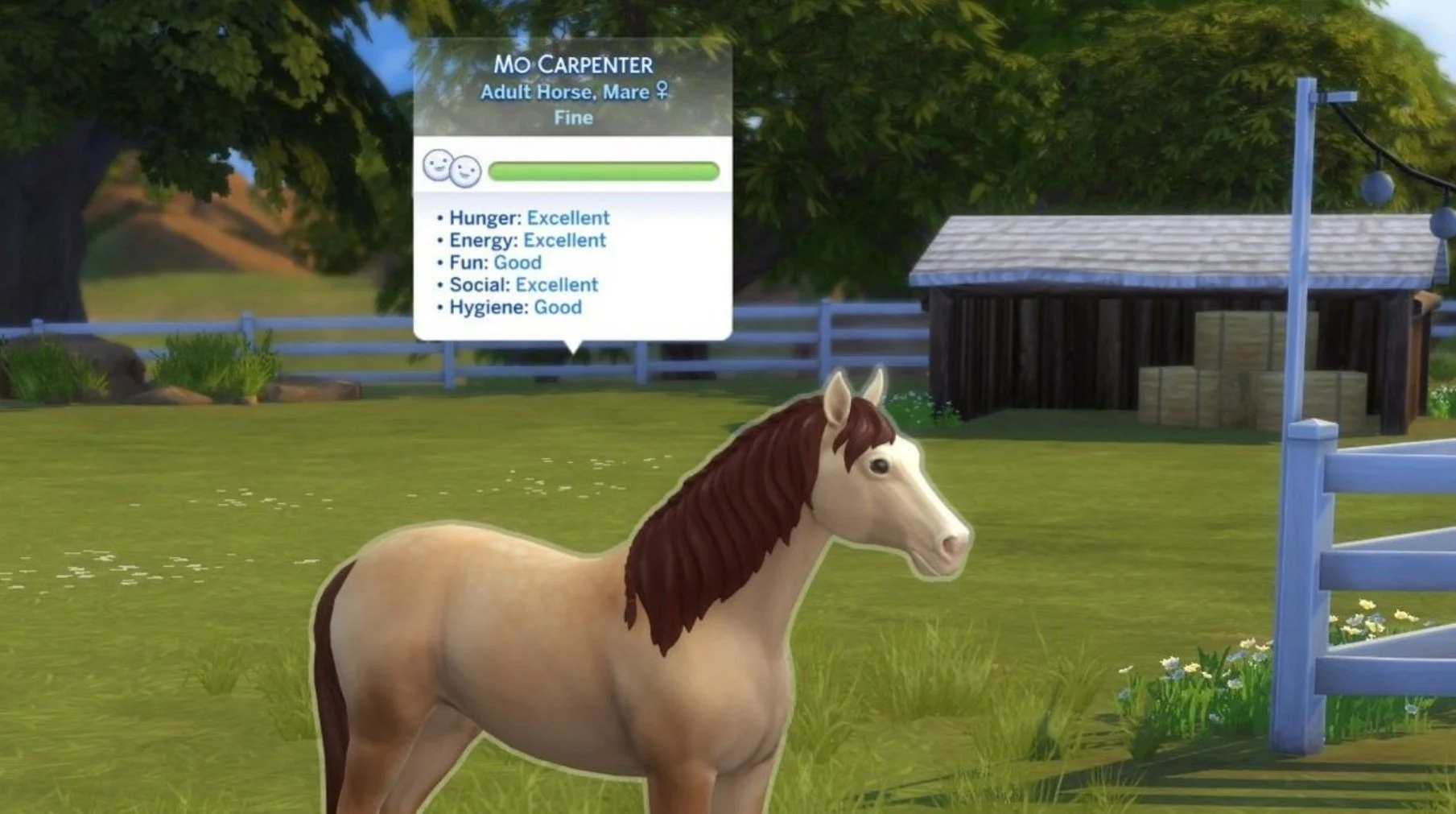
The Sims 4: Horse Ranch is one of very few games that account for the fact that horses might need social interactions and fun. They do!
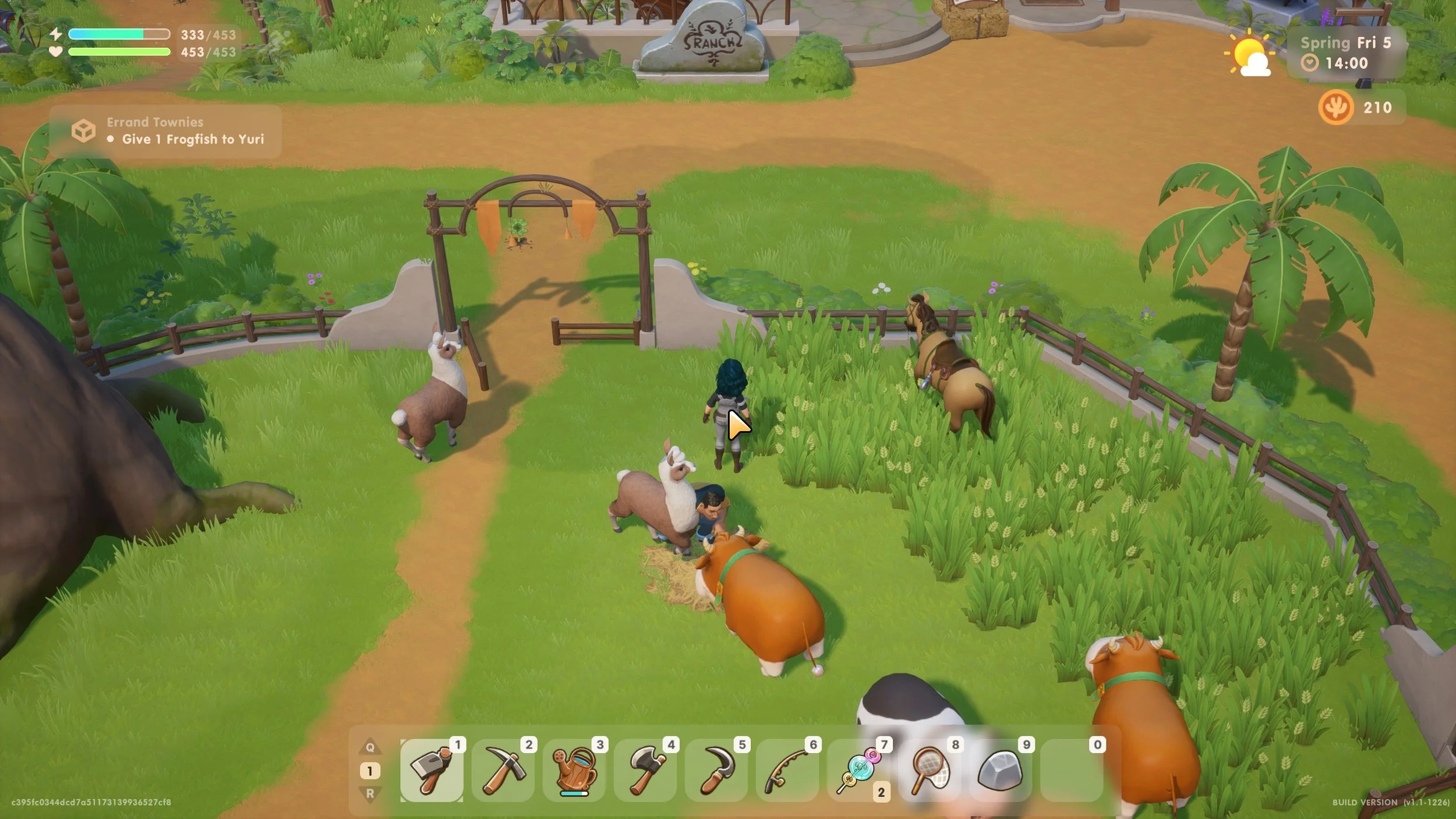
Distinctly weird: when horses that are supposedly resting in a pasture wear saddles and bridles for no reason (Screenshot from Coral Island)
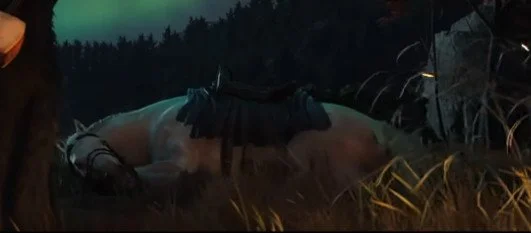
It’s nice that the horse in Ghost of Yotei gets to sleep, but that’s decidedly not a natural pose (alternatives here) and nobody would ever let their horse lie down while saddled.
Hunger & Care: It’s not particularly sophisticated, but giving your horse bars/meters for hunger and hygiene and adding debuffs once either of those meters drops below a certain threshold is a straightforward way of motivating the player to care for their horse. If it’s good enough for Red Dead Redemption 2, it’s probably good enough for some other games as well!
Other Needs: Beyond hunger and hygiene, there are other needs that you could add bars or stats for: thirst, that can be alleviated through watering or stopping near rivers, social or fun needs that can be satisfied by letting the horse chill with other horses in a paddock, a safety need that is kept up by ensuring the horse has resting space away from dangers…
Horses at Rest: Horses deserve to relax after work and need their tack removed in order to rest. If your game features any sort of home base or camp/rest mechanic, make sure to disable or remove your horse’s saddle and bridle in those situations, because if you don’t, I will personally haunt your dreams and put peas under your mattress. In-game consequences for neglecting to give your horse this kind of rest and comfort could include stamina debuffs, the mount being unrideable that day due to soreness or causing a carefully crafted saddle to break down much faster. If your game includes unridden horses idling in pastures, they should not be wearing any saddles or bridles!
Grooming interactions such as brushing a horse’s coat and cleaning its hooves should never just be chores, in my opinion, but are best used to represent the real life purpose of grooming: avoiding saddle sores and pressure points under tack, and reducing the risk of hoof abscesses. In reality, making sure there’s nothing that can hurt your horse stuck in its feet or on its back is a necessity for long term health, and I’d love for more games to represent that. Check out this article for more thoughts on horse care in games!
Horse-friendly Stabling: If your game includes any stables, consider that horses are social herd animals that need Friends, Forage and Freedom in order to thrive, and design your stables accordingly. Even a simple paddock with a lean-to makes horses look happier than standing tied or being confined to tiny stalls. Strongly Recommended Reading here!
How exactly the creature’s needs impact the gameplay can vary: perhaps care is optional and players simply get some sort of buff to their horse’s health or stamina. Perhaps care tasks are a necessity, or the horse will refuse the player’s inputs if things get bad enough. Perhaps a well cared-for horse is more resilient to threats and scary situations as outlined in the section above this one. Perhaps doing care tasks rewards the player and/or horse with experience or points of some sort that can then be reinvested into a riding skill tree.

Give Different Horses Individuality and Personality
If your game gives the player the option to ride multiple different horses, there’s obvious opportunity here to make those horses different from each other in more than just name and coat color: Once we’ve defined the needs and reactions above, any of those tendencies can be tweaked to make one horse more or less fearful than another, one in need of more social interactions with other horses, one that can go with less food for a slightly longer time. Any of the mechanical principles outlined in the first two sections of this article can have their parameters shifted between different horses.
Other more straightforward stats that impact movement, such as speed, stamina, agility or strength, can also differ between horses for an increased sense of individuality, though stats by themselves will rarely do quite as much for emotional attachment as actual behaviors and personality traits.
Another quite simple way of adding personality is through preferences. Here’s how that could look:
Treats: Every horse can eat apples, carrots, watermelon slices and strawberries, but each horse has a favorite treat and will get additional benefits from eating that one, or will need their favorite treat for specific mechanics.
Scratching Spots: if the player can pet or groom the horse (and you should let players pet or groom the horse!) they have a favorite spot (e.g. the withers, croup, head, chest, shoulder, flank…) where they react positively to it. I first saw this in an early trailer for Fernhoof Grove, and we’re doing something similar in Horses of Hoofprint Bay as well.
Biomes and Ground Types: Think of Favored Terrains in DnD – one horse might be faster or more enduring over grass than through forests, another might be able to traverse steeper slopes without slipping. You could also once again tie this into reaction mechanics and give horses more resilience against scary things if they’re in their favored biome.
Types of Activities: Horses might particularly enjoy certain activities such as sprinting, jumping, pulling a carriage, which then results in buffs or additional XP gain.
For some interesting ways in which horse games have tackled individuality before, I recommend taking a look at Horse Tales: Emerald Valley Ranch, where horses have various traits and preferences, and The Ranch of Rivershine, where each horse has specific perks that influence its care, training or gathering.
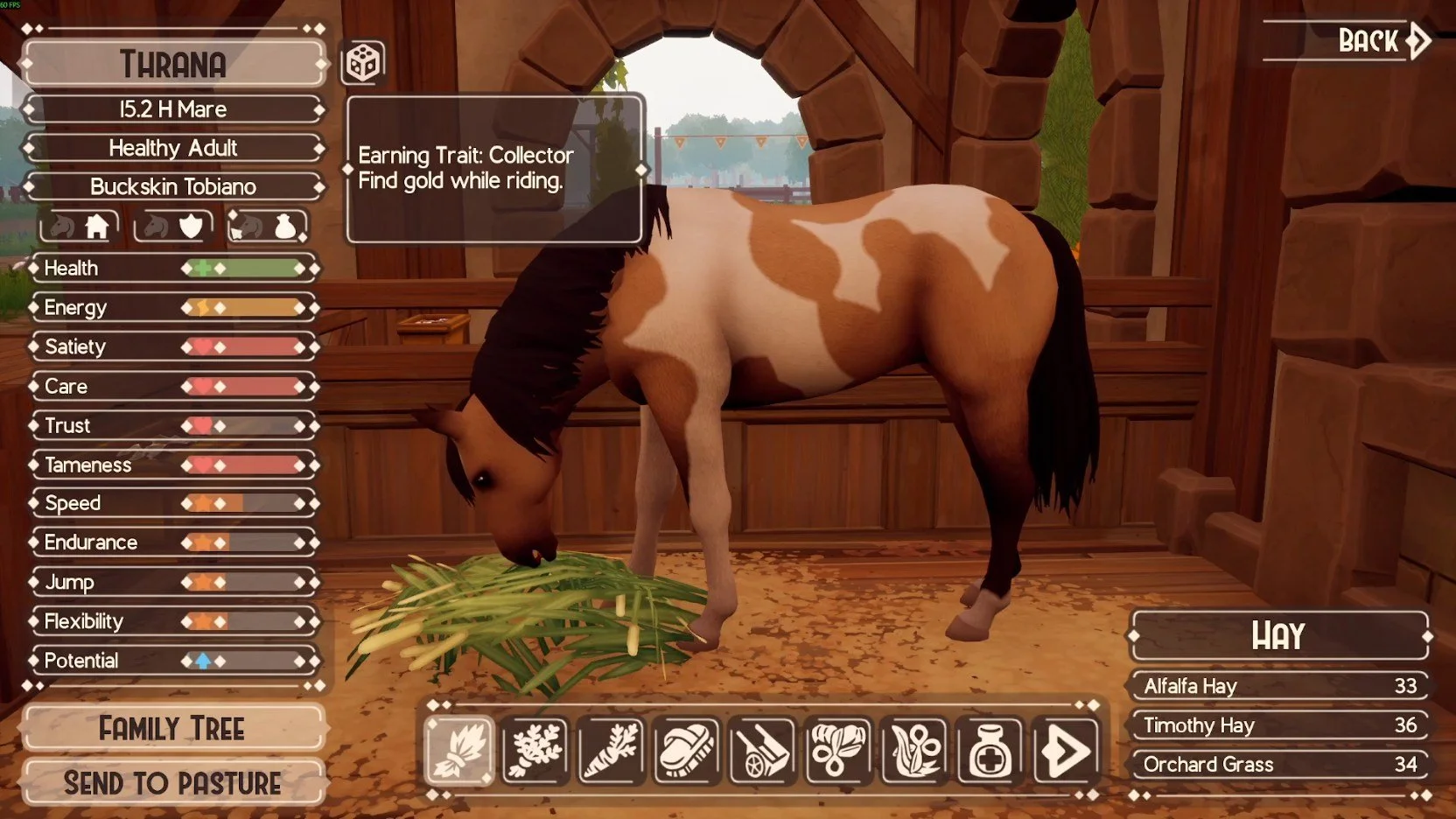
Horses in The Ranch of Rivershine have stats you can train, and are further indiviualized through their Earning, Care and Training perks, which influences how quickly they level certain skills and gives the player other perks from riding this specific horse.
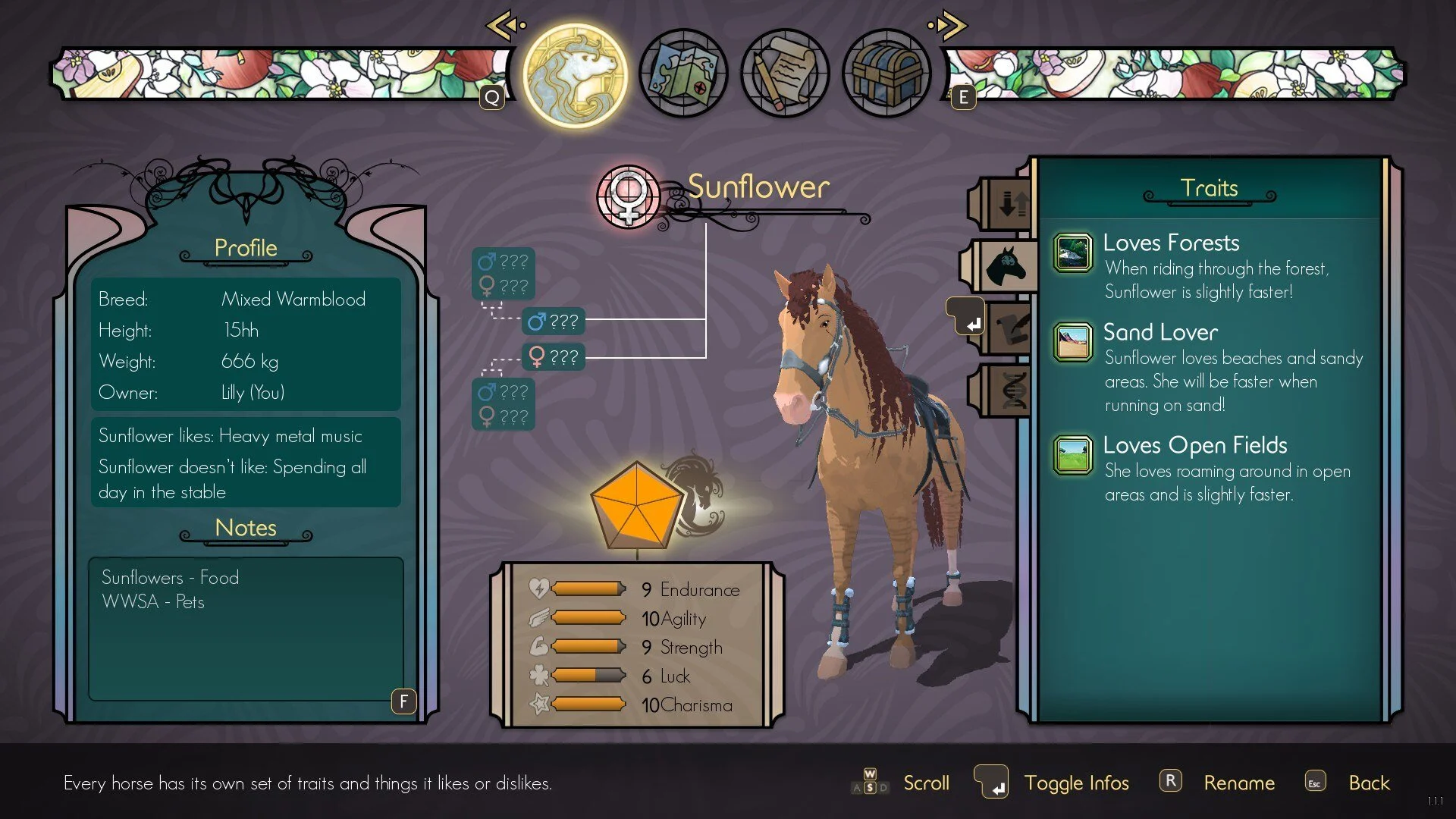
In Horse Tales: Emerald Valley Ranch, horses have stats, traits that impact their handling, a favorite treat, a preferred petting sequence for how they like to be snuggled, and additional likes/dislikes that are only fluff. Image Source.
Include Horses in Dialogues and Narrative
For a game that includes characters talking to each other when there are horses around, it’s only natural that the horses are part of the conversation in some way or other. If you’re not a horse person yourself, it might not be that simple to come up with relevant dialogues though, so let’s go over some topics:
Logistics: A mounted character always needs to account for where they can or cannot take their horse, and this can be part of conversations or quests. Will the horse survive a trek through those mountains? Will I need to bring grain for my horse if there’s not enough grazing to be had? Is there a safe place to tie my horse while I sneak into this enemy hideout? Can this inn provide a stall and hay for my horse in addition to a room for myself? Even if none of these are actual mechanical problems for the player to solve, the writing can allude to them being taken into consideration.
Reacting to the horse: As covered above, horses are inherently reactive animals, and that makes for conversation among riders. There might therefore be relevant dialogue about how the horses are scared of a supernatural threat nearby, how they’re smelling blood in the air from a battlefield, that they’re anxious about the noise an approaching train makes. Such dialogue can even be the only way to show a horse’s reactions to things, if your animation budget or art style doesn’t allow for showing the reaction itself.
Talking to the horse: Your character doesn’t have anyone else to talk to? No problem, riders talk to their horses all the time, and what they say ranges from actually useful voice commands (e.g. tongue clicking to speed up, “whoa” to slow down, “easy there” to calm nerves…) to rhetorical conversation. If a horse perks up due to nearby danger and the rider hasn’t spotted the source of the unrest yet, it’s very realistic for the rider to say things like “What is it, what do you see?” even in real life, let alone in fantastic scenarios where the horse might actually give an answer.
Referencing a Specific Horse: You can make players feel very seen by including dialogue that references their specific horse, either by name or by sex and color. A stablehand might assure you they’ll have your red gelding saddled immediately when you enter the barn, a questgiver might let you know they used to ride a grey mare just like yours, a friend you haven’t seen in a while might greet your horse by name with a pat just after greeting you.
Horse as Quest Objective: I’ve always more than enjoyed games where a mount is unlocked not through a purchase or simple unlocking, but won and earned in a quest. See the first Darksiders game or The Legend of Zelda: Twilight Princess for excellent examples of this. Putting the player’s mount in danger, having it be stolen and needing to free it, or completing a training mission to unlock new skills can all be very effective ways to strengthen the emotional attachment between horse and rider.
For more on this topic, check out my article Horses in Games: Companions vs Collectibles!
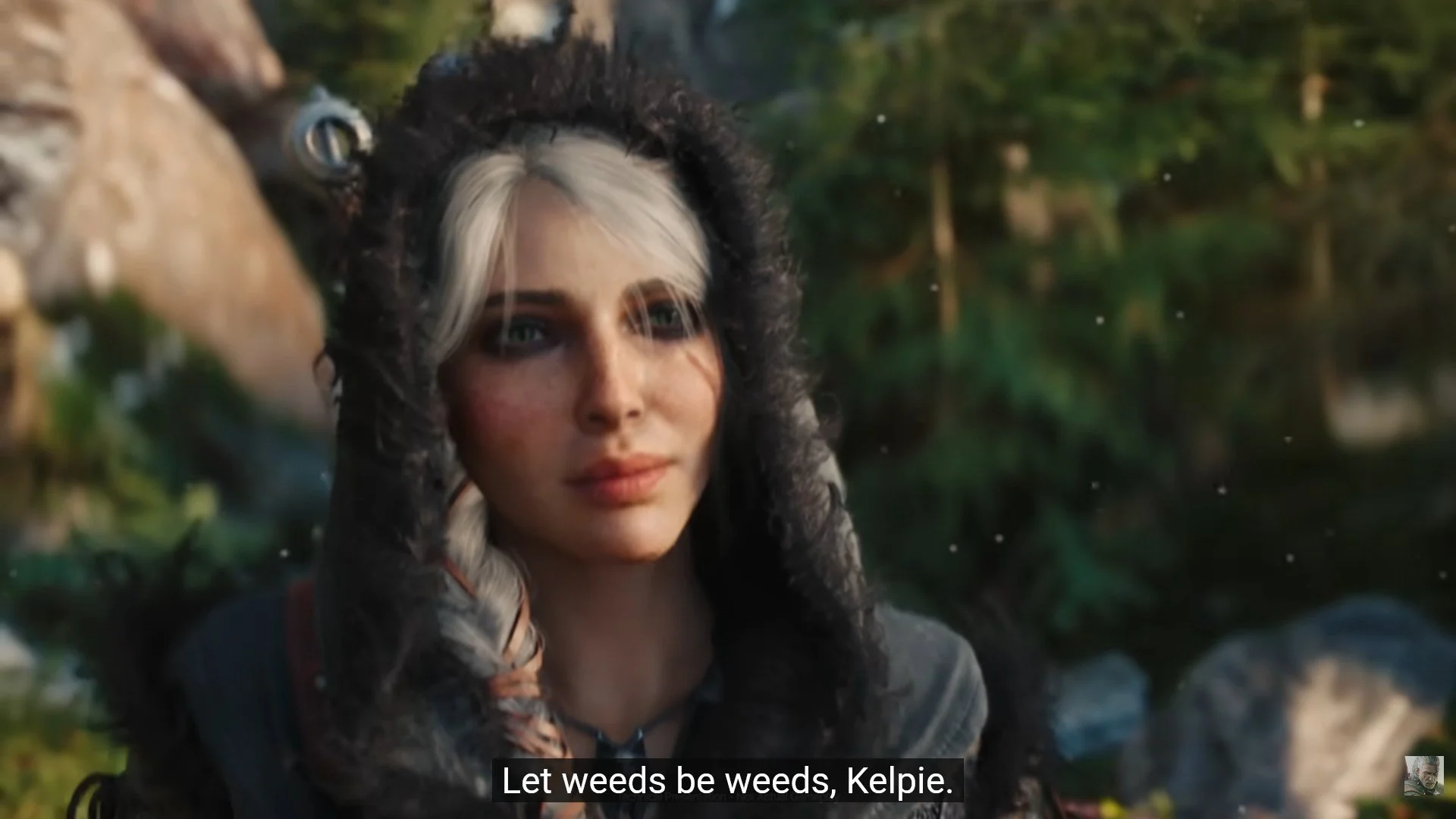
The Witcher 4 Tech Demo from June 2024 shows Ciri talking to her horse and the horse reacting to her presence, to the joy of horse-loving gamers everywhere.
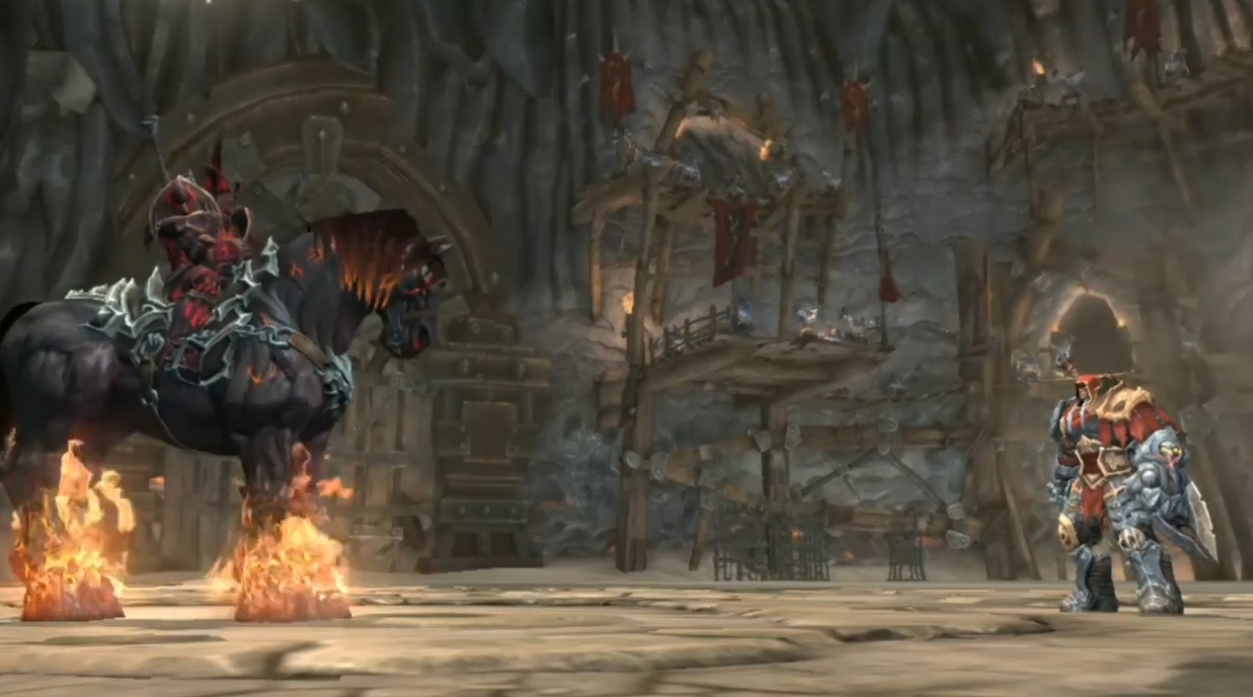
The first Darksiders game has its apocalyptic horseman protagonist (right) start on foot and win his steed back from an enemy (left).
Include Horses’ Disobedience and Loss of Control
In most games, the horse basically becomes the character as soon as you’re mounted up, and the players’ control inputs are immediately applied without friction. This generally makes sense for a smooth experience and a useful mount, but it has the side effect of removing any sense of agency and free will from the horse.
This is a tricky subject, because adding friction between what the player wants the horse to do and what the horse does can quickly turn to frustration or to the player forgoing the use of mounts altogether. I firmly believe that there’s interesting room to explore here though, and that the risk of frustration can be significantly alleviated through communication and through giving the player options to reduce disobedience through progress.
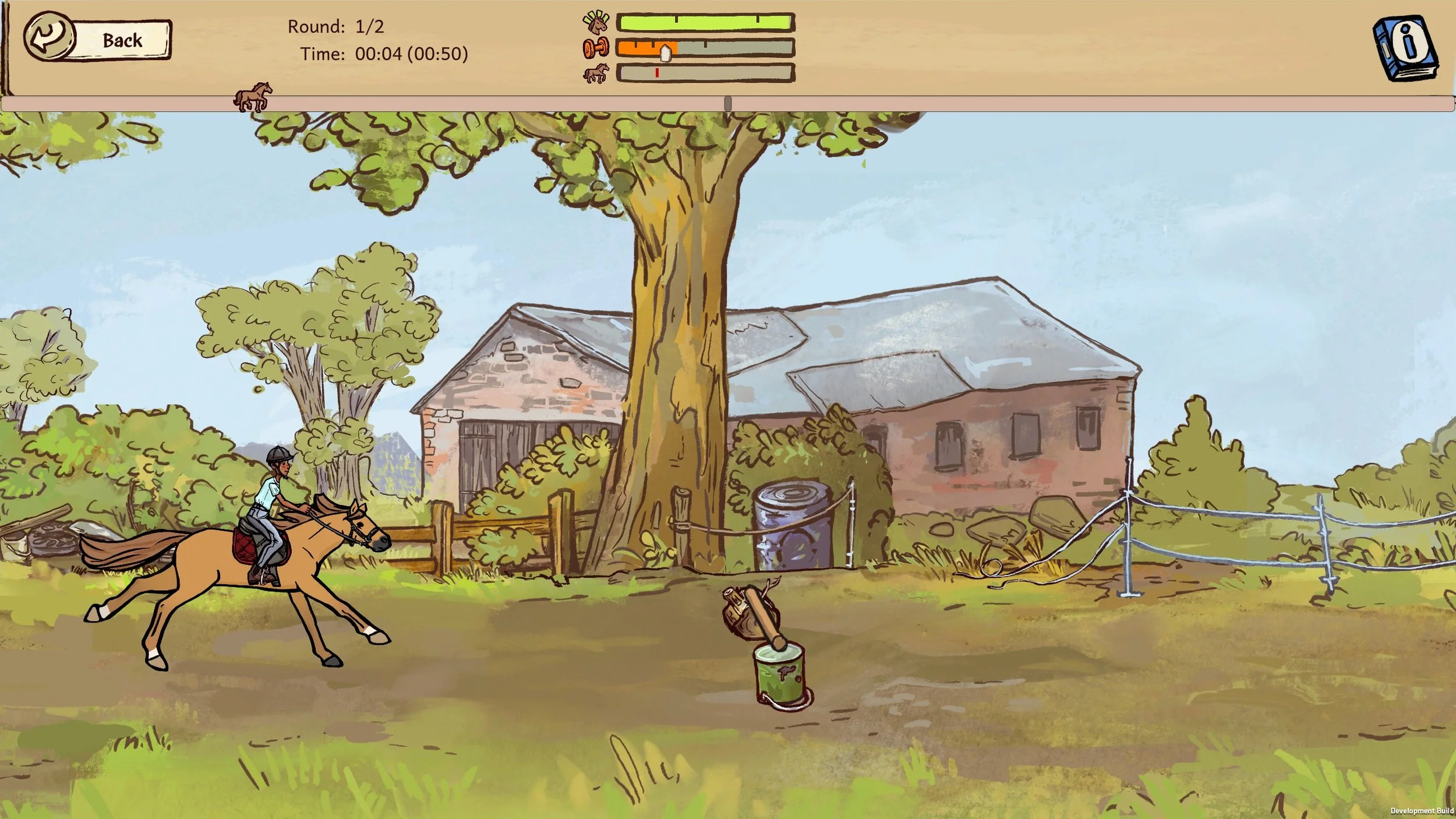
In Horses of Hoofprint Bay, a horse might break into a gallop without your input if it’s under-exercised or if its Confidence is low.
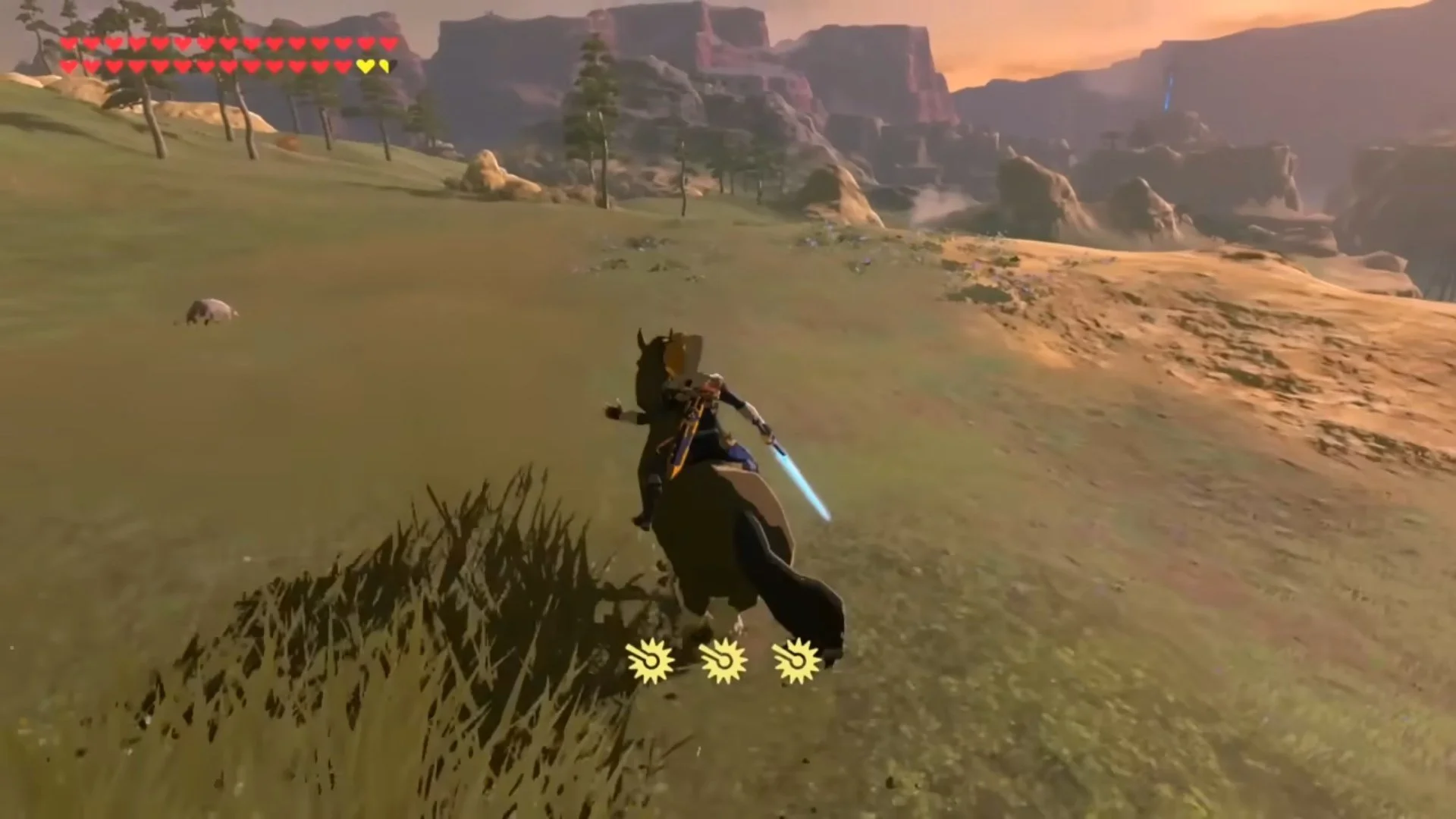
In The Legend of Zelda: Breath of the Wild, horses will occasionally move off into the ‘wrong’ direction if your bond with them isn’t maxed out yet. Image Source
First, let’s look at how disobedience (or: the horse displaying free will) might look in gameplay:
An over-eager horse might increase its speed without player input and need to be actively slowed down.
A lazy or tired horse might slow down without player input and need extra encouragement to go forward every so often.
A horse that’s not yet properly trained might simply ignore the player’s left-right input and continue forward, unless they react in time with additional input. This is how The Legend of Zelda: Breath of the Wild lets players ‘soothe’ wild-caught horses!
We’re all very used to game horses appearing behind us at a whistle, but perhaps a horse that doesn’t like me much yet takes longer to come or has a limited distance over which it will heed my call. This is something that The Ranch of Rivershine handles very nicely, by making call distance depend on the Trust stat!
As touched upon in the first section of the article, forcing your horse into dangerous and uncomfortable situations might lead to it ignoring player input and instead bucking you off, running away, or simply refusing to move closer to the scary thing.
Including ways to let horses disobey the player doesn’t mean the player then has to just tolerate that loss of control for the whole game. Instead, I’d argue it makes sense to give the player ways to improve their control over the horse through things like levelling up, unlocking perks, getting better equipment or building trust with the horse.
Let Horses Display Idle Behaviors
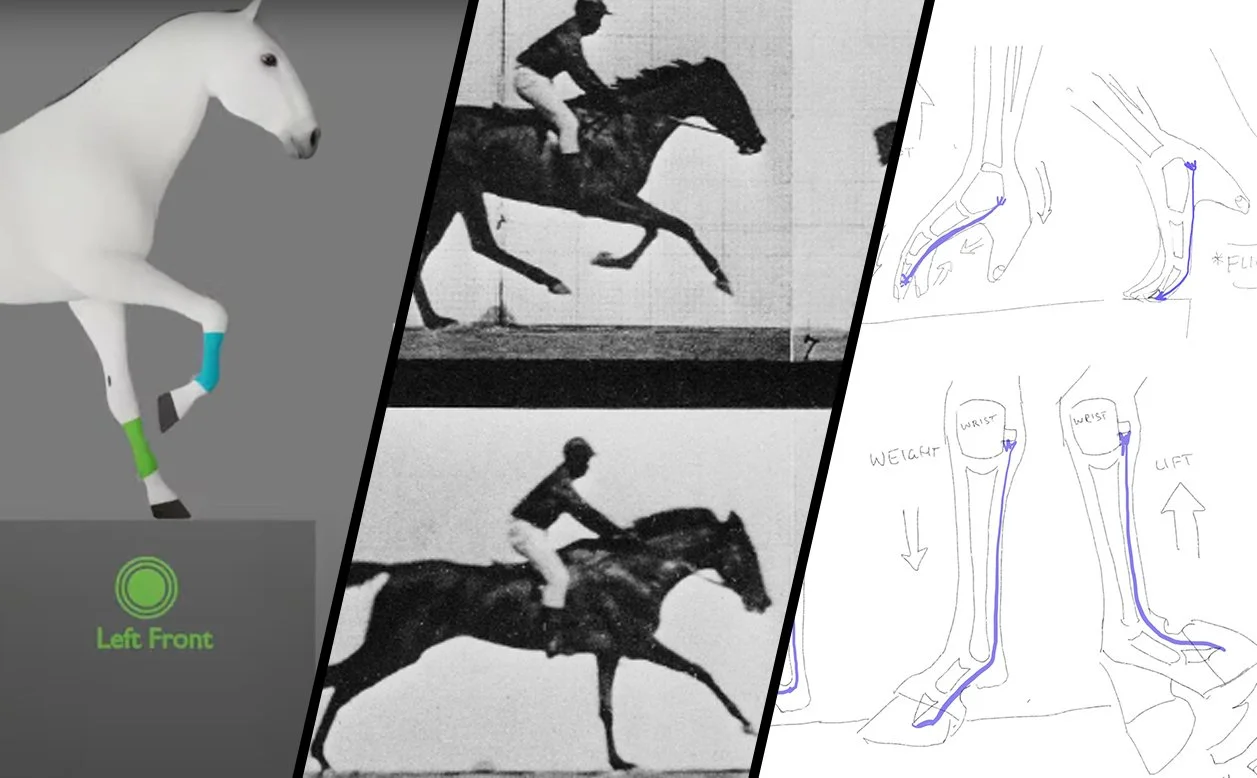
That a horse should display some idle animations in its downtime to support the impression of liveliness will not come as a surprise to anyone, but unfortunately I’ve often seen games (and entire asset packs) struggle with what kinds of motions and behaviors are actually believable for horses to display.
So, what kinds of things does a horse get up to when it’s not currently busy? Let’s start with simple, small actions that a horse might perform when it’s taking a short break standing in place, but still wearing tack and potentially carrying a rider:
Lowering the head to graze. Note that this usually includes moving the forelegs apart to the front and back for easier reach
Reaching sideways to eat shrubbery or leaves off of branches
Ear twitching: a horse can move each ear independently and does so to actively listen to things happening around it, even while otherwise relaxed
Looking around: horses might well lift their head and perk up to face anything interesting going on around them. Note however, that bending the head to face backwards looks quite unnatural.
Scratching their head on a foreleg: horses get itchy, and a break where the rider lets the reins hang loose is a great opportunity to scratch. They to this by lowering their head and rubbing the side of their nose or cheek on their knee
Head shaking: A horse’s head shake is more of a rotational motion than any up-down or left-right. See here for a video example. Horses are particularly likely to do this if they have flies in their face, or after a halter or bridle was taken off.
Relaxing a hind leg: Horses can doze while standing upright, and they do this by standing firmly on three legs and relaxing one hindleg. The stance also lets their hip drop to one side. This pose is a sign of relaxation and would not be seen on a horse that’s anxious or in danger. They’ll do this only if they feel safe and perhaps a little sleepy.
Urinating/Defacating: including such bodily functions might not fit the tone of every game, but it is something that riders are very much used to seeing in real life. Note that these things don’t just happen to an otherwise static horse, but that a urinating will assume a wide-legged stretched out stance, and that the exact pose is a bit different between male and female horses due to their anatomy.
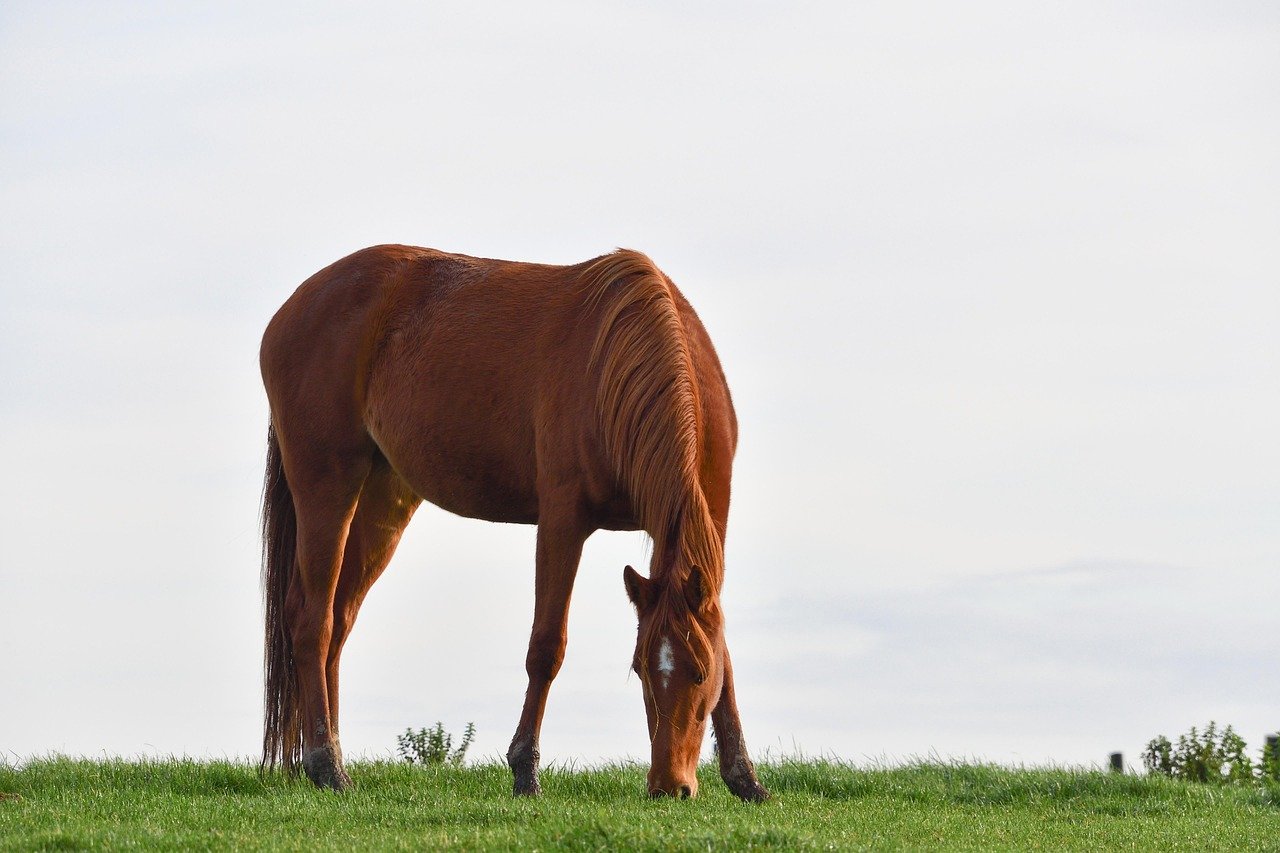
When grazing, a horse will usually move their forelegs apart to the back and front for easier reach. Note that they will never bend their knees for this, that looks completely wrong! Image Source
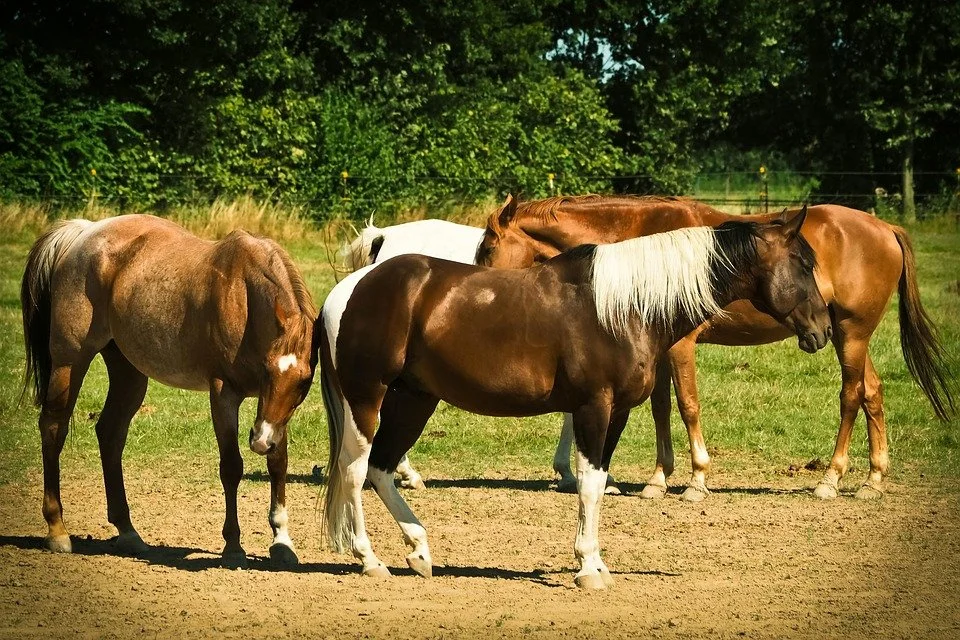
The slightly lifted hind leg, with just the tip of the toe touching the ground, is a common sign of relaxation. This only works with hind legs! If a horse lifts its foreleg in the same way, that’s usually a sign of pain. Image Source
I’m a big fan of games including actual downtime for the horse: when the game gives me the option to put my horse away for the night, preferably into a paddock or sheltered pasture rather than simply tied up or standing in a stall, here’s some cute things the horse might get up to in that situation:
Grazing & walking around: horses spend a lot of time searching for forage and nibbling at grass, usually while slowly moving forward
Lying down and rolling: especially if they’ve just been wearing a saddle and are sweaty, horses love to go for a roll in the dirt to alleviate itches.
Dozing while standing up: a horse that feels safe in pasture is very likely to relax a hind leg as described earlier, and also let their head droop and eyes fall closed for a snooze.
Lying down to sleep (upright or flat): While horses can sleep standing up, they do need to lie down for proper rest. Note that they don’t curl up like dogs (several asset packs and AAA games get that remarkably wrong), but lie either upright with their head drooping, or completely flat on their side.
Scratching themselves: horses get itchy and make all sorts of funny motions to scratch themselves, such as scraping their own flank with their teeth, contorting to scratch their ear with a hind leg or rubbing their butts up against trees and fenceposts.
Full body shake: This is particularly likely to happen after the horse has rolled in the dirt, though they might also do it while under saddle – a quite unsettling thing to sit through as a rider if you’re not used to it!
If there are multiple horses sharing a pasture, paddock or stable, there’s a whole lot more wonderful options for interactions, such as mutual grooming, playing, threatening fighting, mutual fly swatting and more
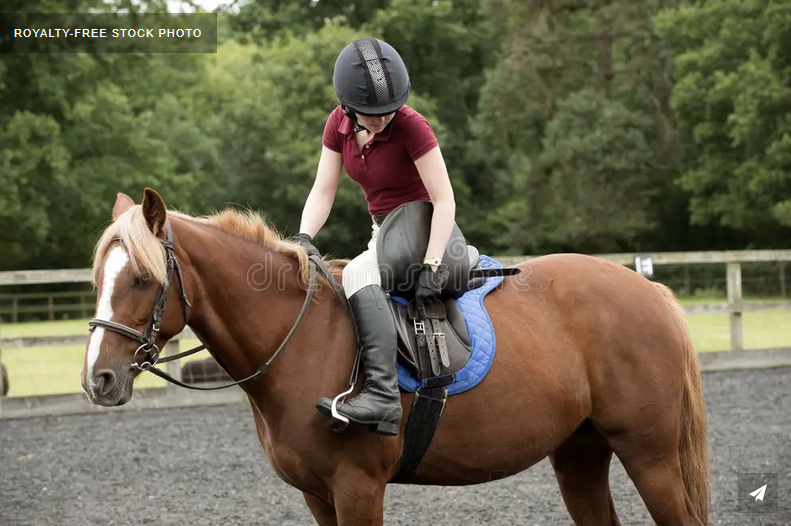
To tighten the saddle girth, a rider would move their leg forward and reach down under the saddle flap to reach the girth straps. Image Source.
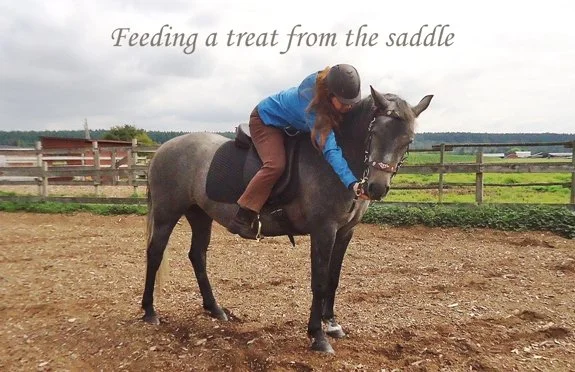
A rider can feed the horse a treat while in the saddle. Image Source
If horse AND rider are idle because the player has stopped giving input, there’s another bunch of little behaviors they can engage in together:
Rider taking their feet out of the stirrups and stretching their legs
Rider reaching down to check or tighten the saddle girth
Rider feeding horse a treat, horse reaching around to grab it
Rider reaching forward to remove twig from mane or sort mane/forelock
Rider scratches horse, horse leans into it
Rider hugs horse from the saddle
Finding video material of all these actions isn’t always simple, because unfortunately, a lot of horse owners don’t upload footage of their horses’ completely mundane behaviors to neatly tagged playlists. Stock video sites like Shutterstock can help, but I also highly recommend making use of horse-focused communities like /r/Horses, /r/Equestrian, Friendly Horse Chat or the TMQ Discord to simply ask if anyone happens to have video of their horse doing a certain thing.
What Else?
“But Alice, none of those examples quite work for my game, even though I really want to make horses matter more in it,” fear not and let me help you. This article is kept quite generic in order to cover a lot of options and types of games, but obviously the exact design of horsie features will vary drastically between different genres of game and depend on a myriad of factors from art style to scope to target audience.
If you’d like to get tailor-made input on what additional horse details or mechanics might fit your game, you can always post your prototype or game idea in the TMQ Communities, or get in touch with me about consultation options!


This article is aimed at game developers who want to include horses in their games without making the same couple of basic mistakes that make equestrians cry – to give game creators a starting point for further research and some ideas for how to add a bit of depth, variety and authenticity to their portrayal of horses.