
Scams, Asset Flips, and Naive Amateurs: The Horse Girl's Guide to Recognizing which Games are Worth Supporting
Horse Games are an underserved niche and their players are practically begging for new projects to follow and support. I’ve been spreading that message loudly everywhere I can for years and I still fully stand by it. It’s great that it’s slowly but surely getting heard, but that dawning realization has unfortunately also led to some bad actors trying to profit from the audience’s desperation as well as to clueless beginners getting tangled up in mismanaged expectations.
With this article, I want to give people in the horse game audience some tools and background information on how to better gauge which projects might deliver on their promises, which red flags to watch out for in new game announcements and which critical questions to ask.
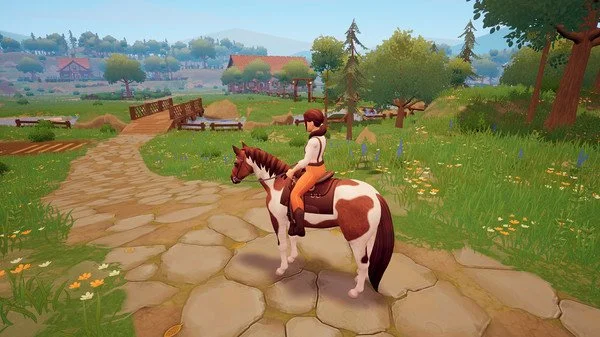
I’ve always gauged The Ranch of Rivershine to have much higher success chances than many games announced at the same time, precisely because of the developer’s previous portfolio and obvious professional approach. That it’s now out, completed and very well-received isn’t just a lucky coincidence.
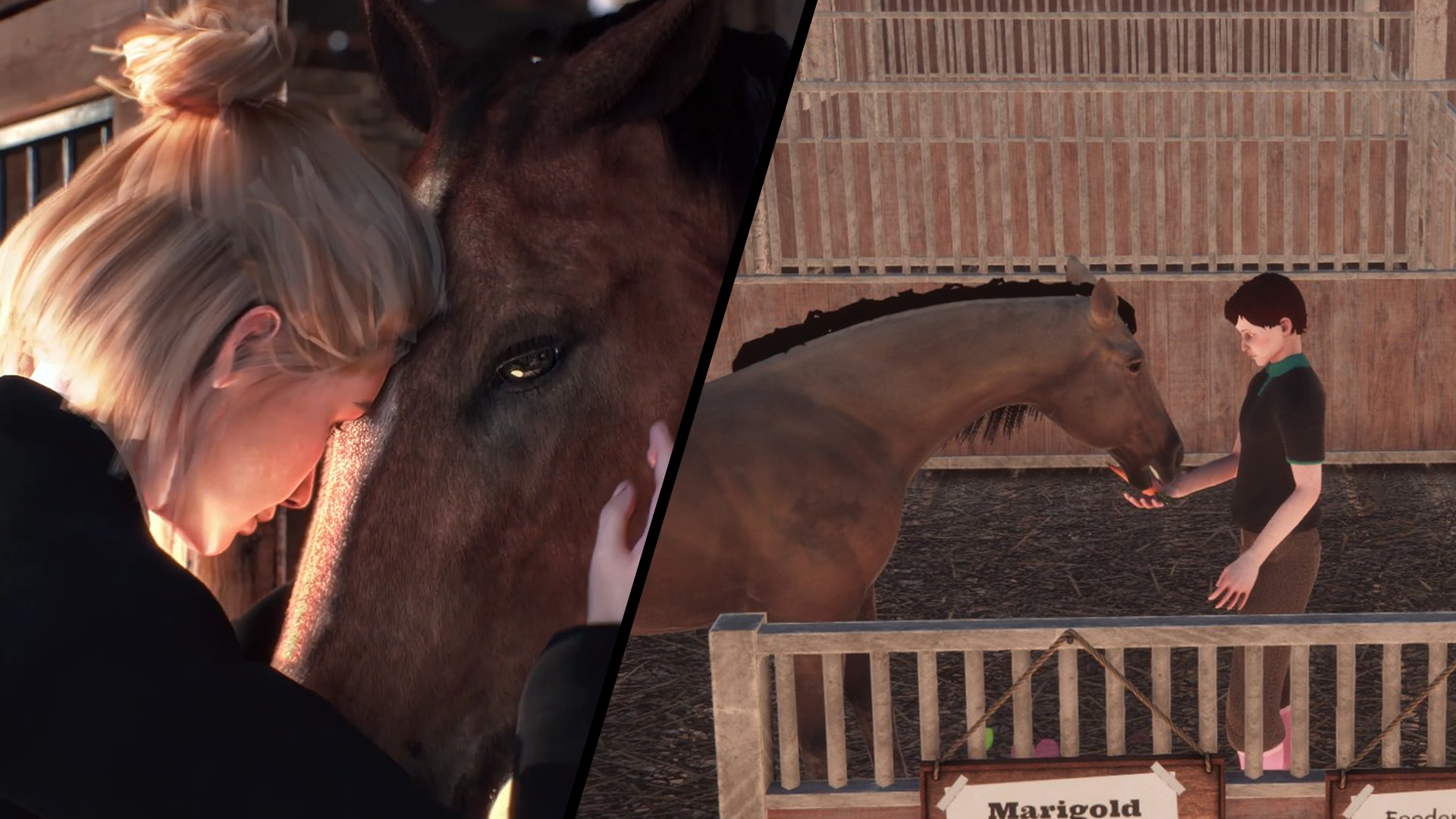
That My Horse: Bonded Spirits ended up looking nothing like its announcement trailer and released to mixed reviews wasn’t much of a surprise if you know what red flags to look out for. The exact same goes for Horses 2025.
Establishing Project Archetypes
Stick with me while I get theoretical for a second: We’ll establish three types of project that I’ve seen pop up repeatedly over the years of running The Mane Quest and its communities.
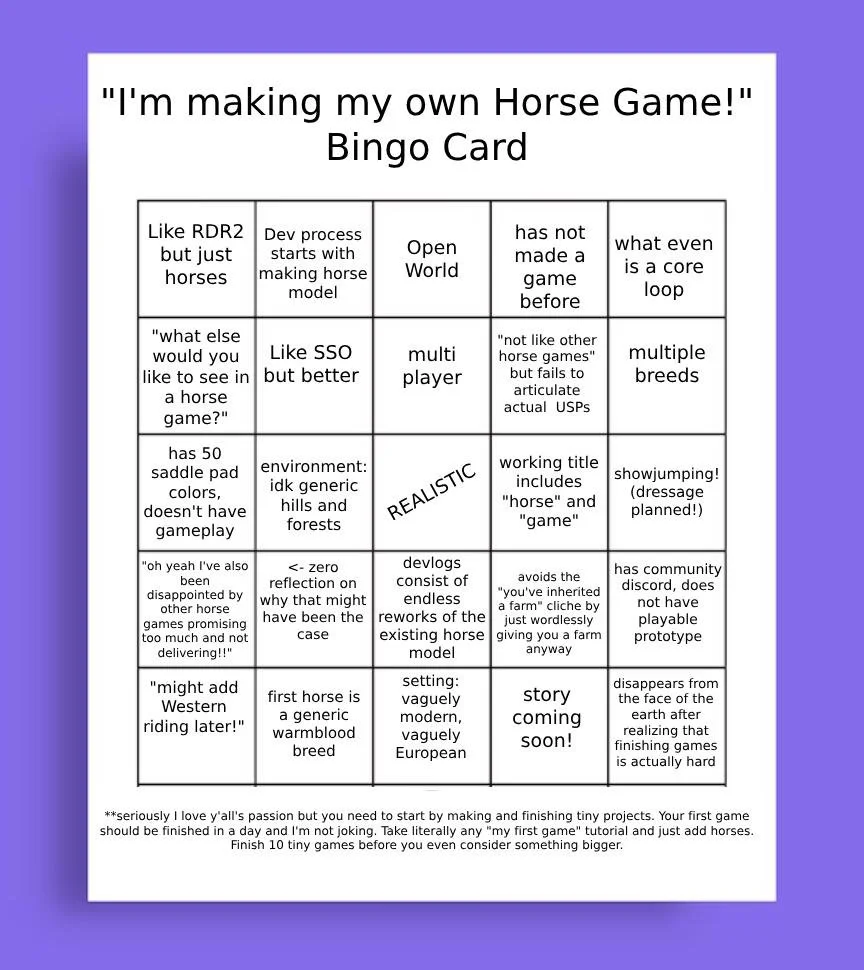
The overly-ambitious first time horse game dev Bingo Card for Naive Amateur Projects – if you’re planning a first project that hits five or more of these, it’s probably time to reconsider!
The Naive Amateur Project: This is an upcoming horse game from a person or team who has never made a game before but is passionately taking things into their own hands. The creators are driven by genuine enthusiasm for the topic, but held back by a completely unrealistic approach to project scope. Their game may sound like it’s going to be everything you ever wanted from a horse game, but it’ll either be years until you see anything remotely playable, or the creators will simply stop communicating somewhere along the way because it turns out their plans were not actually feasible. See bingo card to the right.
The Opportunist Project: This is a game by a person or team who has made games before and is now foraying into the horse game niche, probably because they heard the audience is desperate and therefore easy to profit off of. They likely rely heavily on pre-made assets or pre-rendered trailers in order to quickly put together something that looks like it’s far in development to unsuspecting eyes, in order to gain wishlists and gauge the actual sales potential. This kind of project may turn out looking quite different than what was initially promised when it actually releases, or it may get quietly cancelled when it doesn’t perform well enough in terms of wishlists to continue development.
The Competent Professional Project: This is a game by a person or team who has either made relevant games of similar scope before, or is aware of their limitations and planning a game with a very well-defined and self-contained vision. They announce a concrete feature list and are not afraid to tell players what their game won’t have. The game gets announced with a somewhat concrete timeline that doesn’t reach years and years into the future, and they have a playable prototype, demo or playtest that already demonstrates functional core gameplay. This is by far the most promising type of project, and the kind that’s most likely to actually release within the declared timeframe and deliver on what it has promised.
Not every newly announced horse game project will fall neatly into one of these categories and match every defining characteristic. Some projects may even start as Naive Amateurs, but grow into Competent Professionals in the process, as they tighten down their scope and learn on the job, but it cannot be assumed that that will be the case every time. Similarly, a game meeting the basic criteria for a Competent Professional project does not guarantee it will be well-received and completely live up to expectations. (Don’t ask me how I know)
Whether or not any project ends up deserving the title of “Scam”, is a matter of transparency and honesty, in my opinion. I’ve seen people throw that word around whenever they personally felt misled by any part of a game’s marketing or promises, but I would argue that a game initially over-promising and later cutting features or taking much longer than initially anticipated – such as we’ve seen from Equestrian the Game or Astride – remains a genuine attempt with lessons learned along the way, not deserving of being labelled a scam. Similarly, I cannot provide any evidence that the creators of games like My Horse: Bonded Spirits or Horses 2025 have any malicious intentions, but between liberal use of generative AI and marketing materials that are decidedly not representative of the final project, I’m at least confidently applying the label of “ethically dubious and obviously misleading” to those.
In short: whether or not something is a scam or just a subpar product is not always a clear-cut line to draw. None of the signs (positive or negative) mentioned in this article are a completely surefire way to tell the quality of a product before it releases, but I hope they can help optimistic onlookers figure out which projects to support and which to stay wary of. Depending on the project, that may save you the emotional rollercoaster of hope and disappointment, or even reduce the risk of investing actual money into a product you’ll never actually get to play.

How to critically examine a just-announced game
So with that in mind, how do you tell whether a newly announced project is trustworthy? How do you gauge the chances of something getting made the way it’s being promised? Let’s look at some questions you should ask and some possible answers and what they mean.
When you see a new horse game pop up, I recommend trying to find information along these lines, and adjusting your expectations accordingly. I’m not putting together an actual point score system, but the more green checkmarks a game gets, the higher its likelihood to actually become a finished product worth playing. If a game mostly gets the red cross marks as answers, then I advise caution, especially if the game is asking you to invest any money upfront.
Have the developers made any games before?
✅ Yes, they have a portfolio of well-received previous games
✅ This is their first “big” project, but they have a portfolio of playable prototypes, jam games or similar evidence of experience
❌ No, this is their first project and they have never finished anything playable
❌ Yes, they have other games that look a bit cheap and mostly have mixed or negative reviews
Does the game have any kind of unique identity beyond “horse game”?
✅ Yes, there’s a specific setting, or a focus on a specific discipline, or has a specific genre of gameplay beyond just describing itself as a ‘horse game’
❌ The game describes itself as “not like other horse games” and says it’ll be better and more realistic than others
❌ No, but the game will be THE horse game that we’ve all been waiting for!
Does the Feature list make a lot of vague promises?
✅ No, the game’s description gives me a clear overview of what I can and can’t do in the game
❌ The description sounds like this game will have EVERYTHING I’ve ever wanted in a horse game!
❌ Yes, the description includes a lot of complex things without precise info on how those things will work, e.g. a thrilling story, horses with unique personalities, super-realistic behavior, multiple different horse breeds, online multiplayer, multiple riding disciplines…
Is there any gameplay footage?
✅ Yes, the gameplay videos give me a clear idea of what I’ll be able to do in the game!
❌ The videos just show a horse and/or rider moving in an environment
❌ No, there’s nothing playable yet, just models and animations
❌ No, the trailer only uses concept art or live action footage
❌ There’s footage that looks like gameplay, but it has that smooth, pre-rendered look to it, without actually informing players whether or not it’s in-engine gameplay footage
Is the art style consistent?
✅ Yes, the shown material has a coherent artistic vision and seems consistent in itself
❌ I think the screenshots I’ve seen so far have been AI-generated
❌ I can’t tell, I’ve only seen a realistic-looking horse model so far
❌ I recognize the horse model from a dozen other horse games, it has not been adjusted to suit this game’s art style in any way
❌ It’ll be ultra realistic and ultra detailed, despite coming from a team with no previously published games
Does the project have a feasible timeline?
✅ Yes, there’s a concrete release date, or a release window within the next year or so
❌ No, the developers don’t know yet how long it’ll take them
❌ It’s a big project, so it’ll probably take 5-7 years until it’s done, at least!
How do the developers talk to the audience?
✅ They post occasional updates and maybe ask for input on specific features or for feedback on playable versions of the game
❌ They ask for the audience’s input on everything and let players decide what every feature should look like in the game. They seem to add whatever players ask for
❌ They don’t talk to the audience at all and don’t respond to any questions from players
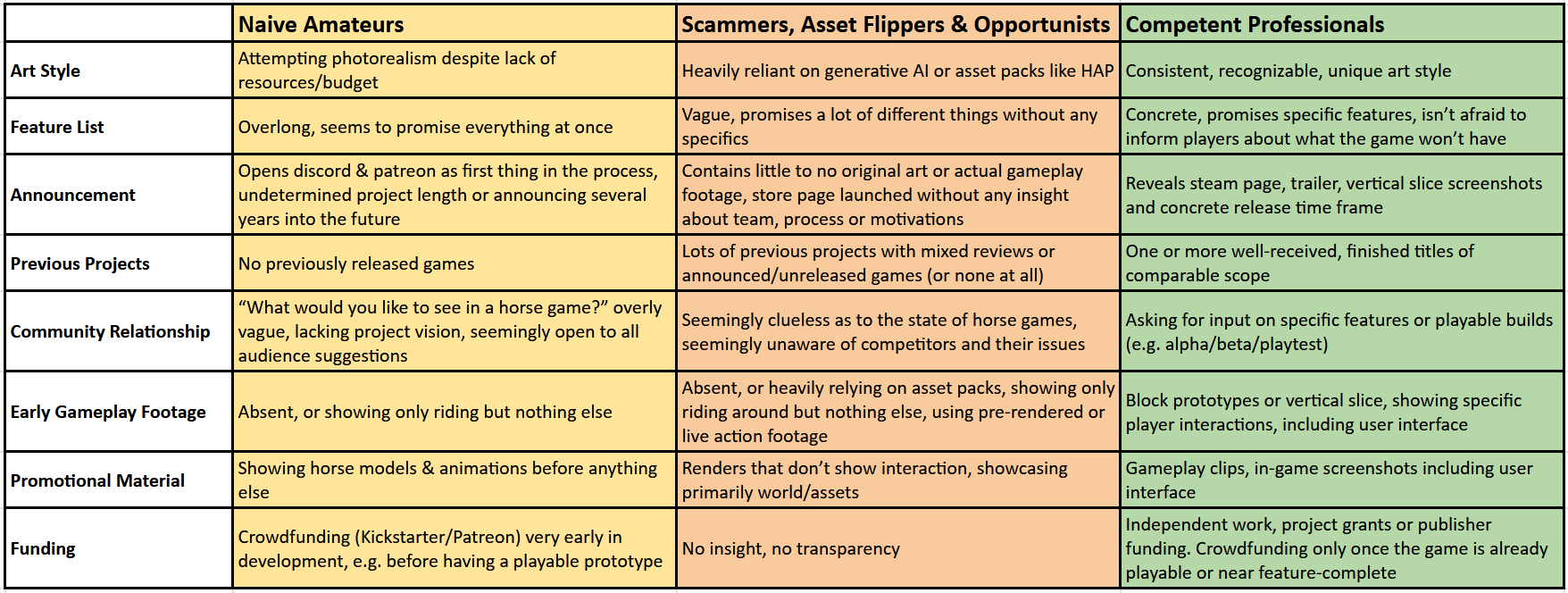
Overview Table
This is a rough characterization of the three project archetypes outlined above, and not an exact science! But if you’ve been following the horse game space for a while like I have, you might immediately be able to think of a few projects that fit into each category.
What To Do About It
So now that we’ve looked at the indicators for what makes a project more or less trustworthy, what can you do about it? Really, it depends a bit on your expectations, as well as on what the game creators are asking for from their potential players:
Following a game on social media, adding it to your wishlist and engaging with posts doesn’t cost you anything, so you don’t really have anything to lose in doing so. Keeping an eye on games can’t really do harm, and personally I like keeping tabs on all horse-related games even if my expectations for some of them are very low.
When participating in crowdfunding via e.g. Patreon or Kickstarter, only spend as much as you’re comfortable losing if the project doesn’t ever get finished. The earlier in the process you back something, the likelier it is for that project to never get completed. If you have the disposable income and general optimism for that to not be a limiting factor, by all means support projects that are in their early concept phase! But if you’re short on cash and want to make sure you get some actual ‘bang for your buck’, I recommend saving your money for supporting games that are either out already, or for those that get as many green checkmarks as possible in the list above.
Try to keep your expectations reasonable. If you approach any newly announced game with a “this will be everything I’ve ever wanted 😍” vibe, you’re setting yourself up for disappointment. Try to meet games where they are, appreciate what they do well and criticize what they lack. We all benefit from player opinions having more nuance than games being considered either being perfection beyond criticism or absolute garbage.
If you’re not sure what to make of a game project, ask questions! If a developer is ready to share their project in public, they should also be ready to field a few questions about their feature list, game scope or previous projects. Make use of the TMQ Communities too, to ask for other players and other developers about what they make of a specific game’s promises.
Be kind about it! Remember that you’re always talking to actual people about work they’ve probably poured months or years of their life into. Don’t get lulled into supporting dubious projects, be honest about what you’re skeptical about, but never harass or trash-talk developers just because you don’t like what they’re doing or doubt that they can deliver on what they promise.
As for developers, let me quickly address the other side here: If you’re a beginner game creator worried about not being able to gain people’s trust with your big plans, may I instead point you towards my these articles: Making Your Own Horse Game and 5 Crucial Industry Tips for Horse Game Developers. Also consider something like the Tiny Horse Game Jam as a starting point! I absolutely believe we can use more people making horse games, but you’ll have an infinitely easier time finding and satisfying your audience if you plan for a well-scoped project that you can actually deliver.
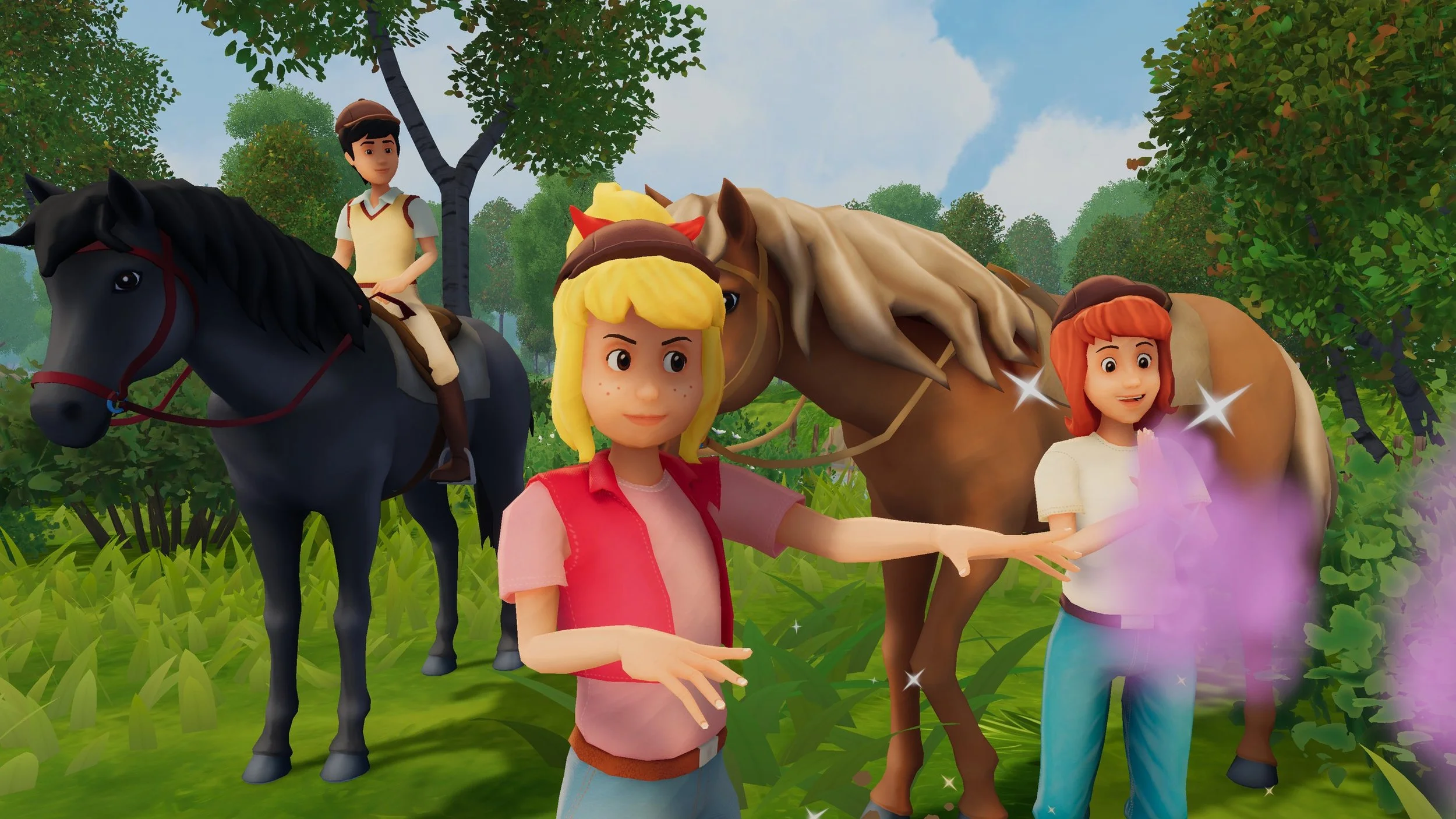
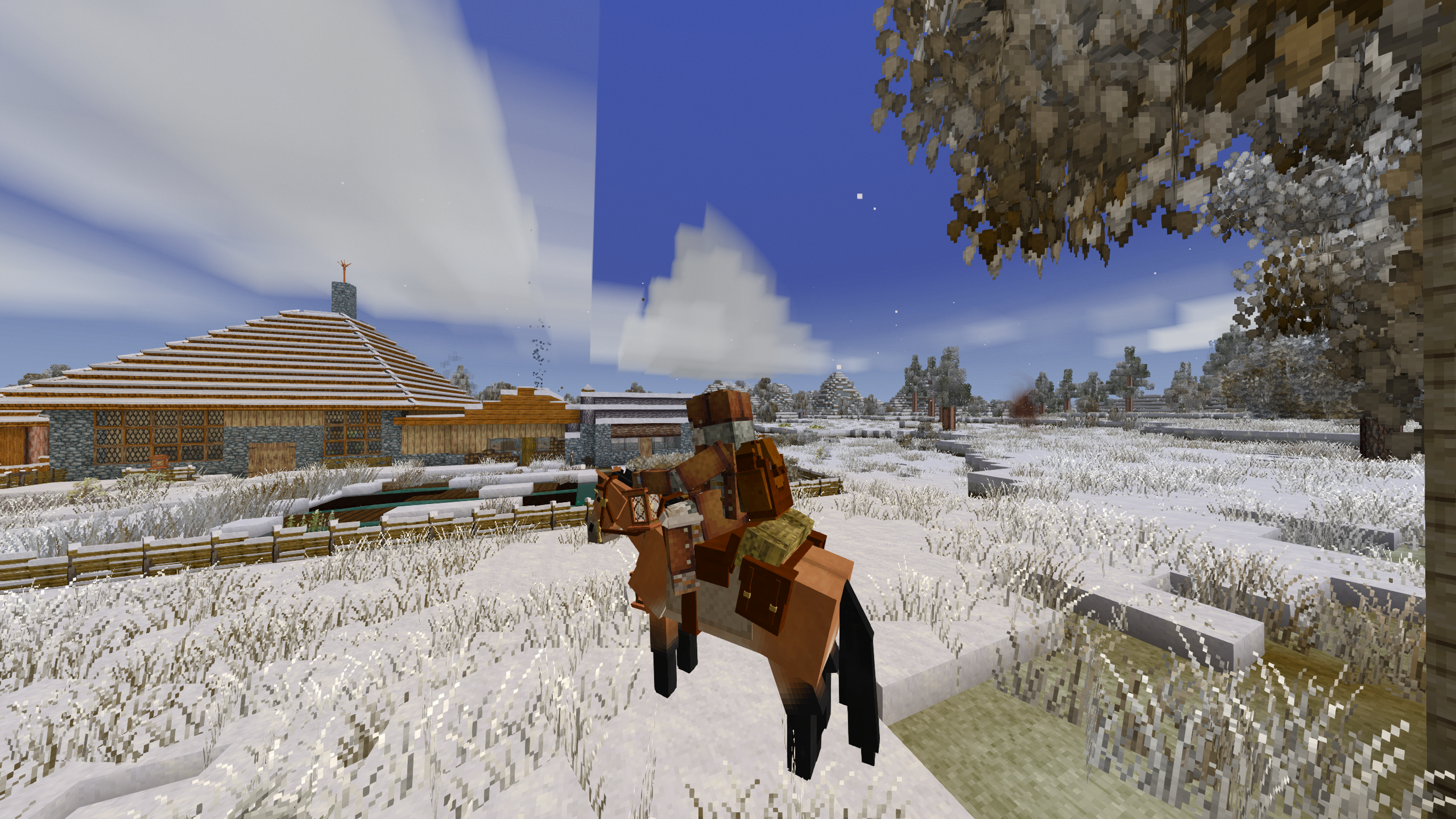
Gather up horse game fans, it is time for another announcement roundup. This is where I do a quick rundown of upcoming and recently released games that I want to let you all know about, but don’t have capacity for deep dives and dedicated articles for.